
Government Manufacturing Strategy Classifier
Not all "government involvement" in manufacturing is the same. This tool helps you classify an industrial scenario by analyzing three key dimensions: Control, Funding Source, and Risk Bearing. Select the options that best describe your scenario to see if it aligns with a State-Owned Enterprise (SOE) model or an Indirect Support (Subsidy/Policy) model.
Classification Result:
You might assume that manufacturing is purely a private sector game-factories owned by corporations, driven by profit margins, and run by CEOs. But look closer at the supply chains keeping your country running, from the steel in your bridges to the pills in your medicine cabinet. Governments don't just regulate factories; sometimes, they own them, fund them, or even build them from scratch. This concept, often called government manufacturing or public sector industrial production, is a complex mix of strategic necessity, economic intervention, and historical legacy.
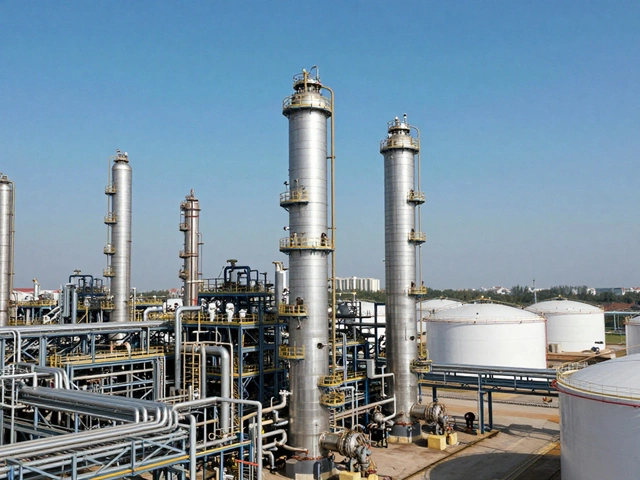
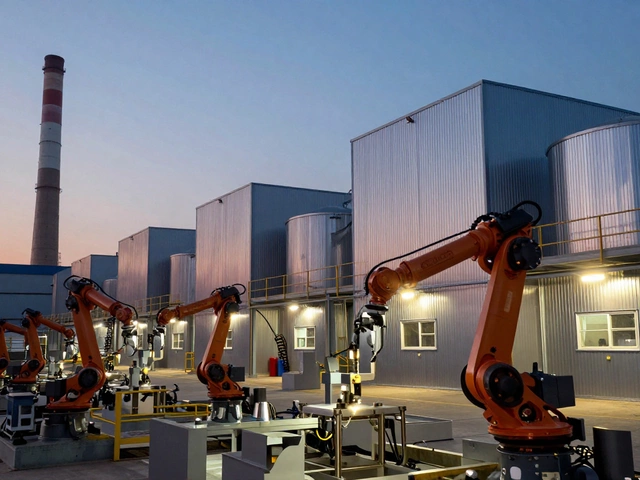
Why would a government get its hands dirty with assembly lines? Usually, it’s about control. Think about defense contractors or space agencies. You can’t leave the production of fighter jets or rocket engines entirely to market forces when national security is on the line. But it goes beyond tanks and missiles. In many countries, governments directly manage industries like railways, postal services, and energy production. These aren't just service providers; they are massive manufacturing operations producing goods and infrastructure that keep society functional.
The Core Definition: State-Owned vs. State-Supported
To understand what manufacturing in government actually means, you have to distinguish between two very different things: direct ownership and indirect support. When people hear "government manufacturing," they often picture the former-State-Owned Enterprises (SOEs). These are companies where the government holds a majority stake or full ownership. They produce goods for sale, compete in the market, but operate with political rather than purely commercial goals.
However, most "government manufacturing" activity today is actually the latter: support. This involves subsidies, tax breaks, grants, and regulatory frameworks designed to boost private manufacturing. For example, if a government offers a $1 billion grant to build a semiconductor plant, they aren't manufacturing chips themselves. They are shaping the environment so private companies do it. Both approaches fall under the umbrella of industrial policy, but their mechanics are worlds apart.
| Feature | State-Owned Enterprises (SOEs) | Indirect Support (Subsidies/Policy) |
|---|---|---|
| Control | High. Government sets production targets. | Low. Private firms decide what/how to produce. |
| Funding Source | Taxpayer money + Revenue. | Taxpayer money via grants/tax cuts. |
| Risk | Borne primarily by the state. | Borne primarily by private investors. |
| Examples | Railways, Defense plants, Postal services. | Solar panel subsidies, R&D tax credits. |
Why Do Governments Manufacture?
It seems inefficient, right? Private companies are usually better at cutting costs and innovating. So why step in? The answer lies in "market failures." Sometimes, the free market just doesn't deliver what society needs, or it delivers it too slowly.
First, consider strategic autonomy. During World War II, governments worldwide ramped up aircraft and tank production because relying on foreign suppliers was risky. Today, this logic applies to critical minerals, semiconductors, and pharmaceuticals. If a pandemic hits and your country relies 90% on imported masks or vaccines, the government steps in to ensure domestic capacity exists. This isn't about beating Amazon on price; it's about survival.
Second, there's the issue of natural monopolies and high entry barriers. Building a national railway network or a nuclear power plant requires billions in upfront capital with decades-long payback periods. Private investors often shy away from such long-term, low-margin projects. Governments fill this gap, ensuring essential infrastructure gets built even if it’s not immediately profitable.
Finally, let's talk about social welfare. In some economies, manufacturing jobs are seen as a tool for social stability. By keeping certain factories open-even if they're losing money-governments prevent mass unemployment in specific regions. It’s a blunt instrument, sure, but politically, it works. You see this often in declining industrial hubs where closing a state-run steel mill could destabilize an entire town.
Global Examples: From China to the UK
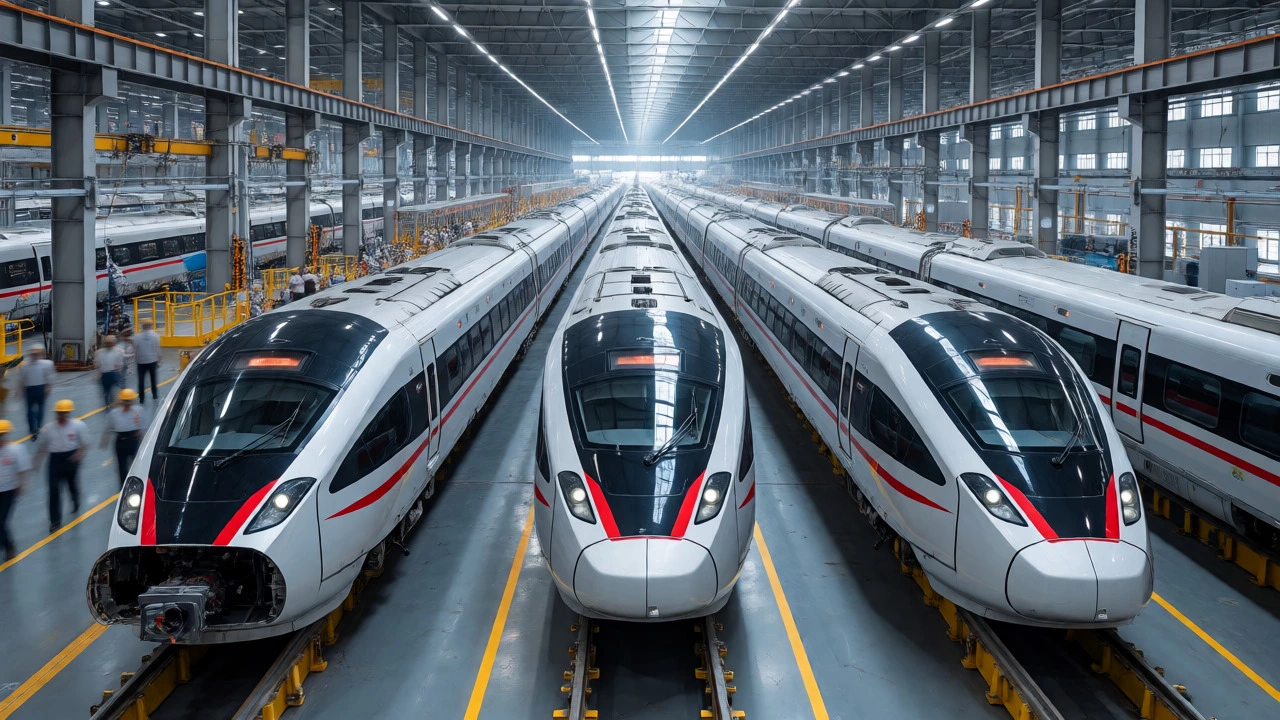
The approach to government manufacturing varies wildly depending on who you ask. Take China. Their model is heavily state-led. Major industries like telecommunications, energy, and heavy machinery are dominated by SOEs. Companies like CRRC (the world's largest train manufacturer) or PetroChina are effectively arms of the state. They benefit from cheap loans, guaranteed contracts, and protection from foreign competition. This allows China to scale production rapidly, dominating global markets in solar panels and electric vehicles.
In contrast, the United Kingdom has largely moved away from direct ownership since the privatization waves of the 1980s. Today, British government involvement is mostly through agencies like Innovate UK, which funds research, or the Ministry of Defence, which remains one of the largest buyers of manufactured goods. However, recent trends show a shift back toward intervention. With the post-Brexit landscape and global supply chain shocks, the UK is increasingly using industrial strategy to attract battery gigafactories and green hydrogen plants.
The United States sits somewhere in the middle. It doesn't have many large-scale SOEs compared to China, but it uses massive subsidies. The CHIPS Act, for instance, allocates billions to revive domestic semiconductor manufacturing. Here, the government isn't building the fabs; TSMC and Intel are. But the government is paying for a significant chunk of the construction, effectively de-risking the investment.
The Role of Government Schemes in Modern Manufacturing
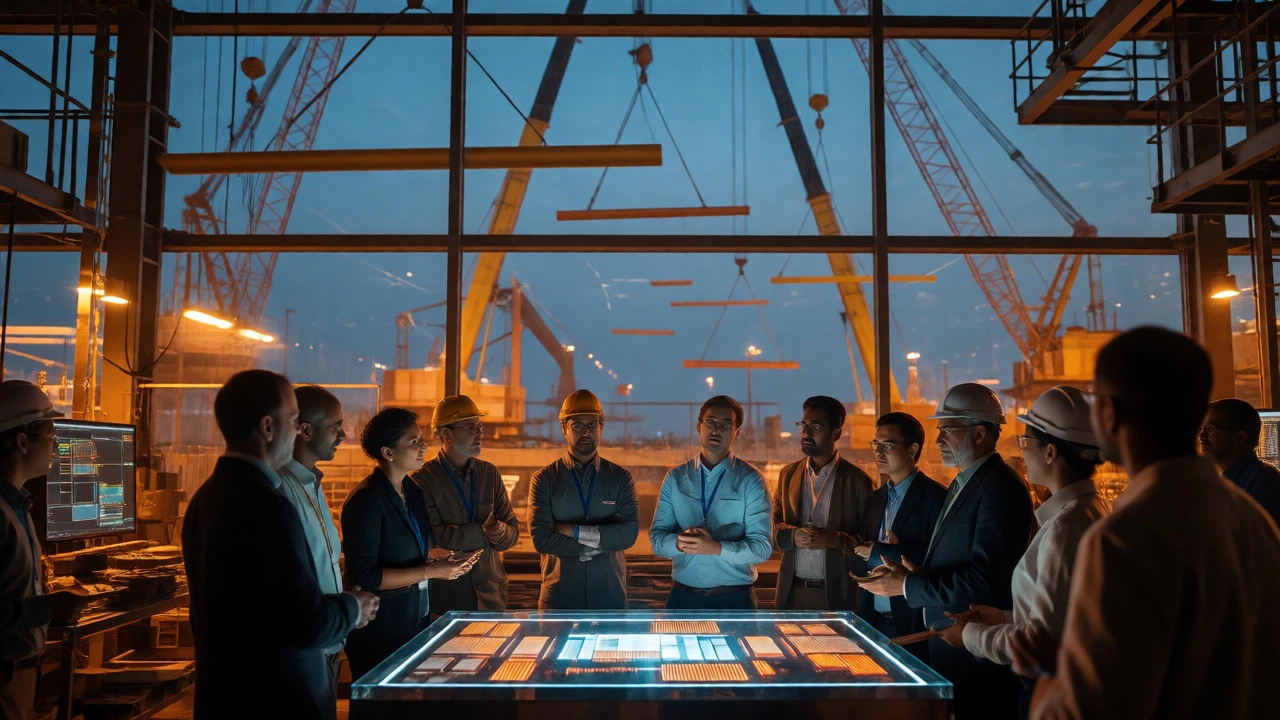
If you're a business owner, you probably care less about whether the government owns the factory and more about how they help yours survive. This is where government schemes come into play. These are structured programs offering financial or technical assistance.
- Capital Subsidies: Direct cash grants to buy machinery. In India, the Production Linked Incentive (PLI) scheme rewards companies for increasing output in sectors like electronics and pharmaceuticals.
- Tax Holidays: Reduced corporate tax rates for new manufacturing units set up in special economic zones (SEZs).
- R&D Grants: Funding for innovation. If you're trying to invent a new type of biodegradable plastic, government labs or grants might cover part of your testing costs.
- Infrastructure Support: Governments building roads, ports, and reliable power grids specifically around industrial clusters to lower logistics costs for manufacturers.
These schemes aim to correct market imbalances. For instance, small manufacturers often struggle to access credit. Government-backed loan guarantees can unlock capital that banks wouldn't lend otherwise. It’s a way of leveling the playing field against giant conglomerates.
Criticisms and Pitfalls
Is government manufacturing always good? Hardly. Critics point out several serious downsides. The biggest one is inefficiency. Without the threat of bankruptcy, state-owned factories can become bloated. Workers might be over-hired, processes outdated, and management political rather than professional. Why innovate if the government will bail you out anyway?
Then there's the risk of crowding out private investment. If the government floods the market with subsidized goods, private competitors can't match the prices. They go bust, leaving the state as the sole provider. Once that happens, quality often drops, and customer choice vanishes. Remember the old telecom monopolies? Before deregulation, waiting months for a phone line was normal.
Corruption is another thorny issue. Large manufacturing contracts awarded by the state can become breeding grounds for cronyism. Instead of the best supplier getting the job, it might be the one with the best political connections. This misallocates resources and slows down overall economic growth.
How to Navigate Government Manufacturing Policies
For entrepreneurs and managers, understanding these dynamics is crucial. You need to know which side of the fence you're on. Are you competing with a subsidized state enterprise? Or are you eligible for their grants?
Start by mapping the industrial policy landscape in your region. Look for keywords like "industrial strategy," "reshoring initiatives," or "green deal." These documents outline where the government intends to pour money. If they’re pushing electric vehicles, expect subsidies for battery production and tariffs on imported EVs.
Next, assess the competitive threat. If a state-owned entity dominates your sector, focus on niches they ignore. SOEs are great at volume and standard products. They’re often terrible at customization and speed. Position yourself as the agile alternative.
Finally, engage early. Government schemes often require lengthy application processes. Building relationships with local development agencies before you need funding can save you months of red tape. Attend industry roundtables hosted by trade ministries-they’re not just boring meetings; they’re where policy shifts are announced first.
The Future: Reshoring and Green Manufacturing
Where is this all heading? Two major trends are reshaping government manufacturing roles: reshoring and decarbonization.
Reshoring is the push to bring manufacturing back home from overseas. Geopolitical tensions have made leaders nervous about relying on distant supply chains. Governments are now actively incentivizing companies to move production closer to consumers. This means new factories popping up in Western Europe and North America, supported by aggressive tax breaks.
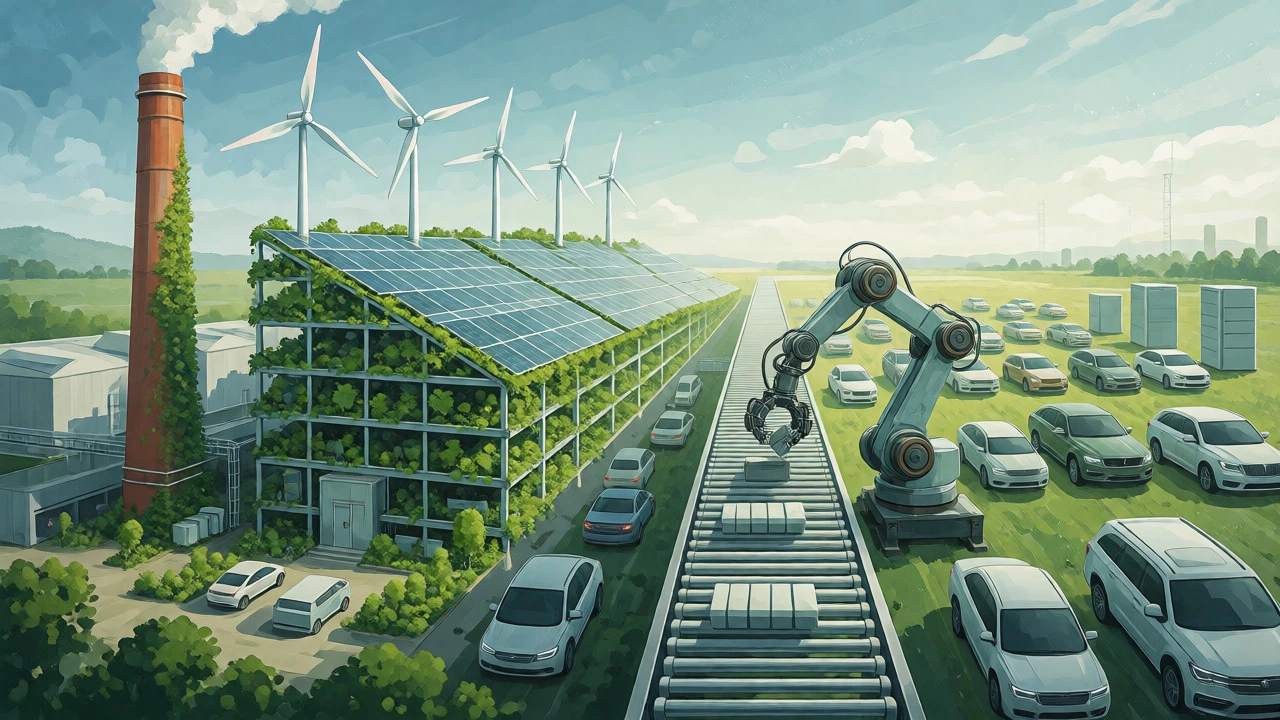
Decarbonization is equally powerful. Meeting net-zero targets requires massive changes in how we make things. Steel, cement, and chemicals are hard-to-abate sectors. Private companies alone can't shoulder the cost of switching to green hydrogen or carbon capture. Governments are stepping in as co-investors, sharing the risk of these expensive transitions. We’re likely to see more hybrid models, where public funds enable private green tech to scale.
Manufacturing in government isn't going away. It’s evolving. It’s moving from owning the factories to orchestrating the ecosystem. Whether you view this as smart stewardship or bureaucratic meddling depends on your perspective, but ignoring it means missing out on billions in potential opportunities.
What is the difference between a State-Owned Enterprise and a government subsidy?
A State-Owned Enterprise (SOE) is a company where the government holds a controlling interest and directly manages production. A government subsidy is a financial incentive given to a private company to encourage specific behaviors, like hiring workers or investing in R&D, without giving up ownership or operational control.
Why do governments intervene in manufacturing sectors?
Governments intervene to correct market failures, ensure national security through strategic autonomy, provide essential infrastructure that private firms won't build due to high costs, and promote social welfare by maintaining employment levels in key industries.
Are state-owned manufacturers always less efficient than private ones?
Not always, but often. SOEs lack the profit motive and bankruptcy threat that drive efficiency in private firms. However, they can achieve economies of scale in natural monopolies like railways or utilities, where duplication of infrastructure would be wasteful.
How does the 'Made in China' initiative relate to government manufacturing?
The Made in China 2025 plan is a prime example of state-led industrial policy. The Chinese government provides massive subsidies, cheap land, and favorable regulations to dominate high-tech manufacturing sectors, blending direct state support with private execution to achieve global market leadership.
Can small businesses benefit from government manufacturing schemes?
Yes. Many schemes are specifically designed for SMEs, offering easier access to credit, grants for automation, and support for exporting. These programs help smaller players compete against larger corporations by reducing their operational costs and risks.