
US TV to India Compatibility Checker
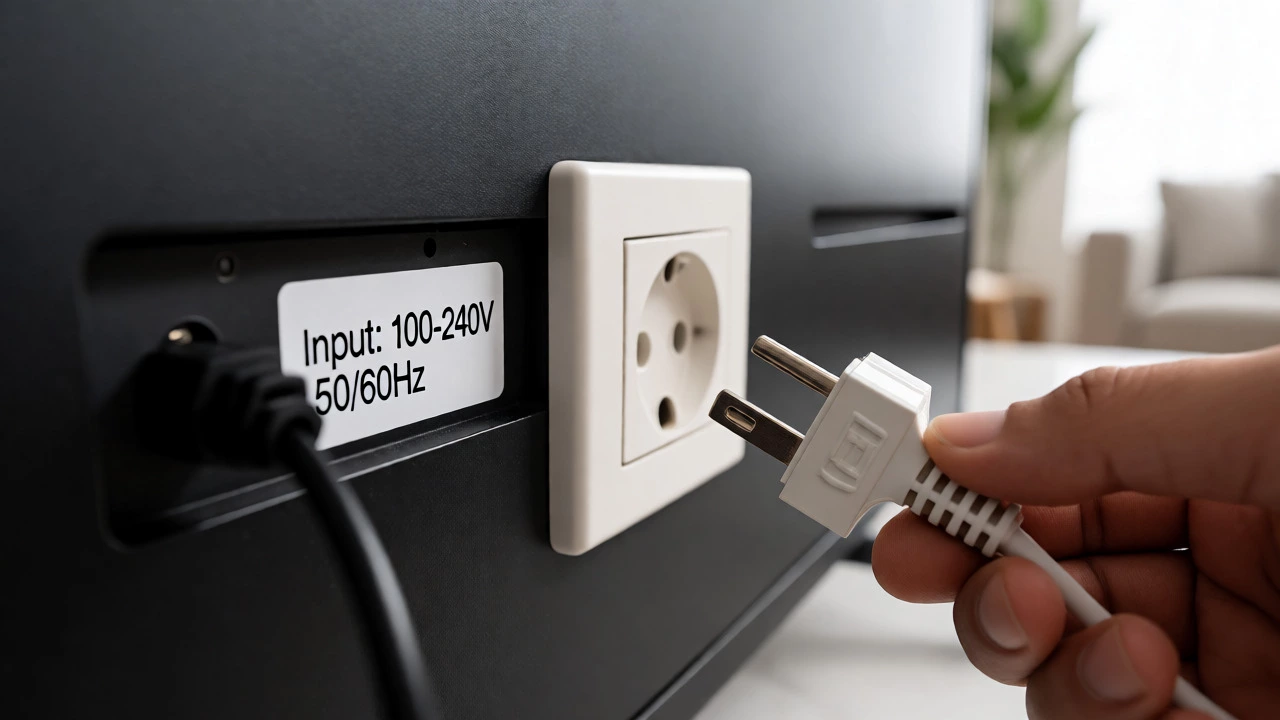
Look at the label on the back of your TV near the power cord.
Choose your primary viewing method in India.
Compatibility Report
You just scored an incredible deal on a 75-inch OLED at Costco or Best Buy. The price is half what it would cost back home in Mumbai or Delhi. You pack it into your checked luggage, dreaming of the massive screen in your living room. But before you plug it in, stop. There is a high chance you are about to blow a fuse-or worse, fry your new television.
The short answer is: it depends entirely on the model and how you power it. Most modern TVs sold in the US are "multi-voltage" capable, meaning they can handle India's 230V grid without exploding. However, that doesn't mean everything works seamlessly. You face three distinct hurdles: electrical compatibility, broadcast signal formats, and warranty voids. If you ignore these, you might end up with a very expensive brick.
The Voltage Trap: 120V vs 230V
This is the biggest killer of imported electronics. The United States runs on a 120V, 60Hz power system. India operates on 230V, 50Hz. If your TV only accepts 120V (common in older models or some budget brands), plugging it directly into an Indian wall socket will likely destroy the internal power supply instantly.
How do you check? Look at the label on the back of the TV, near where the power cord enters. It will say something like "Input: 100-240V, 50/60Hz." If it says 100-240V, you are safe. This is called dual-voltage capability. Most major brands like Samsung, LG, Sony, and Vizio have manufactured multi-voltage sets for over a decade because they sell globally.
If the label says "Input: 110-120V," you cannot plug it in directly. You need a step-down transformer. Do not confuse this with a simple travel adapter. A travel adapter just changes the shape of the plug; it does not change the voltage. Using a cheap $10 adapter on a 120V-only TV in India is a recipe for smoke and sparks.
| Label Reading | Action Required | Risk Level |
|---|---|---|
| 100-240V | Use a plug adapter only | Low |
| 110-120V | Requires heavy-duty step-down transformer | High if ignored |
| Unknown/Missing Label | Do not plug in; check manual online | Critical |
Plug Types and Physical Connections
Even if your TV handles the voltage, the physical plug won't fit. US plugs are Type A (two flat pins) or Type B (with a ground pin). India uses Type C, D, and M sockets. Type C has two round pins; Type D has three large round pins; Type M has three even larger round pins.
You will need a robust plug adapter. For a large TV, ensure the adapter is rated for at least 10 amps. Cheap plastic adapters often melt under the heat generated by high-power devices. A better solution is to cut off the US plug and wire an Indian plug directly onto the cable, but only do this if you are comfortable with electrical work and don't mind voiding any remaining US manufacturer warranty immediately.
Broadcast Signals: NTSC vs. ATSC vs. ISDB-T
Here is where things get technical. US televisions use the ATSC standard for digital over-the-air broadcasts. They also decode NTSC for legacy analog signals. India, however, switched to the DTMB standard for terrestrial digital TV, though many cable operators still deliver signals via coaxial cables using various encoding methods.
Does this matter? Only if you plan to watch live TV via an antenna plugged directly into the TV's RF port. If you do, you will likely see nothing or static because the tuner inside the US TV doesn't speak the local language of Indian broadcasting.
The good news? Almost everyone in India watches TV through set-top boxes (DTH providers like Tata Play, Dish TV, or Airtel Digital TV) or streaming sticks (Firestick, Roku, Apple TV). These devices output HDMI signals. Your US TV will happily accept an HDMI signal from an Indian set-top box. The resolution and frame rate issues (50Hz vs 60Hz) are largely handled by modern HDMI standards, though you might notice slight motion judder if the content is native 50Hz and your TV is locked to 60Hz processing. In practice, most smart TVs auto-detect and adjust.
Warranty and Serviceability Nightmares
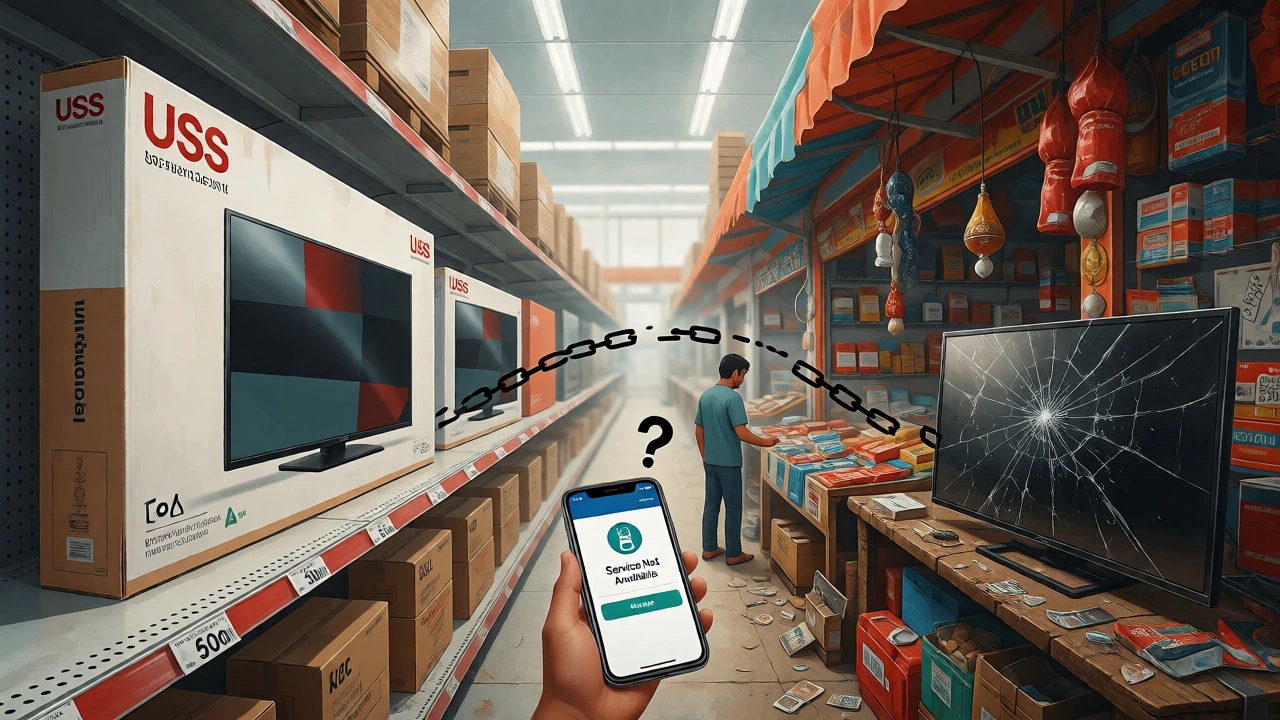
This is the part nobody talks about until the screen goes black. Buying a TV in the US gives you a US warranty. Does that warranty apply in India? Generally, no.
Major manufacturers like Samsung and Sony offer international warranties, but they are rarely straightforward. You might find that the service center in Bangalore refuses to touch a unit purchased in Chicago because the serial number isn't registered in their regional database. Or, they might fix it but charge you for parts that aren't stocked locally.
Consider the logistics. If your 65-inch panel cracks or the mainboard fails, shipping it back to the US for repair is impossible due to size and cost. Finding third-party technicians in India who understand US-specific board layouts can be hit-or-miss. Often, they prefer repairing local models with readily available spare parts.
Smart TV Apps and Regional Locks
Your US Smart TV comes pre-loaded with apps tailored for the American market. Netflix, Amazon Prime Video, Disney+, and Hulu are standard. When you connect to Wi-Fi in India, the TV might detect your IP address as being in India and switch the interface to the Indian store.
This can cause confusion. Some apps might disappear, while others appear. More importantly, the user interface language might default to English (which is fine) but the content library will shift. You lose access to US-exclusive channels unless you use a VPN on your router or stick to global services like YouTube and Netflix (where the catalog differs slightly by region).
Also, consider voice assistants. If your TV has Alexa built-in, it will expect US accents and context. While Alexa India exists, hardware integration can sometimes lag behind software updates. You might find yourself shouting commands that the TV misunderstands.
When Is It Worth the Hassle?
So, should you bring that TV back? Let's weigh the pros and cons.
- Buy it if: The price difference is massive (e.g., >$500 savings), the TV is multi-voltage, and you rely primarily on streaming devices (Apple TV, Fire Stick) rather than the TV's built-in tuner.
- Skip it if: The TV is older (pre-2015), requires a bulky transformer, or if you value peace of mind regarding repairs. Also, skip it if you plan to use the built-in antenna for local Doordarshan channels.
Another factor is customs duty. If you are carrying one personal TV, you usually fall under personal exemption limits, provided it's not brand new in the box with tags attached. Customs officers in India are strict about commercial quantities. If you look like you're importing for resale, they will tax you heavily. Keep the receipt handy to prove the purchase price and date.
Practical Tips for Safe Transport and Setup
If you decide to go ahead, follow these steps to minimize risk:
- Check the Label First: Before leaving the US, verify the voltage input. Take a photo of the label. If it's 100-240V, breathe easy.
- Pack Properly: TVs are fragile. Carry-on is risky for anything over 40 inches. Check-in baggage must be padded well. Remove the stand if possible to reduce profile.
- Bring a High-Quality Adapter: Don't buy the flimsy ones at airport kiosks. Get a grounded, heavy-duty adapter rated for at least 15A.
- Test Immediately: As soon as you land, set it up and test all inputs. Use an HDMI device (like a laptop) to confirm the screen works before discarding packaging.
- Register Online: Try to register the product on the manufacturer's global website. Sometimes this helps establish proof of ownership for future support.
Alternatives to Importing
Before you lug that box around, check prices in India. Brands like Vu, Onida, and Mi (Xiaomi) offer aggressive pricing during festive sales (Diwali, Republic Day). Sometimes, after accounting for potential repair costs and hassle, buying locally is cheaper. Plus, you get a valid Indian warranty card and free installation.
If you really want a US-spec feature, like specific gaming optimizations or Dolby Vision IQ, check if the Indian variant of the same model supports it. Often, the hardware is identical, and the differences are purely software-based regions locks that can be bypassed with DNS settings or firmware tweaks.
Can I use a US TV in India without a transformer?
Yes, if the TV label states "100-240V" input. Most modern TVs (post-2010) from major brands support this range. You only need a physical plug adapter. If the label says "110-120V," you strictly need a step-down transformer to avoid damaging the TV.
Will my US TV receive Indian cable channels directly?
Probably not via the coaxial antenna port. US TVs use ATSC tuners, which may not decode Indian DTMB or analog cable signals correctly. However, if you connect an Indian set-top box via HDMI, the TV will display the channels perfectly, as it treats the signal as a generic video source.
Is the warranty valid in India?
Generally, no. Warranties are regional. While some brands offer limited international coverage, you often have to pay for labor and parts. It is safer to assume the TV has no warranty once it leaves the US.
What happens if I plug a 120V TV into a 230V outlet?
You will likely hear a pop or see smoke. The internal capacitors and power supply components are rated for lower voltage. Overvoltage causes immediate failure, often rendering the TV unusable without expensive component-level repairs.
Do I need to worry about Hz frequency differences?
For movies and games, usually not. Modern panels refresh at 60Hz or higher and handle 50Hz input signals via interpolation. You might notice minor motion artifacts in sports broadcasts originally filmed at 50Hz, but it is rarely a dealbreaker for casual viewing.