
Furniture Startup Budget Estimator (India 2026)
Estimate your initial investment and required working capital. Adjust the sliders to match your specific business plan.
Business Parameters
Estimated Costs (INR)
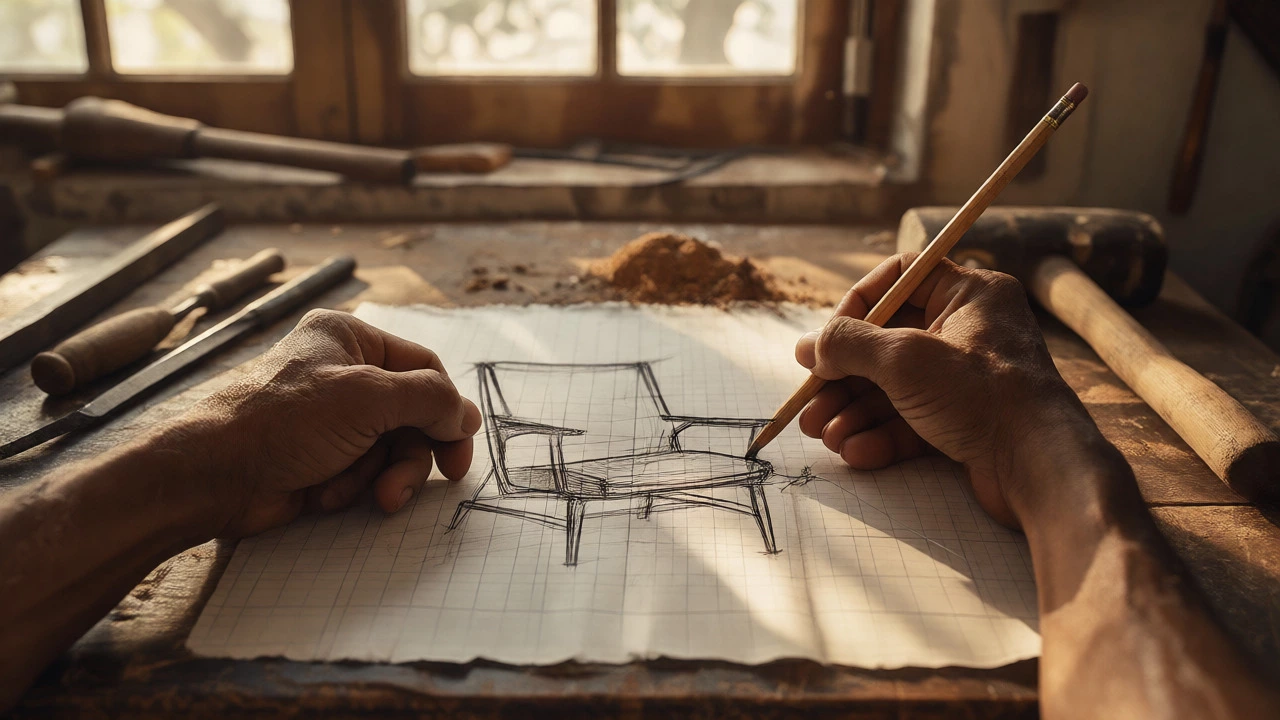
You’re staring at a sketch of a mid-century modern armchair. It looks great. The market wants it. But then the math hits you: how much cash do you actually need to pull this off? In India, the answer isn't a single number-it's a spectrum ranging from ₹5 lakhs for a lean online workshop to over ₹1 crore for a branded retail chain with its own factory.
Most people get this wrong by focusing only on the machinery. They forget that in the Indian context, working capital and raw material procurement are where startups bleed money. If you don't have cash flow planned for three months of idle time while your inventory sits in a warehouse, you're not starting a business; you're starting a hobby with high overheads.
The Core Investment Breakdown
Let’s break down the furniture business cost India landscape into tangible buckets. We aren't talking about vague estimates here. Based on current 2026 market rates in hubs like Jodhpur, Moradabad, and Bangalore, here is what you are looking at for different scales of operation.
| Business Model | Initial Setup Cost | Working Capital (3 Months) | Primary Expense Drivers |
|---|---|---|---|
| Home-Based Workshop | ₹5 - ₹10 Lakhs | ₹2 - ₹5 Lakhs | Basic tools, small batch wood, local marketing |
| Small Scale Manufacturer | ₹25 - ₹40 Lakhs | ₹10 - ₹15 Lakhs | Machinery, rent deposit, skilled labor, GST compliance |
| Retail-First Brand | ₹40 - ₹70 Lakhs | ₹20 - ₹30 Lakhs | Showroom interior, branding, e-commerce logistics, inventory |
| Full-Scale Factory | ₹1 Crore+ | ₹40 Lakhs+ | Industrial land lease, heavy machinery, export certifications |
Real Estate and Location Strategy
Where you set up shop dictates half your costs. In cities like Mumbai or Delhi, commercial rent can eat up 30% of your monthly revenue before you sell a single chair. Compare that to Tier-2 cities like Indore or Coimbatore, where industrial sheds are available for ₹15-₹25 per square foot per month.
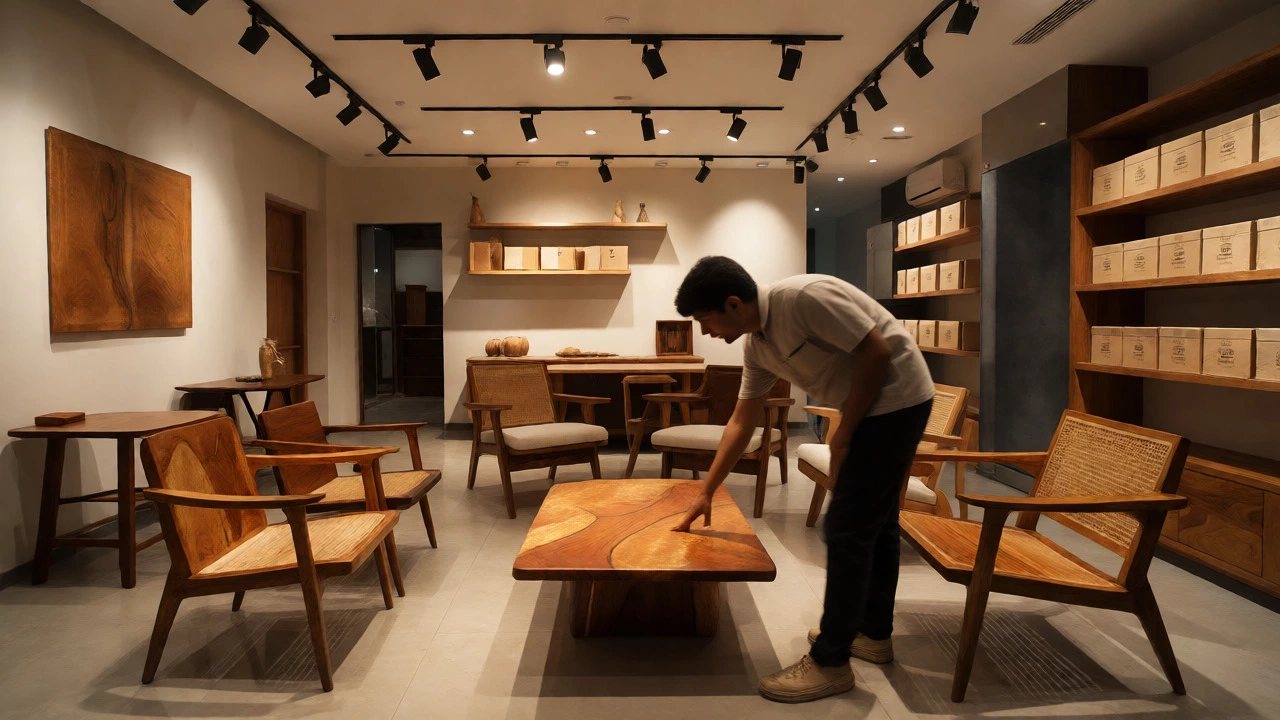
If you are manufacturing, proximity to timber markets matters. Being near Saharanpur or Jodhpur cuts transport costs on raw materials significantly. However, if you are selling directly to consumers, visibility matters more than production efficiency. A small showroom in a residential area of Bangalore might cost ₹1.5 lakh/month in rent, but the footfall converts better than a hidden godown.
Machinery and Equipment: What Do You Actually Need?
You don’t need a CNC machine on day one unless you are doing complex carving. For most startups, manual craftsmanship combined with basic power tools is sufficient. Here is the realistic equipment list for a standard wooden furniture unit:
- Cutting Tools: Table saw and circular saws (₹1.5 - ₹3 Lakhs).
- Shaping: Thickness planer and jointer (₹2 - ₹4 Lakhs).
- Sanding: Industrial drum sander and orbital sanders (₹1 - ₹2.5 Lakhs).
- Finishing: Spray booth and compressor setup (₹1 - ₹2 Lakhs).
- Assembly: Pneumatic nail guns and clamps (₹50,000 - ₹1 Lakh).
Buying second-hand machinery from closing units in Gujarat or Maharashtra can save you 40% of these costs. Just ensure you budget an extra ₹50,000 for immediate repairs and safety upgrades.
Raw Materials and Supply Chain Volatility
This is the silent killer of margins. Wood prices fluctuate based on monsoon seasons and government logging bans. Teak, Sheesham, and Mango wood are staples in India. As of late 2025, seasoned Teak was hovering around ₹8,000-₹10,000 per cubic foot, while Mango wood remained cheaper at ₹1,500-₹2,500 per cubic foot.
You must factor in wastage. In furniture making, 15-20% of raw wood becomes scrap. If you buy ₹10 lakhs worth of wood, assume only ₹8 lakhs ends up in a sellable product. Additionally, hardware-hinges, handles, slides-adds up quickly. A single sofa frame might use ₹2,000 worth of plywood and foam, but ₹500 worth of fittings. Never underestimate the "small stuff."
Labor and Skilled Craftsmanship
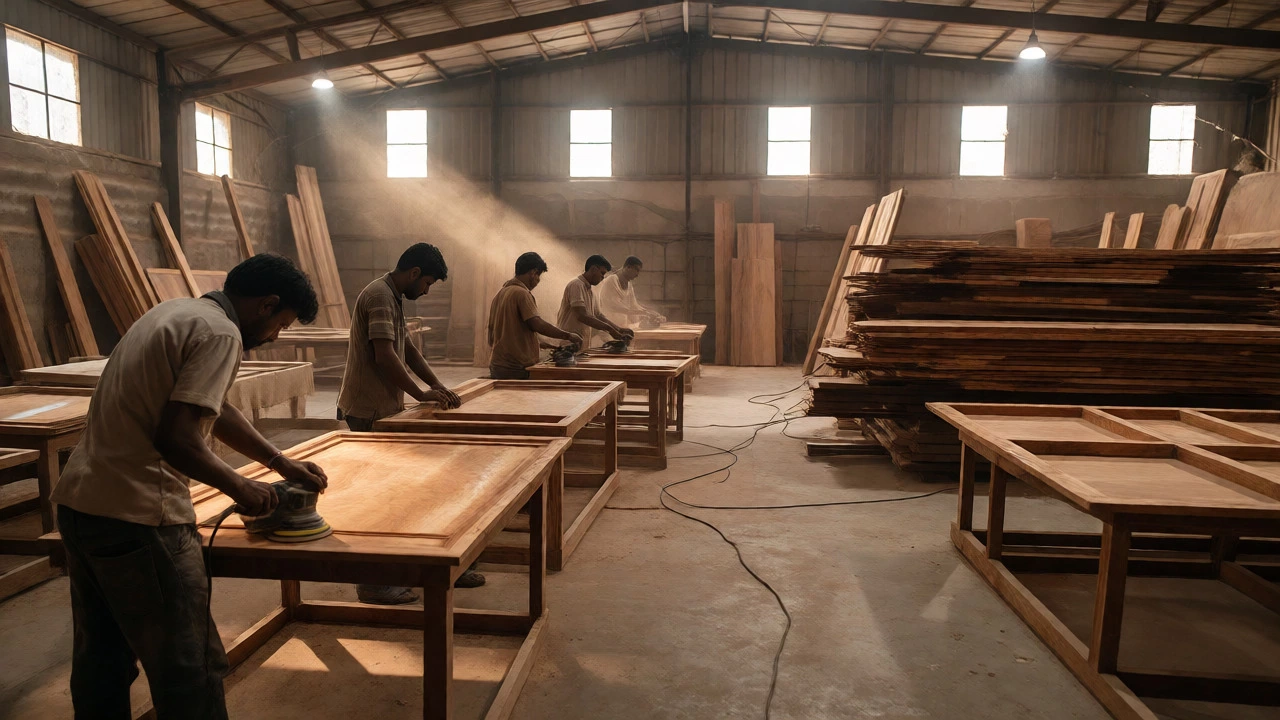
Furniture is labor-intensive. You cannot automate quality easily. In urban centers, a skilled carpenter charges ₹800-₹1,200 per day. In rural clusters, this drops to ₹400-₹600. But rural labor often lacks precision finishing skills required for premium exports or metro customers.
Your payroll will likely be your largest monthly recurring expense after rent. For a small team of five (two carpenters, one polisher, one helper, one manager), expect monthly wages between ₹1.5 and ₹2.5 Lakhs depending on location. Remember to include PF (Provident Fund) and ESIC contributions if you register as a formal employer, which adds roughly 12-15% to your wage bill.
Legal Compliance and Licensing
India’s regulatory environment has simplified slightly, but you still need specific permits. Skipping these leads to fines that wipe out profits.
- GST Registration: Mandatory if turnover exceeds ₹40 lakhs (goods). Furniture attracts 18% GST generally, though some items fall under 12%. Get this done immediately to claim input tax credits on your machinery purchases.
- Udyam Registration: Free MSME registration. This unlocks bank loans and subsidies under the PMEGP scheme.
- Factory License: Required if you employ more than 10 workers with power or 20 without power.
- Pollution Control Board (PCB): Essential for spray painting units due to VOC emissions. Non-compliance can shut you down overnight.
Marketing and Customer Acquisition
Having a good chair means nothing if no one sees it. Traditional advertising (newspapers, hoardings) is expensive and hard to track. Digital marketing offers better ROI for new brands.
Budget ₹20,000-₹50,000 per month initially for social media ads targeting home decor enthusiasts in metros. High-quality photography is non-negotiable. Hire a professional photographer for your first catalog shoot; it costs ₹15,000-₹25,000 but pays for itself through higher click-through rates. If you plan to sell on platforms like Amazon or Flipkart, account for commission fees (15-25%) and logistics costs, which can erode margins if your pricing isn't calculated correctly.
Cash Flow: The Hidden Cost
Here is the truth nobody tells you: furniture businesses are slow-turning. Unlike food or electronics, people don't buy sofas every week. Your inventory might sit for 60-90 days. During this time, you still pay rent, salaries, and electricity.
You need a working capital buffer equal to at least three months of fixed expenses. If your monthly burn rate is ₹3 Lakhs, keep ₹9 Lakhs aside just for survival. Many startups fail not because they lack orders, but because they run out of cash waiting for payment terms from B2B clients who take 60-90 days to pay invoices.
Government Subsidies and Loans
Don't leave free money on the table. The Ministry of Micro, Small and Medium Enterprises offers several schemes relevant to furniture makers.
- PMEGP (Prime Minister’s Employment Generation Programme): Offers subsidies up to 35% on project costs up to ₹50 lakhs for manufacturing units.
- Mudra Loans: Good for smaller setups needing ₹1-₹10 lakhs without collateral.
- Stand-Up India: For SC/ST and women entrepreneurs, offering bank loans between ₹10 lakhs and ₹1 crore.
Apply early. The paperwork takes time, and disbursement isn't instant. Factor this delay into your launch timeline.
Common Pitfalls to Avoid
Over-investing in inventory is mistake number one. Start with 5-10 core designs. Prove they sell before expanding to 50 SKUs. Second, ignoring packaging. Furniture breaks during transit. Poor packaging leads to returns, which cost double in reverse logistics. Invest in robust corrugated boxes and corner guards.
Third, underpricing. New entrants often price low to gain market share. But if your margin doesn't cover customer acquisition costs and return rates, you’ll lose money on every sale. Calculate your landed cost (material + labor + overhead + packaging + shipping) and add a minimum 30-40% margin before adding profit.
Is it cheaper to manufacture or trade furniture in India?
Trading requires lower initial capital (₹5-10 lakhs) since you skip machinery and factory space. However, margins are thinner (15-20%). Manufacturing demands higher upfront investment (₹25+ lakhs) but offers better control over quality and higher long-term margins (30-50%) once established.
What is the average profit margin in the Indian furniture industry?
Net profit margins typically range from 10% to 25% for manufacturers. Retailers often see 15-30% gross margins, but net profits drop after rent and staff costs. Direct-to-consumer online brands can achieve higher margins (20-35%) by cutting out middlemen, provided they manage logistics efficiently.
Do I need a license to start a small furniture workshop?
Yes, you need GST registration if your turnover crosses the threshold. If you hire more than 10 employees using power tools, a Factory License is mandatory. Pollution Control Board consent is also required if you use chemical finishes or spray paint, regardless of size.
How much does it cost to open a furniture showroom in a metro city?
Opening a 1,000 sq ft showroom in cities like Delhi or Mumbai costs ₹15-25 lakhs for interiors and deposits alone. Add ₹10-15 lakhs for initial inventory. Total entry cost is usually ₹30-40 lakhs. Tier-2 cities offer similar spaces for 40-50% less.
Which state is best for starting a furniture manufacturing business?
Uttar Pradesh (Moradabad/Saharanpur) and Rajasthan (Jodhpur) are hubs for traditional craftsmanship and lower labor costs. Karnataka (Bangalore) is ideal for tech-enabled, modern design-focused brands due to access to skilled designers and export infrastructure.