
Global Textile Market Position Analyzer (2026)
India sits firmly at number two in the world for textile production. You might expect it to be first, given the country’s deep historical roots in cotton and handloom traditions. But China holds the top spot, dominating both volume and synthetic fiber output. This ranking isn’t just a statistic; it defines how billions of dollars move through global supply chains every year. If you are looking to understand where India stands today, you need to look beyond the simple rank number. You need to see what drives that position and where the gaps lie.
The Current Standing: Second Place with a Growing Gap
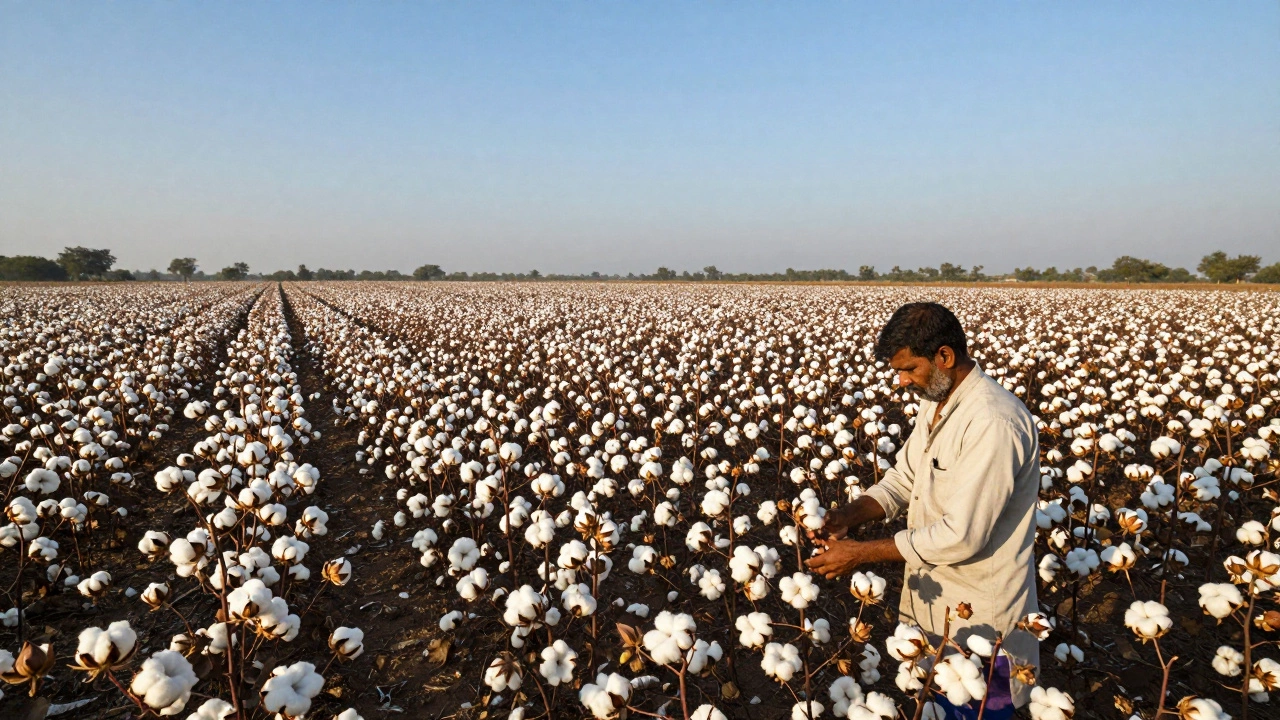
As of mid-2026, India is the second-largest producer of textiles globally. The country contributes roughly 14% to 15% of global textile exports. China, by comparison, accounts for about 35% to 40%. That gap is significant, but it is narrowing in specific segments like organic cotton and sustainable fabrics. India’s strength lies in its raw material base. It is one of the world’s largest producers of cotton, alongside the United States and Brazil. This domestic supply chain reduces dependency on imported fibers, giving Indian manufacturers a cost advantage in natural fiber processing.
The ranking fluctuates slightly depending on whether you measure by value or volume. By volume, India often competes closely with Bangladesh in ready-made garments (RMG), but India wins on total textile output because it includes yarn, fabric, and home textiles. Bangladesh focuses heavily on final assembly, while India covers the entire vertical from farm to fashion. This breadth keeps India’s overall production rank high, even if its garment export numbers sometimes lag behind Southeast Asian rivals.
| Rank | Country | Primary Strength | Global Share (%) |
|---|---|---|---|
| 1 | China | Synthetic fibers, scale, infrastructure | ~38% |
| 2 | India | Cotton, handlooms, diverse product mix | ~15% |
| 3 | Bangladesh | Ready-made garments (RMG), labor costs | ~7% |
| 4 | Vietnam | Garment assembly, trade agreements | ~5% |
| 5 | Turkey | Proximity to Europe, high-quality denim | ~4% |
Why Cotton Keeps India in the Top Two
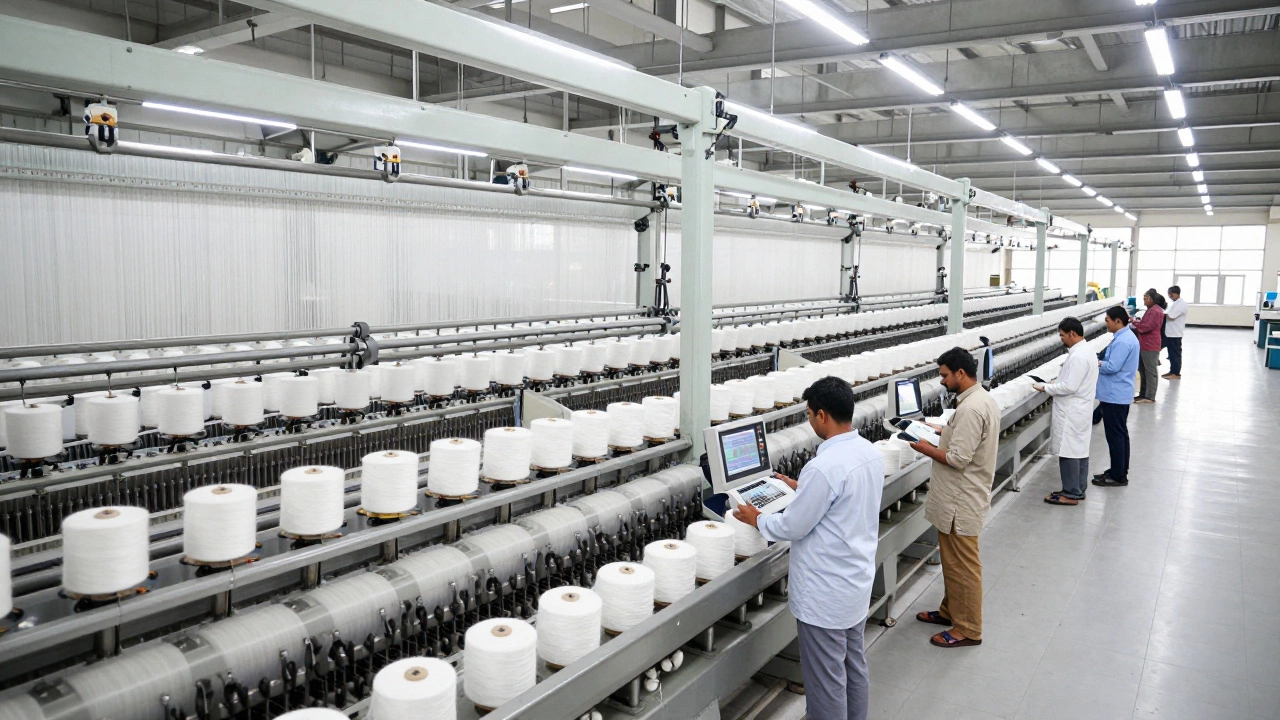
The backbone of India’s textile rank is cotton. The country produces over 6 million tonnes of cotton annually. This makes it the largest exporter of raw cotton in the world. When you control the raw material, you control the initial margin. Indian mills spin this cotton into yarn, which is then woven or knitted into fabric. The efficiency here has improved dramatically. Modern spinning mills in Gujarat and Maharashtra now operate with automation levels comparable to Chinese facilities. This shift from manual labor to technology has boosted productivity per worker, helping India maintain its second-place status despite rising wage costs.
However, there is a catch. While India excels in cotton, it lags in man-made fibers (MMF). China dominates the MMF sector, producing polyester and nylon at scales India cannot match. As global fashion trends shift toward blends and synthetics for durability and performance wear, India’s reliance on natural fibers becomes a vulnerability. To stay ranked number two, India must expand its MMF capacity. The government has recognized this, pushing policies to attract investment in chemical fiber plants. Without this balance, the rank could slip as consumer preferences evolve.
The Fragmentation Problem: Small Units vs. Giants
One reason India hasn’t overtaken China is structural fragmentation. The Indian textile industry is split between large integrated players and millions of small, unorganized units. About 90% of the workforce operates in the informal sector. These small units produce traditional handlooms and niche fabrics, which add cultural value but lack economies of scale. They struggle with consistent quality, timely delivery, and access to credit. In contrast, China’s industry is dominated by large conglomerates that can negotiate better prices for machinery and raw materials.
This fragmentation affects India’s ability to win bulk orders from global fast-fashion brands. Brands like H&M or Zara prefer suppliers who can deliver millions of identical units quickly. Indian exporters often have to stitch together capacity from multiple small factories to meet such demands, increasing logistical complexity. Consolidation is happening, but slowly. Mergers and acquisitions among mid-sized firms are creating stronger entities, yet the sheer number of micro-enterprises remains a drag on overall efficiency.
Export Markets and Trade Dynamics
Where does all this production go? India’s top export markets are the United States, the European Union, and neighboring countries like Sri Lanka and Nepal. The US alone absorbs nearly 30% of India’s textile exports. This dependency creates risk. Tariff changes or trade tensions in Washington can ripple through Indian factories overnight. For instance, recent discussions around cotton subsidies have occasionally sparked friction in WTO talks, reminding us that trade policy directly impacts production rankings.
Compared to Vietnam or Bangladesh, India has fewer free trade agreements (FTAs) with major Western markets. Vietnam benefits from the EU-Vietnam Free Trade Agreement (EVFTA), giving its goods duty-free access to Europe. India relies more on Most Favored Nation (MFN) status, which means higher tariffs apply. This puts Indian products at a price disadvantage in key markets. To compensate, Indian brands focus on higher-value items like designer wear, home furnishings, and technical textiles, rather than competing solely on low-cost basics.
Government Initiatives Boosting the Rank
The Indian government has launched several schemes to solidify its second-place standing. The Production Linked Incentive (PLI) scheme for textiles offers financial incentives for boosting capacity in man-made fibers and technical textiles. The goal is clear: reduce the import bill for synthetic fibers and increase export competitiveness. Additionally, the Amended Technology Upgradation Fund Scheme (ATUF) provides subsidies for modernizing machinery. Factories that upgrade to automated looms and cutting systems report 20-30% increases in output.
Another critical move is the push for sustainability. Global buyers are demanding eco-friendly practices. India is positioning itself as a leader in organic cotton and recycled fibers. Certifications like GOTS (Global Organic Textile Standard) are becoming standard for Indian exporters. This aligns with the growing “green” trend in Europe and North America. By leading in sustainable textiles, India differentiates itself from competitors who rely on cheaper, polluting methods. This strategic pivot helps maintain relevance even if pure volume growth slows.

Challenges Threatening the Number Two Spot
Despite the strong position, threats loom. Labor unrest is periodic, with strikes disrupting production in key hubs like Tiruppur and Surat. Infrastructure bottlenecks, particularly port congestion and power fluctuations, add hidden costs. Logistics expenses in India are higher than in China or Vietnam, eating into profit margins. Furthermore, skill shortages persist. While there are many workers, there is a deficit of trained technicians for advanced machinery. Vocational training programs are expanding, but the pipeline needs to widen faster to keep pace with technological adoption.
Geopolitical shifts also play a role. The “China Plus One” strategy encourages brands to diversify away from China. This benefits India, but it also boosts Vietnam, Bangladesh, and Cambodia. Competition is fierce. If India fails to streamline its regulatory environment and improve ease of doing business, these neighbors could capture a larger share of the diverted demand. Speed matters. Buyers want quick turnaround times, and bureaucratic delays can cost contracts.
Future Outlook: Can India Move to First?
Overtaking China seems unlikely in the next five years. China’s scale, infrastructure, and integrated supply chain are deeply entrenched. However, India can strengthen its number two position significantly. The focus should be on moving up the value chain. Instead of just exporting raw yarn or grey fabric, India should aim for finished, branded products. Technical textiles-used in healthcare, automotive, and defense sectors-offer higher margins and less competition. Expanding this segment could boost India’s global share without needing massive volume increases.
Digital transformation is another lever. Adopting AI for demand forecasting and blockchain for supply chain transparency can make Indian manufacturers more attractive to premium buyers. Startups in the textile tech space are emerging, offering solutions for waste reduction and energy efficiency. Integrating these innovations will help India compete not just on price, but on reliability and sustainability. The rank is secure for now, but maintaining it requires continuous evolution.
What is India's exact rank in global textile production?
India is ranked second in the world for textile production, following China. It holds approximately 15% of the global market share.
Which country produces the most textiles?
China is the largest producer of textiles globally, accounting for nearly 40% of worldwide production. It leads in both natural and synthetic fibers.
Why is India not the number one textile producer?
India trails China due to smaller scale in synthetic fiber production, fragmented industrial structure, and lower automation levels in some sectors. China’s integrated supply chain and massive infrastructure give it an edge in volume and speed.
What are India's main strengths in the textile industry?
India’s strengths include being a top cotton producer, a vast skilled workforce, a strong handloom tradition, and leadership in organic and sustainable textiles. Its diverse product range from yarn to finished garments also adds resilience.
How does India compare to Bangladesh in textiles?
Bangladesh is a major competitor in ready-made garments (RMG), often ranking third globally. India ranks higher in total textile output because it includes raw materials, yarn, and fabric, whereas Bangladesh focuses primarily on garment assembly.
Is India's textile rank improving or declining?
India’s rank is stable at second place, but its market share is gradually growing. Government incentives and a shift toward high-value technical textiles are strengthening its position against competitors like Vietnam and Bangladesh.
What challenges does the Indian textile industry face?
Key challenges include infrastructure gaps, high logistics costs, labor disputes, dependence on cotton versus synthetics, and fewer free trade agreements compared to regional rivals. Skill shortages in operating advanced machinery also pose a hurdle.
Who are the main buyers of Indian textiles?
The United States is the largest buyer, followed by the European Union. Other significant markets include Sri Lanka, Nepal, and the Middle East. Diversifying these markets is a current priority for Indian exporters.