
Indian Car Manufacturer Match-Up
Test your knowledge on who leads the Indian roads. Select a question below or compare brands directly.
Loading...
Quiz Complete!
Your Score: 0/5
Market Share (PV)
Key Strength
-
Flagship Models
-
EV Position
-
Market Share (PV)
Key Strength
-
Flagship Models
-
EV Position
-
You might assume that because Tata Motors owns Jaguar and Land Rover, they are the undisputed king of Indian roads. But if you look at who actually puts cars on the streets of Delhi, Mumbai, and Bangalore every single month, the answer shifts dramatically. The title of largest car manufacturer in India currently belongs to Maruti Suzuki. This isn't just a close race; it's a massive gap. While Tata has made incredible strides with electric vehicles and luxury exports, Maruti’s dominance in the passenger vehicle segment remains unchallenged by sheer volume.
Why does this matter to you? Whether you're buying your first hatchback, investing in auto stocks, or just curious about where India stands in the global supply chain, understanding the hierarchy of manufacturers reveals how the country builds its economy. It’s not just about who sells the most units; it’s about which companies have mastered the art of cost-effective engineering for the price-sensitive Indian consumer.
The Undisputed Leader: Maruti Suzuki
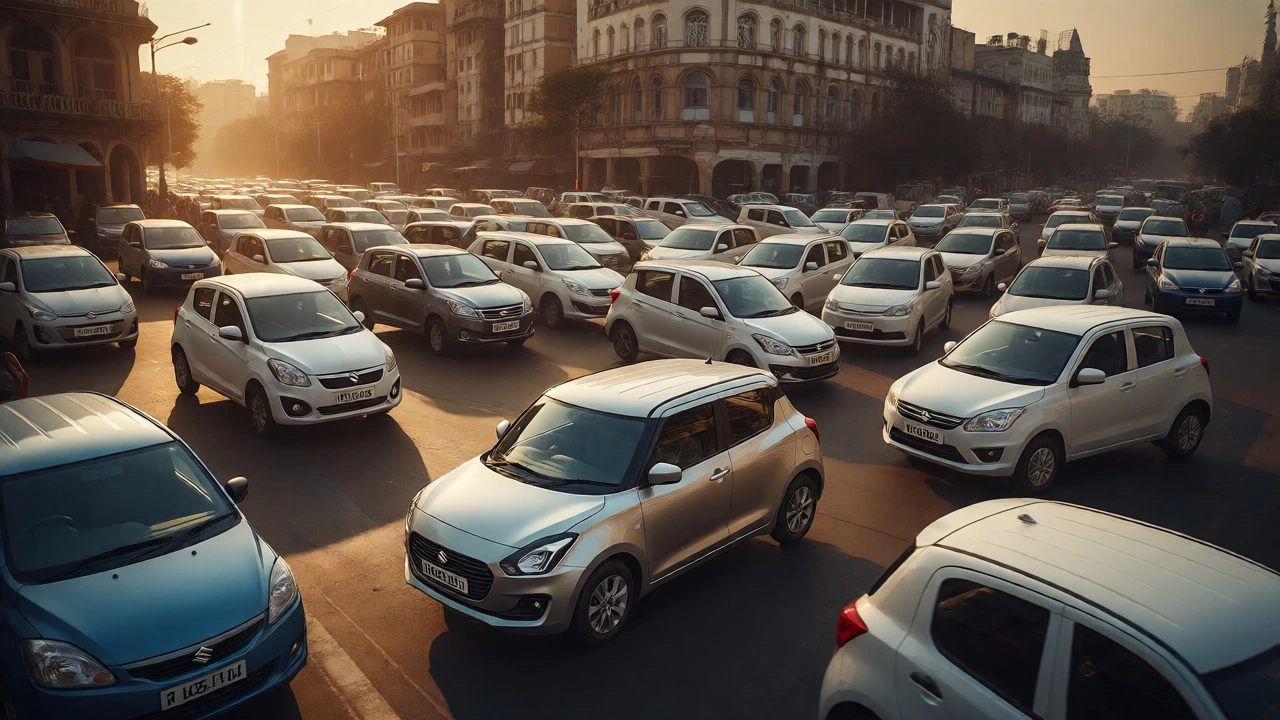
Let’s cut straight to the data. As of the latest fiscal reports leading into 2026, Maruti Suzuki holds approximately 40-45% of the entire passenger vehicle (PV) market share in India. That is nearly half of every new car registered in the country. How did they get here? It wasn’t magic. It was a strategic partnership formed in 1983 between the Indian government and Japanese automaker Suzuki Motor Corporation. They built a factory in Gurugram, Haryana, focused on one thing: making small, reliable, and affordable cars.
Think about the Alto, Swift, and Baleno. These aren't just models; they are cultural icons in India. For decades, when an Indian family saved enough money to move from a two-wheeler to a four-wheeler, they bought a Maruti. Why? Because the resale value is rock solid, spare parts are available in every village, and the mileage keeps running costs low. This ecosystem creates a moat that competitors struggle to cross.
Maruti’s production capacity exceeds 1.7 million units annually across their three plants in Haryana and Gujarat. In 2025 alone, they sold over 1.5 million domestic units. Compare that to the next closest competitor, and the scale becomes obvious. They don’t just manufacture cars; they manufacture trust.
The Challenger: Tata Motors
If Maruti is the king of entry-level and mid-range sedans and hatchbacks, Tata Motors is the aggressive challenger trying to redefine what an Indian car looks like. Tata is the second-largest passenger vehicle manufacturer, but they operate differently. While Maruti focuses on volume through affordability, Tata pushes hard on safety ratings, design, and increasingly, electric mobility.
In recent years, Tata has surged in popularity thanks to models like the Nexon and Punch. The Punch, in particular, became a bestseller almost overnight, eating into Maruti’s territory in the sub-compact SUV segment. Tata’s market share hovers around 15-17%, which sounds small compared to Maruti’s 40%, but remember: Tata also dominates the commercial vehicle segment (trucks and buses), where they hold over 50% of the market.
Here is a critical distinction many people miss: When we talk about "car manufacturer," we usually mean passenger vehicles. If you include commercial vehicles, Tata’s total revenue and unit sales are much closer to Maruti’s. However, in the specific context of personal transportation-the cars you drive to work-Maruti still leads by a wide margin. Tata’s strength lies in its vertical integration. They own JLR (Jaguar Land Rover), giving them access to premium technology that trickles down into their mass-market cars.
Other Major Players in the Game
Beyond the big two, the landscape is crowded with strong contenders. Mahindra & Mahindra ranks third in passenger vehicles but is the absolute leader in utility vehicles (UVs) and tractors. Mahindra doesn’t try to compete in the tiny hatchback segment. Instead, they focus on rugged SUVs like the Thar and XUV700. Their strategy works because Indians love SUVs, even if they never leave the city. Mahindra’s market share sits around 12-14%.
Hyundai Motor India is the fourth-largest player. Hyundai was the first foreign private company to enter India after liberalization in 1996. They brought better features and styling than Maruti initially offered. Today, they hold about 10-12% of the market. Models like the Creta are perennial favorites in the compact SUV space.
Then there are the niche players. Toyota Kirloskar and Honda Cars India each hold smaller shares (around 4-5%), focusing on reliability and hybrid technology respectively. Kia, though newer, has quickly grabbed 3-4% by offering feature-rich cars at competitive prices.
Market Share Breakdown: Who Sells What?
To visualize the hierarchy, look at this snapshot of the Indian Passenger Vehicle market share based on recent annualized sales data:
| Rank | Manufacturer | Approx. Market Share | Key Strength | Flagship Models |
|---|---|---|---|---|
| 1 | Maruti Suzuki | 42% | Affordability & Service Network | Swift, Baleno, Alto, Brezza |
| 2 | Tata Motors | 16% | Safety & EV Leadership | Nexon, Punch, Harrier |
| 3 | Mahindra & Mahindra | 13% | SUV Dominance | XUV700, Thar, Scorpio-N |
| 4 | Hyundai Motor India | 11% | Features & Design | Creta, Venue, i20 |
| 5 | Kia India | 4% | Value for Money | Seltos, Sonet, Carens |
| 6 | Toyota Kirloskar | 4% | Reliability & Hybrids | Glanza, Urban Cruiser Hyryder |
Notice how the top four control roughly 82% of the market. This oligopoly means that if you buy a new car in India today, there is a very high chance it came from one of these four factories.
Why Maruti Still Wins on Volume
You might ask, "If Tata cars are safer and Hyundai cars are fancier, why do people still buy so many Marutis?" The answer lies in three factors: Total Cost of Ownership (TCO), availability, and habit.
- TCO: Maruti cars depreciate slower than almost any other brand. You can sell a five-year-old Swift for a decent price. Try selling a five-year-old European brand car, and you’ll lose a chunk of money.
- Availability: Maruti has over 3,700 dealerships and 4,500 service touchpoints. You can find a mechanic for a Maruti in remote towns where a Kia service center might be 100 kilometers away.
- Habit: Generations of Indians grew up with Maruti. There is a psychological comfort in choosing the "safe bet." Deviating from this requires a strong reason, like wanting an SUV (where Mahindra wins) or an EV (where Tata wins).
Furthermore, Maruti’s joint venture status allows them to leverage Suzuki’s global R&D while keeping local manufacturing costs incredibly low. Their localization rate (percentage of parts made in India) is over 90%, insulating them from currency fluctuations and import duties.
The Rise of Electric Vehicles: Does It Change the Ranking?
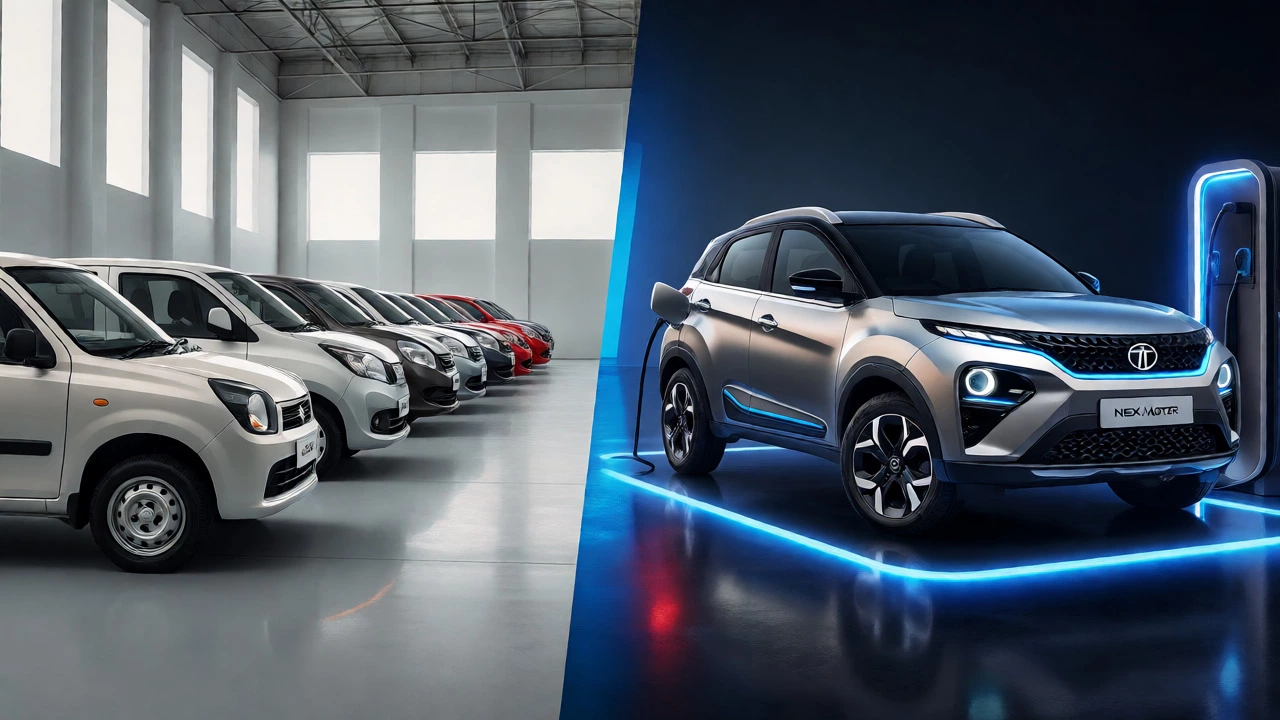
This is where things get interesting. In the Internal Combustion Engine (ICE) world, Maruti is untouchable. But in the Electric Vehicle (EV) segment, Tata Motors is the clear leader. Tata controls roughly 60-70% of the electric passenger vehicle market in India. Models like the Nexon EV and Tiago EV are everywhere.
However, EVs still make up only about 3-5% of total car sales in India. So, while Tata dominates the future-facing segment, Maruti’s massive ICE volume keeps them firmly at number one overall. Maruti is slowly entering the EV space with rebadged Toyota hybrids and upcoming electric models, but they are playing catch-up here. If EV adoption accelerates faster than expected, Tata could close the gap significantly by 2030. But for now, in 2026, volume rules, and Maruti has the volume.
Global Context: Where India Fits In
India is the third-largest automobile market in the world by unit sales, behind China and the United States. The "largest manufacturer" question often spills over into export numbers. Interestingly, Maruti Suzuki is also the largest exporter of passenger cars from India, shipping millions of units to Africa, Latin America, and Asia. This reinforces their position as the industrial backbone of Indian automotive manufacturing.
Companies like Hyundai and Renault use India as a global export hub too. But no one matches Maruti’s combined domestic and export footprint. This dual engine makes them resilient. Even if domestic sales dip, export orders keep the factories humming.
What This Means for Buyers and Investors
If you’re a buyer, knowing the market leader helps you gauge support infrastructure. A Maruti offers peace of mind; a Tata offers modernity and safety; a Mahindra offers ruggedness. Choose based on your priority.
If you’re an investor, understand that Maruti’s stock performance is tied to mass-market sentiment. It’s a defensive play. Tata is a growth play, driven by EV adoption and JLR’s recovery. Mahindra is a cyclical play tied to rural income and SUV trends.
The landscape is shifting, but slowly. The entrenched network of Maruti Suzuki ensures they remain the largest manufacturer for the foreseeable future. Yet, the rise of Chinese entrants like MG Motor (owned by SAIC) and potential new players like Tesla (if they establish local manufacturing) could disrupt the status quo within the decade.
Is Tata Motors bigger than Maruti Suzuki?
No, not in terms of passenger vehicle sales volume. Maruti Suzuki sells significantly more cars domestically than Tata Motors. However, Tata Motors may have higher consolidated revenues due to its ownership of Jaguar Land Rover and its dominance in the commercial vehicle sector. For personal car buyers, Maruti is the larger entity.
Which company is the largest car manufacturer in the world?
Globally, Toyota Motor Corporation is typically ranked as the largest car manufacturer by unit sales, followed closely by Volkswagen Group and Hyundai Motor Group. Maruti Suzuki is a subsidiary/partner of Suzuki Motor Corporation, which is a major global player but not the largest.
Why is Maruti Suzuki so popular in India?
Maruti’s popularity stems from its low maintenance costs, high resale value, extensive service network, and fuel-efficient engines. It was the first brand to make car ownership accessible to the middle class in India, creating deep brand loyalty that persists today.
Who is the largest manufacturer of electric cars in India?
Tata Motors is currently the largest manufacturer of electric passenger vehicles in India, holding the majority of the EV market share with models like the Nexon EV and Tiago EV. Other players like MG and BYD are growing, but Tata leads in volume.
Does Mahindra manufacture more cars than Hyundai?
Yes, Mahindra & Mahindra generally sells more passenger vehicles than Hyundai in India. Mahindra focuses heavily on the SUV segment, which is booming, while Hyundai competes strongly in the sedan and compact SUV segments. Mahindra consistently ranks third in PV sales.