
Home Manufacturing Profitability Calculator
Enter Your Business Details
Profit Analysis
Enter your details and click Calculate to see your potential earnings.
You probably think making money from home means selling your old clothes on eBay or doing freelance writing. But what if you could actually manufacture products right in your garage or spare room? The truth is, some of the highest-margin businesses today aren't in massive factories-they're in homes. People are tired of mass-produced junk and are willing to pay a premium for things made by hand, with care, and often with a story behind them.
The question isn't just "what can I make?" It's "what can I make that people will buy repeatedly at a high markup?" Let's look at the specific types of home-based manufacturing that actually generate significant revenue, not just pocket change.
Why Small-Scale Production Is Booming
The shift toward Direct-to-Consumer (DTC) business models where manufacturers sell directly to customers without intermediaries has changed everything. In the past, you needed a distributor, a retailer, and a marketing budget to get a product into someone's hands. Now, platforms like Etsy, Shopify, and Amazon Handmade let you skip the middlemen. This means you keep more profit per unit.
Think about it this way: A candle maker who sells through a big-box store might see $5 per candle after fees and costs. That same maker selling directly online can charge $25, cover their materials and shipping, and still clear $15-$18 in pure profit. The barrier to entry is low, but the ceiling is surprisingly high if you nail your niche.
Cosmetics and Personal Care: High Margins, Repeat Buyers
If you want recurring revenue, look no further than soap, lotion, and skincare. These are consumables. Once a customer likes your bar of soap, they need another one every few weeks. This creates a loyal customer base that buys automatically.
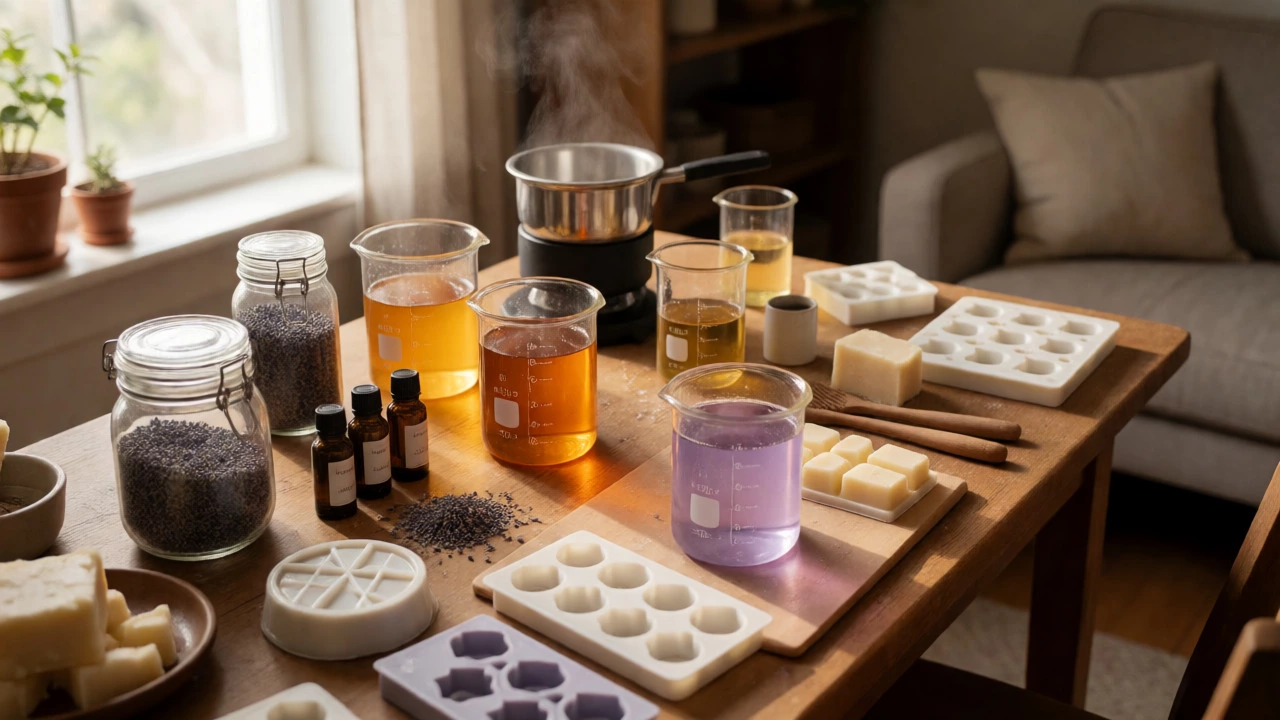
Artisanal Soap Making the process of creating handmade soaps using natural ingredients and essential oils is particularly lucrative because the raw materials-shea butter, coconut oil, lavender-are relatively cheap when bought in bulk, but the perceived value is high. You're not just selling soap; you're selling relaxation, scent, and skin health.
- Startup Cost: Low ($100-$300 for molds, lye, oils, safety gear).
- Profit Margin: Often 60-70%.
- Key Challenge: Compliance. You must label ingredients correctly according to FDA guidelines (in the US) or local regulations.
Don't underestimate the power of branding here. A generic bar of soap sells for $3. A bar labeled "Hand-Poured Lavender & Oatmeal for Sensitive Skin" sells for $9. The product is nearly identical, but the packaging and story drive the price up.
Custom Furniture and Woodworking: The 'IKEA Effect'
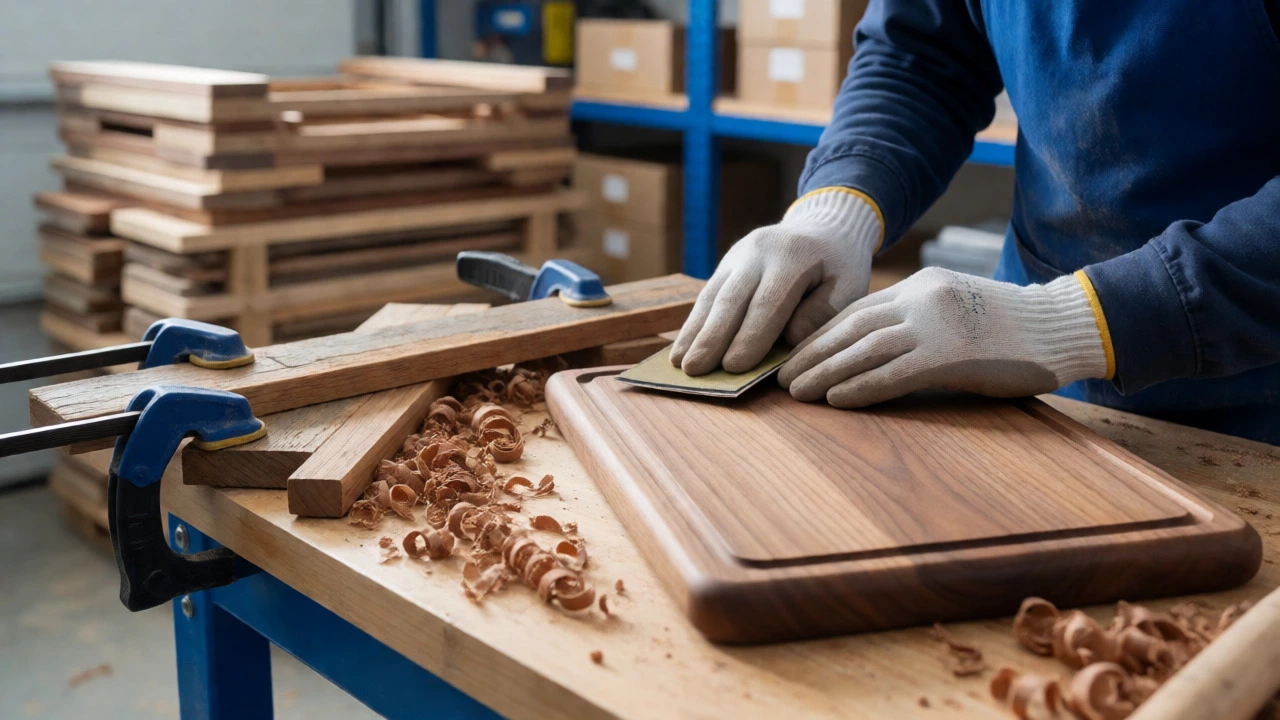
People love furniture they can assemble themselves, but they love custom pieces even more. If you have space for a workshop-even a small one-Small-Batch Woodworking producing limited quantities of high-quality wooden goods such as cutting boards, shelves, and tables can be incredibly profitable.
Why? Because mass-produced furniture often lacks character. Customers pay extra for unique grain patterns, sustainable wood sources, and custom dimensions. A simple walnut cutting board might cost you $15 in lumber and finish. Sell it for $65. Do ten of those a week, and you've got a solid side income. Scale it up to coffee tables or shelving units, and the numbers grow fast.
Pro Tip: Focus on "flat-pack" friendly designs. Shipping large furniture is a nightmare for home-based businesses due to freight costs. Items that can be disassembled or shipped via standard parcel services (like UPS/FedEx) are easier to manage and keep margins healthy.
Food Processing: Niche Snacks and Sauces
Everyone eats. But not everyone has time to cook. This is where Home Food Production preparing and packaging food products in a residential kitchen under cottage food laws shines. Think hot sauces, spice blends, granola, or baked goods.
The key here is regulation. Most regions have "Cottage Food Laws" that allow you to sell certain non-hazardous foods from home without a commercial kitchen license. Check your local rules. Hot sauce, for example, is often easier to permit than dairy-based items because its acidity makes it shelf-stable.
| Niche | Avg. Startup Cost | Typical Markup | Repeat Purchase Rate | Regulatory Burden |
|---|---|---|---|---|
| Artisanal Soaps/Cosmetics | $200 | 4x-6x | High | Moderate (Labeling) |
| Woodworking (Small Items) | $500+ | 3x-5x | Low | Low |
| Specialty Foods (Sauces/Spices) | $300 | 5x-8x | Very High | High (Health Permits) |
| Print-on-Demand Apparel | $50 | 2x-3x | Medium | None |
| Jewelry (Resin/Metal) | $150 | 5x-10x | Low | None |
Foods require strict hygiene and labeling, but the repeat rate is unbeatable. If someone loves your spicy chili crisp, they'll buy a jar every month. That's predictable cash flow.
Jewelry and Accessories: Low Weight, High Value
Shipping costs can kill a home business. Jewelry solves this problem. A pair of earrings weighs ounces, fits in an envelope, and can sell for $50-$200 depending on materials and design. Handcrafted Jewelry creating accessories using metals, beads, resin, or stones allows for extreme creativity with minimal inventory space.
Resin jewelry, in particular, has exploded in popularity. You pour resin into molds, add dried flowers or pigments, cure it, and polish it. The material cost is pennies. The sale price is dollars. However, the market is saturated. To make real money, you need a distinct style. Are you doing minimalist gold-filled pieces? Or chunky, colorful statement necklaces? Don't try to be everything to everyone.
Textiles and Custom Apparel
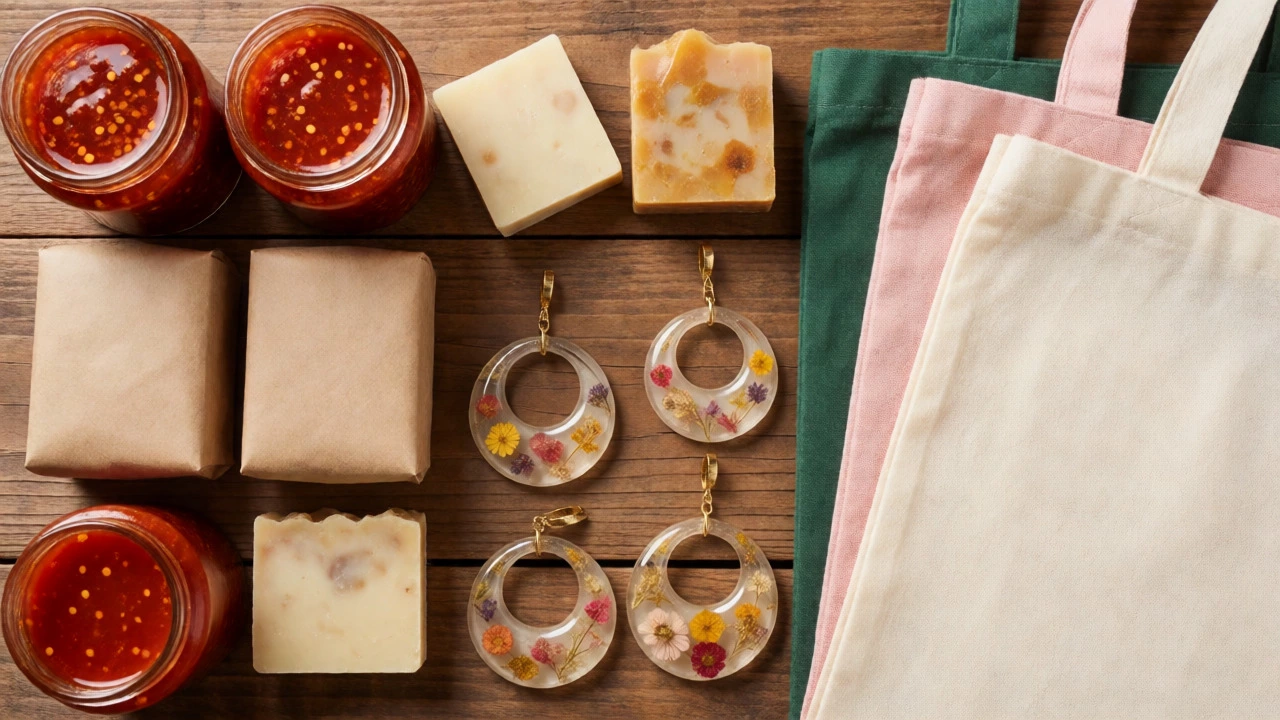
You don't need to sew everything from scratch. Many home manufacturers use Print-on-Demand a method where products are printed and shipped only after an order is placed or heat-press vinyl to customize blank t-shirts, tote bags, and hats. While the margins are lower (because you're paying for the blank item), the volume can be higher.
For higher margins, consider sewing custom-fit items. Dog bandanas, baby quilts, or personalized aprons. These are gift-friendly, which means sales spike during holidays. If you can automate part of the process (like using a Cricut machine for cutting vinyl), you can scale production without hiring staff.
How to Choose Your Niche
So, how do you pick? Don't just follow trends. Look at three factors:
- Your Space: Do you have fumes? (Paints, resins). Do you need water access? (Soaps, food). Can you handle noise? (Saws, grinders). Match the business to your home environment.
- Your Skills: Are you artistic? Go for jewelry or decor. Are you practical? Try woodworking or functional home goods. Are you organized? Food processing requires meticulous record-keeping.
- Market Demand: Search Etsy and Amazon for your idea. If there are thousands of sellers with similar products, you'll struggle to stand out. Look for gaps. Maybe there are plenty of ceramic mugs, but not many with ergonomic handles for arthritis sufferers. That's a niche.
Remember, the goal isn't just to make a product. It's to solve a problem or fulfill a desire. People buy candles for ambiance. They buy custom cutting boards for status. They buy hot sauce for excitement. Identify the emotion, then build the product around it.
Pitfalls to Avoid
Many home manufacturers fail because they ignore the boring stuff. Here’s what trips people up:
- Underpricing: Beginners often charge too little because they forget to pay themselves. Calculate labor hours. If it takes you an hour to make a $20 item, and you only spend $5 on materials, you're earning $15/hour before taxes. That's barely minimum wage in many places. Price accordingly.
- Inventory Bloat: Don't buy 100 units of supplies until you've sold 10 units of product. Start small. Test demand.
- Ignoring Shipping: Free shipping is expected by many buyers. Factor the cost of boxes, tape, and postage into your price. If you don't, you'll lose money on every sale.
Starting a home-based manufacturing business is about blending craft with commerce. It requires patience, but the ability to create something tangible and sell it directly to happy customers is deeply rewarding-and yes, quite profitable.
Do I need a business license to manufacture products at home?
Yes, in most jurisdictions, you need a general business license and possibly a seller's permit. Additionally, specific industries like food and cosmetics have stricter regulations. For food, you may need a cottage food license. For cosmetics, you must comply with labeling laws. Always check your local city and state/provincial requirements before starting.
What is the most profitable home manufacturing business for beginners?
Artisanal soap making and specialty food items (like spice blends or hot sauces) are often cited as top choices for beginners. They have low startup costs, high profit margins, and strong potential for repeat customers. However, profitability depends heavily on your ability to market effectively and find a unique niche.
Can I run a manufacturing business from my apartment?
Yes, but with limitations. You need to consider noise, smells, and space. Businesses like jewelry making, candle pouring, or digital printing work well in apartments. Heavy machinery or messy processes like woodworking or large-scale soap curing might be difficult unless you have a dedicated workspace or access to a shared studio.
How much does it cost to start a home manufacturing business?
Costs vary widely. A print-on-demand apparel business can start for under $100. A soap-making setup might cost $200-$500. A woodworking shop could require $1,000+ for tools and safety equipment. Budget for initial inventory, packaging, website fees, and legal permits.
Is dropshipping considered home manufacturing?
No. Dropshipping involves selling products that a third party manufactures and ships. Home manufacturing implies you are involved in the creation, assembly, or finishing of the product. Print-on-demand is a hybrid model where you design the product, but a partner prints and ships it.