Mixing in Manufacturing: How Blending Materials Powers Indian Industry
When you think of manufacturing, you picture machines, assembly lines, robots—but the real magic often starts with something simple: mixing, the process of combining two or more substances to create a uniform product. Also known as material blending, it’s the unseen step that turns raw ingredients into reliable, high-quality outputs across industries. Whether it’s plastic pellets mixed with colorants, chemicals blended for pharmaceuticals, or dough for bakery products, getting the mix right makes or breaks the final product.
Mixing isn’t just stirring stuff together. It’s a science that depends on mixing equipment, specialized machinery designed to handle specific materials under controlled conditions—like ribbon blenders for dry powders, high-shear mixers for thick pastes, or continuous mixers for large-scale production. In Gujarat’s chemical hubs or Pune’s electronics component factories, the right mixer can cut waste by 30% and boost output speed. Poor mixing? That’s where batch failures happen, recalls start, and margins vanish.
This is why Indian manufacturers are upgrading their mixing systems faster than ever. With government incentives for automation and rising demand for consistent quality, even small shops are ditching manual stirring for precision blenders. You’ll find this shift in everything from textile dyes to food additives to battery electrolytes. The goal isn’t just to combine ingredients—it’s to control how they interact, at what speed, under what temperature, and for how long. And that’s where the real value lies.
Below, you’ll find real examples of how mixing shows up in surprising places—from the plastics that wrap your snacks to the chemicals powering India’s pharma boom. These aren’t theory pieces. They’re stories from factories, workshops, and labs where someone figured out how to get the mix just right—and turned it into profit.
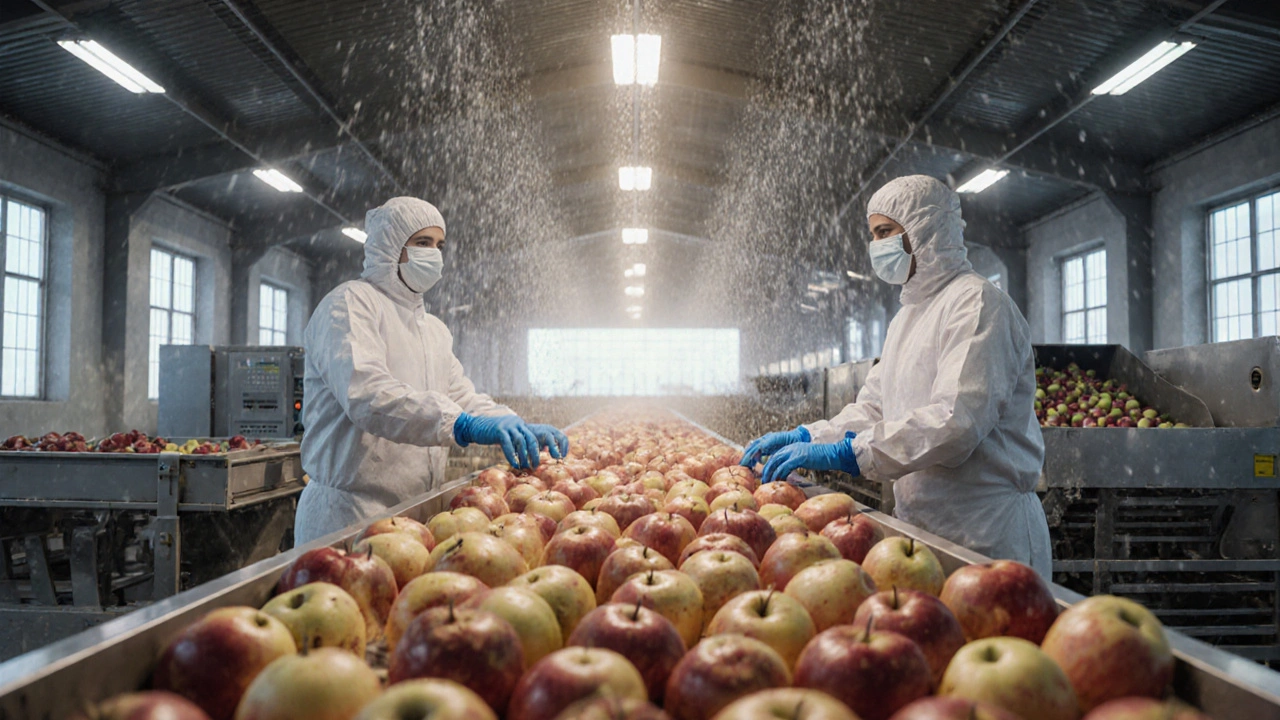
What Are the Basic Unit Operations in Food Processing?
Learn the seven basic unit operations in food processing-cleaning, mixing, separation, heating, drying, size reduction, and packaging-that turn raw ingredients into safe, shelf-stable food products.
Food Processing
Latest Posts



Tags
- manufacturing
- small scale manufacturing
- plastic manufacturing
- India
- plastic pollution
- food processing
- textile industry
- government schemes
- electronics manufacturing
- small business
- steel manufacturing
- startup ideas
- production
- textile manufacturers India
- manufacturing business ideas
- business ideas
- chemical manufacturers India
- electronics manufacturing India
- steel manufacturing plants
- manufacturing business