
Small Manufacturing Cost Calculator
Calculate Your Real Production Cost
Understand your true cost per unit by accounting for hidden expenses. Avoid the #1 mistake that kills 60% of small manufacturers.
Based on data from Indian small-scale manufacturing businesses
Enter your values and click 'Calculate' to see your real production cost per unit.
Key Insights
Hidden Costs Alert: Small manufacturers often miss 3-5 critical cost categories. Your current setup is missing costs that could be eroding your profits.
Remember: If your price is below your true cost, you're losing money on every unit. As in the article example, skipping rust prevention coating cost a manufacturer ₹8 per unit - and destroyed his reputation.
More than 60% of small scale manufacturing businesses in India shut down within five years. Not because they lack good products. Not because they don’t work hard. But because they keep making the same three mistakes over and over again.
They don’t understand their real costs
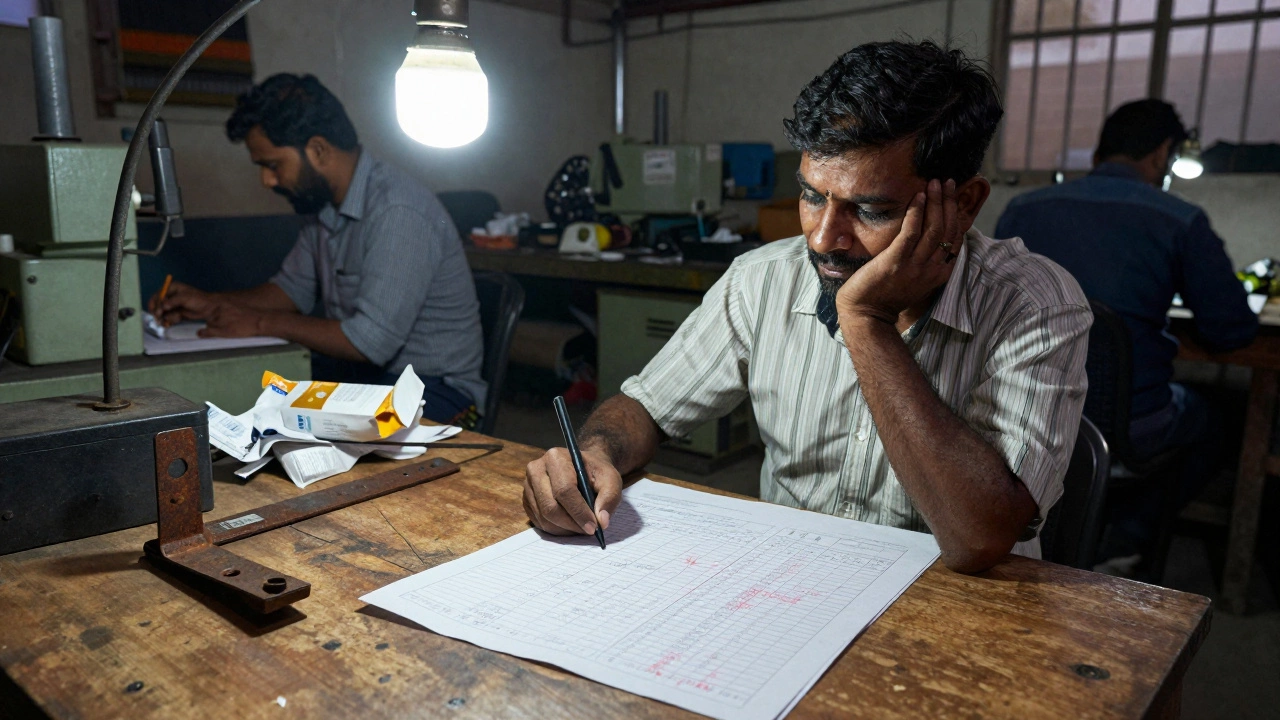
Most small manufacturers start by looking at the price of raw materials and labor. That’s it. They forget about everything else. The cost of electricity when machines run for 12 hours. The waste from defective parts. The time lost when a machine breaks and no one knows how to fix it. The storage fees for unsold inventory sitting in a rented shed.
I met a guy in Ludhiana who made metal brackets. He priced his product at ₹45 per piece, thought he was making a good profit. Turns out, he was losing ₹8 on every unit. Why? He didn’t count the cost of rust prevention coating he skipped to save money. After three months, customers started returning broken brackets. His reputation crashed. He didn’t realize his real cost wasn’t ₹30-it was ₹53.
Small manufacturers need to track every rupee that leaves the factory. Not just payroll and materials. Include maintenance, packaging, transportation, even the cost of unpaid overtime when you’re rushing an order. Use a simple spreadsheet. Update it every week. If you can’t name every cost, you’re flying blind.
They think quality means expensive
Many small manufacturers believe that to compete with big brands, they need to use premium materials. That’s not true. What matters is consistency.
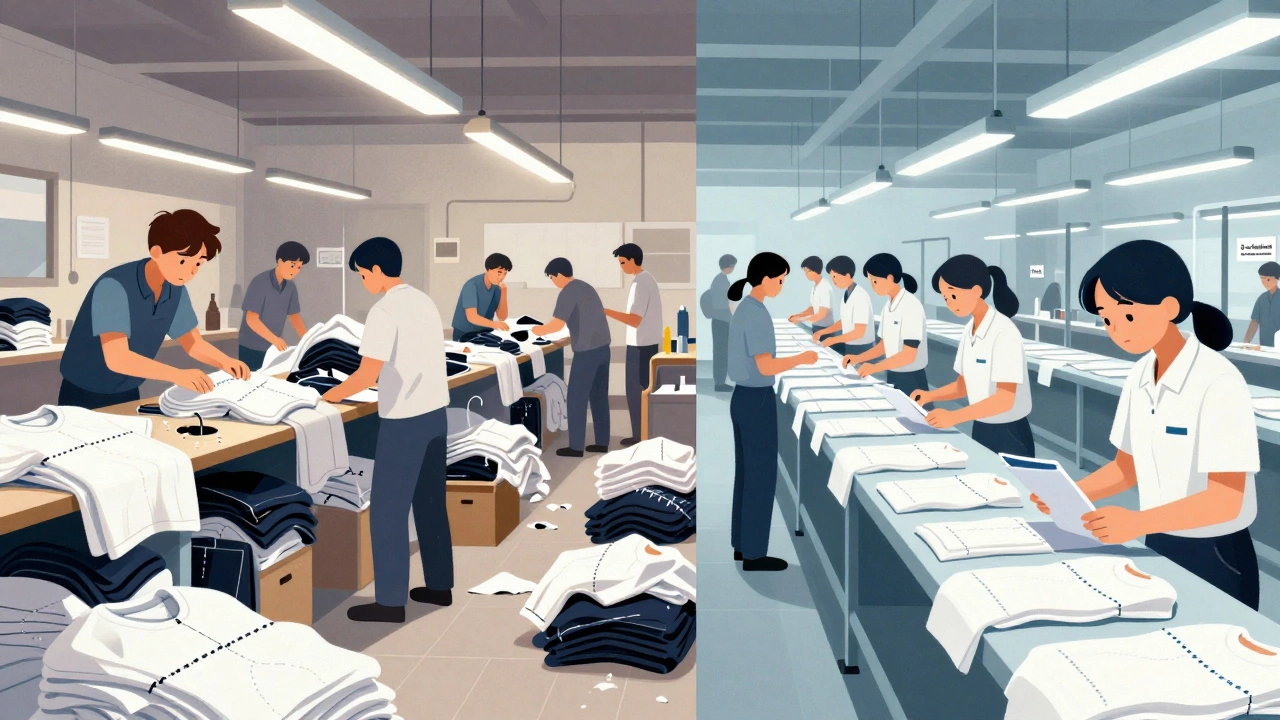
A factory in Tiruppur made cotton T-shirts for local retailers. They used cheap fabric but had a strict inspection process. Every shirt went through three checks: stitching, color, and fit. They rejected 12% of output. Customers didn’t know they were getting ‘second-tier’ fabric. All they knew was that every shirt looked the same. Their repeat order rate was 78%.
Meanwhile, another factory down the road used 100% organic cotton but skipped inspections. Some shirts had crooked seams. Others shrank after one wash. They couldn’t explain why sales dropped. They thought quality meant expensive. It doesn’t. Quality means predictable.
Fix your process before you fix your materials. Set up a checklist. Train workers to spot defects. Document what good looks like. You don’t need ISO certification to be reliable. You just need discipline.
They ignore cash flow like it’s optional
One of the biggest killers of small manufacturing units isn’t competition. It’s not bad products. It’s cash flow.
Take a typical scenario: You get a big order from a wholesaler. They ask for 5,000 units. You agree. They pay you 30 days after delivery. But you need to buy raw materials now. You need to pay workers now. You need to pay the electricity bill now.
So you borrow from a local moneylender at 2% per week. You make the order. You deliver. You wait. And wait. Meanwhile, your interest keeps piling up. By day 45, you’re broke. The wholesaler pays on day 60. Too late. You’ve already lost your machine to a lien.
Real manufacturers plan cash flow like a battlefield. They know exactly how much money they need to cover 60 days of operations. They never take a big order unless they have a line of credit lined up. They ask for 50% upfront. They use digital invoicing tools to get paid faster. They don’t wait for customers to pay-they make payment terms part of the deal.
If your bank account dips below 30 days of operating costs, you’re already in danger. No matter how many orders you’re getting.
They don’t build relationships with suppliers
Small manufacturers treat suppliers like vendors. Big manufacturers treat them like partners.
In Surat, there are two silk weavers. One buys yarn from whoever offers the lowest price. The other works with one supplier who delivers on time, even if it’s 5% more expensive. When the monsoon hit and transport shut down, the first weaver couldn’t get yarn for three weeks. The second supplier arranged a private truck. No extra charge. Just because they’d worked together for seven years.
Suppliers hold power. They control lead times. They know when prices are about to spike. If you’re just a number to them, you’ll be the first to get delayed when things go wrong.
Visit your supplier’s factory. Know their names. Ask about their kids. Pay on time. Even if you’re tight on cash, call them and say, “I’ll pay you on Friday, I promise.” That builds trust. Trust means priority. Priority means survival.
They don’t adapt to market shifts
Five years ago, a small factory in Coimbatore made plastic buckets. They sold 2,000 a month. Then supermarkets started pushing reusable cloth bags. Demand dropped 60% in 18 months.
Most owners panicked. They cut staff. They lowered prices. They hoped it would come back. It didn’t.
One owner did something different. He looked at his machines. They could mold any plastic shape. He started making small storage containers for spices. He added lids with seals. He painted them in bright colors. He sold them to local grocery shops. Within six months, he was making more money than before.
Small manufacturers are agile. They can pivot faster than big companies-if they’re looking. Watch what’s changing in your town. Are people buying less of your product? Are new competitors popping up? Are raw material prices rising? Don’t wait for a crisis. Check your sales data every month. Talk to your customers. Ask: “What else do you need?”
Adaptation isn’t innovation. It’s survival.

They don’t document anything
Most small manufacturing units run on memory. “We use 12 screws per unit.” “The oven runs at 180°C for 25 minutes.” “The guy who mixes the paint does it in three rounds.”
What happens when that guy quits? Or gets sick? Or dies?
I visited a brass casting unit in Kanpur. The owner had been doing it for 30 years. His son wanted to take over. But the son didn’t know how to adjust the mold temperature. No one had written it down. The father couldn’t explain it. He said, “You just feel it.” The son left. The factory closed.
Document your process. Not in a fancy manual. Just a notebook. Or a phone video. Step by step. What tools? What settings? What order? Who does what? Even simple things like “Always clean the mold before pouring” matter.
When you document, you don’t just protect your business. You make it sellable. You make it scalable. You make it survivable.
They think success is about working harder
There’s a myth: if you work 16 hours a day, you’ll succeed.
Reality: working harder without working smarter burns you out. And your workers. And your machines.
A friend runs a small PCB assembly shop. He used to work 18-hour days. His team was exhausted. Quality dropped. He finally hired a part-time supervisor. He trained them to run the machines. He started using a simple Kanban board to track orders. He stopped micromanaging. His output went up 40%. His stress level? Down 80%.
Small manufacturers think they have to do everything. But the best ones build systems. They train people. They automate the boring stuff. They delegate. They sleep.
You don’t need to be the hero. You need to be the architect.
What’s left to fix?
If your business is struggling, ask yourself:
- Do I know my real cost per unit, down to the last rupee?
- Is my product quality consistent, not just good?
- Do I have 60 days of cash ready if a big customer delays payment?
- Do I have one supplier I can trust, not just the cheapest?
- Am I watching for changes in customer demand-or pretending they won’t happen?
- Can someone else run my factory for a week if I’m gone?
- Am I working harder-or working smarter?
Answering yes to all seven doesn’t guarantee success. But it means you’re not making the same mistakes most others are.
Small scale manufacturing isn’t about having the biggest machines. It’s about having the clearest head.
What’s the biggest reason small manufacturing businesses fail?
The biggest reason is poor cash flow management. Many owners focus on production and sales but don’t plan for delays in payments, unexpected expenses, or rising costs. Without a cash buffer or clear payment terms, even profitable businesses can collapse within weeks.
Can small manufacturers compete with big companies?
Yes-but not by trying to be bigger. Small manufacturers win by being faster, more reliable, and more personal. Big companies struggle with customization and quick turnarounds. If you can deliver a small batch of custom parts in 48 hours, you’ll beat a corporation that takes two weeks. Focus on niche markets, consistency, and customer relationships.
Is government support enough to save a failing small factory?
Government schemes can help with loans, subsidies, or training-but they won’t fix bad management. Many small manufacturers apply for aid but still don’t track costs, ignore quality control, or fail to adapt. Support is a tool, not a rescue. The owner’s decisions matter more than any subsidy.
How do I know if my product is still marketable?
Check your repeat customer rate. If it’s below 40%, your product may be losing relevance. Talk to your top 10 customers. Ask: “What’s one thing you’d change?” Look at competitors-are they offering something new? Track local trends. If your town’s shops are selling fewer of your items, don’t wait for a crisis. Adjust before you’re forced to.
Should I invest in automation for my small factory?
Only if you’re doing the same task 50+ times a week. Don’t buy expensive machines to save labor if your output is low. Start with low-cost fixes: a simple conveyor belt, a timer for ovens, or a checklist for quality checks. Automation should solve a real bottleneck-not just look impressive. Many small factories waste money on tech they don’t need.