American Furniture Production: How It Works, Who Makes It, and Why India Is Catching Up
When you think of American furniture production, the process of designing, cutting, assembling, and finishing wooden or upholstered home furnishings within the United States. Also known as US furniture manufacturing, it once dominated global markets with high-quality, durable pieces made in factories from Wisconsin to North Carolina. But today, less than 15% of furniture sold in the US is made here. Most of what you buy at big-box stores comes from China, Vietnam, or Malaysia—where labor is cheaper and regulations are looser.
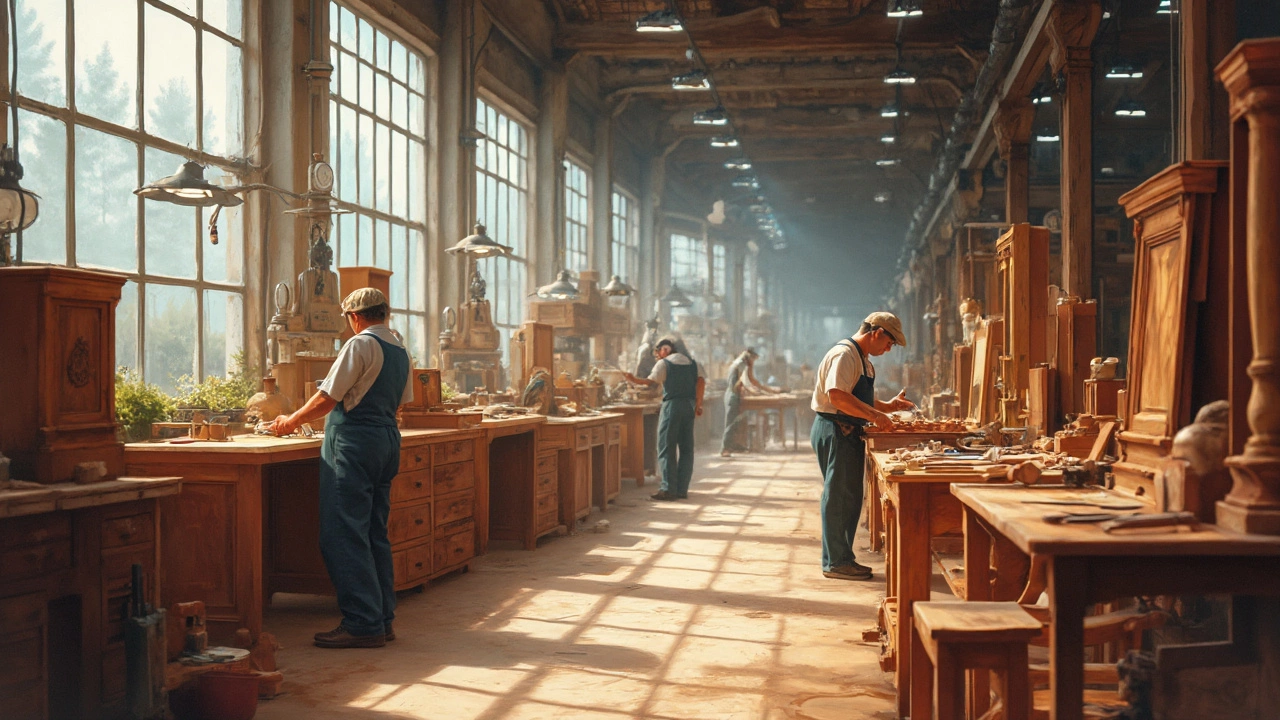
That doesn’t mean American furniture production is gone. It’s just changed. The companies still making it in the US focus on high-end, custom, or handcrafted work—think solid oak dining tables, leather recliners built to last decades, or artisanal woodwork with local character. Places like Pennsylvania, Tennessee, and Michigan still have small shops running CNC machines and hand-sanding finishes. These aren’t mass producers. They’re precision builders who charge more because they stand behind their work. And customers who care about durability, sustainability, and supporting local jobs are willing to pay for it.
Meanwhile, Indian furniture manufacturing, the growing industry producing handcrafted wooden furniture in India using traditional joinery and modern tooling. Also known as made-in-India furniture, it’s gaining traction overseas because it blends craftsmanship with cost efficiency. Indian makers use teak, sheesham, and mango wood—dense, long-lasting materials that rival American hardwoods. They don’t rely on cheap particleboard. They build with mortise-and-tenon joints, hand-finished stains, and attention to detail that’s hard to find in mass-produced imports. And because labor costs are lower than in the US but quality is higher than in many Asian factories, Indian furniture is becoming a smart alternative for buyers who want something real, not just cheap.
It’s not about replacing American production—it’s about understanding where value really lies. The US still leads in innovation, automation, and design software. But when it comes to building furniture that lasts and feels handmade, India is closing the gap fast. And that’s why more American retailers are starting to source from Indian workshops instead of Chinese factories.
Below, you’ll find real examples of how furniture is made, who’s winning the export race, and what’s really driving the shift in global supply chains. No fluff. Just facts, comparisons, and the kind of insight you won’t find on a product label.
Where in the US is Most Furniture Made?
This article explores the leading regions in the US where most furniture is produced, highlighting their significance in the American industry. It also provides insights into how Indian manufacturers can tap into these markets by understanding the production dynamics and trends. The article serves as a practical guide for Indian furniture manufacturers aiming for successful export opportunities to the US. Discover which states dominate the furniture-making scene and what makes them unique.
Furniture Manufacturing
Latest Posts





Tags
- manufacturing
- small scale manufacturing
- plastic manufacturing
- plastic pollution
- India
- food processing
- textile industry
- government schemes
- electronics manufacturing
- small business
- steel manufacturing
- startup ideas
- production
- textile manufacturers India
- manufacturing business ideas
- business ideas
- chemical manufacturers India
- electronics manufacturing India
- steel manufacturing plants
- plastic manufacturers