
If you’re bringing a laptop, phone charger, or TV from the US to India, you’re not alone. Millions of students, expats, and travelers do it every year. But here’s the simple truth: US electronics will work in India - if you know what to check and what to skip. Most modern gadgets are fine. Some won’t. And a few could get damaged - or worse, cause a fire.
Why Voltage Matters More Than You Think
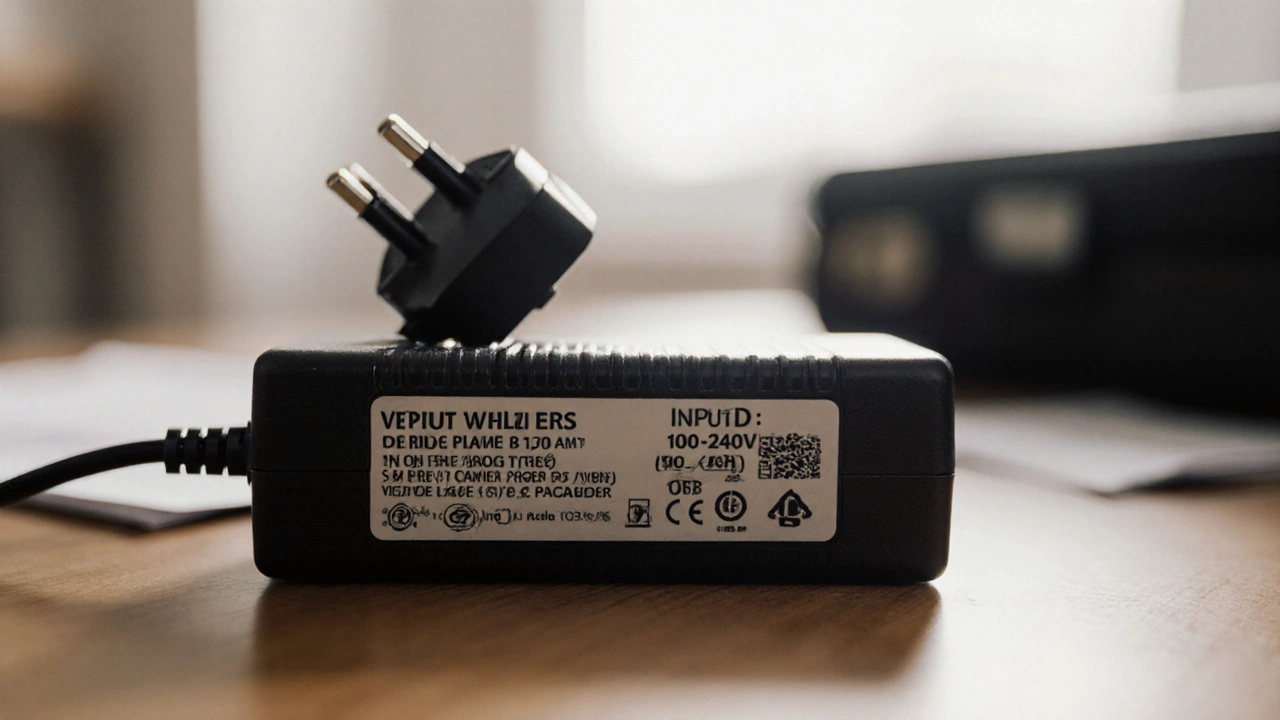
The US runs on 120 volts. India runs on 230 volts. That’s nearly double. If your device only expects 120V and you plug it directly into an Indian outlet, it’s like giving a small engine a tank of jet fuel. It might sputter, overheat, or blow up.But here’s the twist: almost every phone charger, laptop power brick, and camera battery charger made in the last 10 years supports both 100V and 240V. Look at the label on the charger. If it says something like “Input: 100-240V 50/60Hz,” you’re good. That’s the universal standard now. Apple, Samsung, Dell, HP - they all design for global markets.
Older devices are the problem. Hair dryers, electric kettles, coffee makers, and analog radios from the US often only work at 120V. If you plug one of those in without a converter, you’ll likely fry it. And you won’t get your money back. India doesn’t have a culture of returning damaged electronics.
Plugs Are a Different Story
Even if your device handles the voltage, the plug won’t fit. US plugs have two flat prongs (Type A) or two flat prongs plus a round ground (Type B). India uses Type D (three round pins in a triangle) and Type C (two round pins). You’ll need an adapter.Adapters are cheap. You can buy one for under $5 in any Indian electronics market like Nehru Place in Delhi or SP Road in Bangalore. But don’t confuse an adapter with a converter. An adapter just changes the shape. It doesn’t change the voltage. If your device needs 120V and you’re in a 230V country, an adapter alone won’t save it.
Some travelers buy fancy multi-plug adapters with built-in surge protectors. They’re useful if you’re bringing multiple devices. But skip the ones that claim to “convert voltage.” Most of them are gimmicks. If your device doesn’t support 230V, no adapter will fix that.
What Devices Are Safe to Bring?
Here’s a quick cheat sheet:- Safe (no converter needed): Laptops, smartphones, tablets, cameras, Bluetooth speakers, USB chargers, electric toothbrushes, most modern gaming consoles.
- Check the label: Hair straighteners, curling irons, electric shavers, mini-fridges, CPAP machines. Look for “100-240V.” If it’s not there, don’t risk it.
- Don’t bring: Old-style coffee makers, incandescent lamps, space heaters, toasters, microwave ovens, and any appliance labeled “120V only.”
Why avoid microwaves? Because even if you find a 230V model, the frequency in India is 50Hz. US microwaves are built for 60Hz. The motor runs slower, the magnetron heats unevenly, and the unit wears out faster. You’ll end up buying a new one in India anyway.

What About TVs and Home Theater Systems?
TVs are tricky. Most modern LED and OLED TVs support 100-240V, so voltage isn’t the issue. But the broadcast standard is. The US uses ATSC for digital TV. India uses DVB-T2. Your US TV won’t pick up Indian channels unless it has a built-in DVB-T2 tuner - and almost none do.So if you bring a US TV to India, you’ll still need a set-top box. But that’s fine. You’ll use it for Netflix, Amazon Prime, or Disney+ anyway. Just make sure the TV has HDMI ports. It will.
Soundbars and home theater systems are safer. As long as they’re powered by a universal adapter (most are), they’ll work. Just plug them in and connect via HDMI or Bluetooth.
What Happens If You Plug Something In Wrong?
If you plug a 120V-only device into a 230V outlet, you’ll hear a pop. The device might smoke. The circuit breaker might trip. Or nothing might happen right away - until the motor burns out weeks later.There’s no magic fuse that saves you. Cheap devices often have no protection at all. Even expensive ones can fail if the voltage spike is too high. India’s power grid isn’t perfect. Voltage fluctuations are common, especially in smaller towns. A surge protector helps, but only if your device can handle the base voltage.
Don’t rely on “it worked once.” One time doesn’t mean it’s safe. Electronics don’t forgive mistakes.
What Should You Buy in India Instead?
If you’re staying longer than a few months, buy locally. Indian brands like Syska, Havells, and Usha make excellent hair dryers, irons, and kettles. They’re built for 230V, 50Hz, and the local power surges. Prices are low - a good hair dryer costs under ₹1,500 (about $18). You’ll also get a warranty that works here.Electronics are cheaper in India now than they were five years ago. Smartphones, laptops, and TVs are mass-produced here. Xiaomi, Realme, and Samsung have factories in Tamil Nadu and Uttar Pradesh. You’re not saving money by bringing a US-bought TV. You’re just carrying extra weight.
Pro Tips for Travelers and Expats
- Always carry a universal travel adapter with USB ports. You’ll charge five devices at once.
- Buy a small surge protector with a built-in voltage indicator. It’ll show you if the outlet is dangerously high.
- Keep your original chargers. Don’t use random ones from local shops. Many are fake and cause fires.
- If you’re moving permanently, ship only essentials. Buy everything else locally. It’s cheaper, safer, and easier to repair.
- Check your device’s label before you leave. Take a photo of it. You’ll thank yourself later.
Bottom Line
Most modern electronics from the US will work fine in India - as long as they support 100-240V. Check the label. Bring a plug adapter. Leave the old appliances behind. Don’t risk your devices, your safety, or your peace of mind.India isn’t the enemy. It’s just different. Respect the difference. Adapt. And you’ll be fine.
Can I use my US laptop in India without a converter?
Yes. Nearly all modern laptop chargers support 100-240V. Check the label on the power brick - if it says "Input: 100-240V", you only need a plug adapter. No converter needed.
Do US phone chargers work in India?
Yes. Apple, Samsung, Google, and other major brands design their phone chargers to work worldwide. They all support 100-240V. You’ll just need a plug adapter to fit the Indian socket.
Can I use my US TV in India?
You can plug it in - voltage isn’t an issue. But your US TV won’t receive Indian TV channels because it doesn’t support DVB-T2, India’s digital broadcast standard. You’ll need a set-top box to watch live TV. Streaming apps like Netflix will work fine.
What happens if I plug a 120V-only device into an Indian outlet?
It can overheat, melt, or catch fire. Devices like hair dryers, kettles, or old coffee makers built for 120V only will be damaged instantly. There’s no warning. Always check the voltage rating before plugging in.
Are Indian power outlets safe for electronics?
India’s grid has voltage fluctuations, especially in rural areas. Use a surge protector with voltage monitoring if you’re using expensive devices. Avoid plugging directly into wall sockets without protection, especially if you’re using a computer or TV.
Should I buy electronics in India instead of bringing them from the US?
If you’re staying more than 6 months, yes. Indian-made electronics are designed for local voltage (230V), frequency (50Hz), and power conditions. Prices are lower, warranties are valid locally, and repairs are easier. You’ll save money and hassle in the long run.
What to Do Next
Before you pack your bags, check every device you plan to bring. Take a photo of the voltage label. Buy a simple, reliable plug adapter. Leave behind anything that says “120V only.” If you’re unsure, leave it. You can buy a better, safer version in India for less than $20.India’s electronics market is thriving. Factories in Tamil Nadu and Telangana produce top-brand devices for global use. You’re not missing out by buying local - you’re making a smarter choice.