
Plastic Pollution Calculator
The Top 5 Plastic Polluters
Based on 2025 Global Plastic Audit data showing companies responsible for over 10% of branded plastic waste found in oceans worldwide
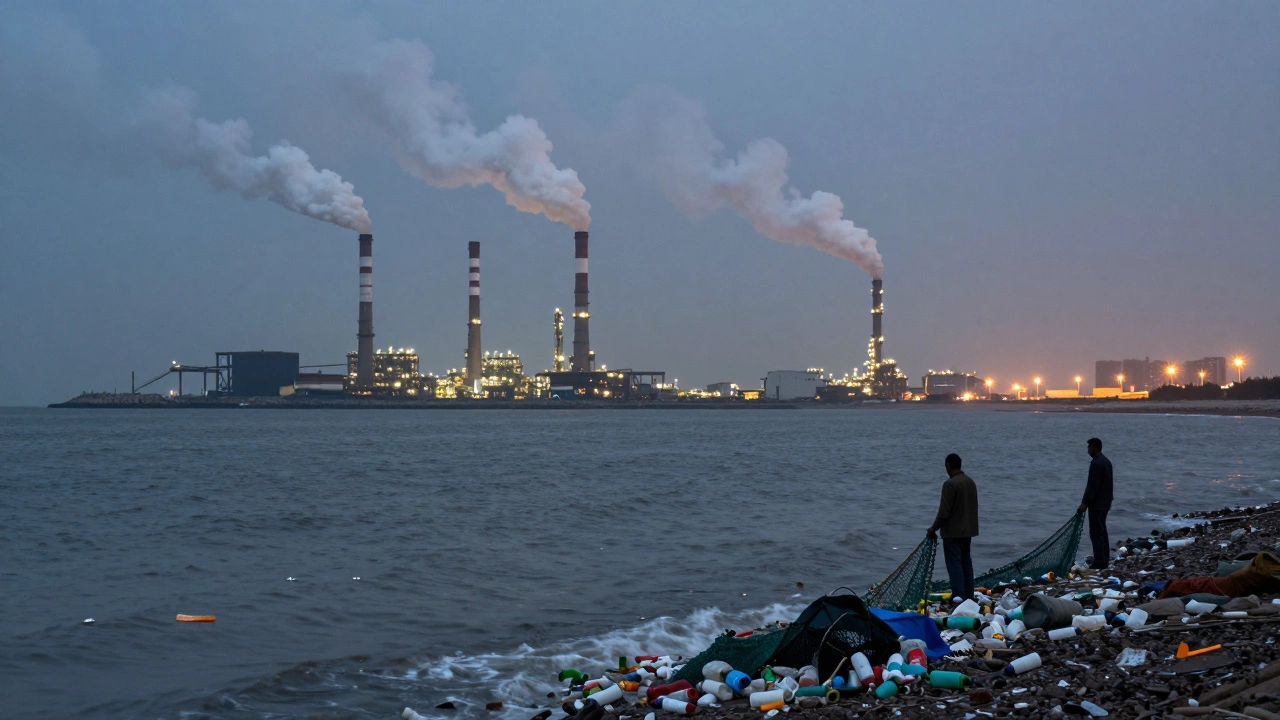
Every year, over 11 million tons of plastic enters the ocean. The top 5 plastic manufacturers alone contribute over 1.3 million tons annually.
The truth: Ocean plastic isn't a waste problem—it's a manufacturing problem.
ExxonMobil
Produces over 3 million tons of plastic resin annually, mostly for packaging
Contribution to ocean pollution: 13.8%
Dow Chemical
Supplies plastic to Coca-Cola, Nestlé, and Unilever
Contribution to ocean pollution: 10.9%
Shell
Produces 1.5 million tons of plastic per year from natural gas
Contribution to ocean pollution: 9.1%
Braskem
Largest plastic producer in Latin America, exports to Europe and North America
Contribution to ocean pollution: 7.3%
Sinopec
China's state-owned oil company, produces more plastic than EU
Contribution to ocean pollution: 6.0%
The Big Picture
These five companies produce over 8.5 million tons of plastic annually, accounting for 11.8% of the 72 million tons of plastic waste entering oceans each year.
Key insight: Plastic pollution is a manufacturing problem, not a waste management problem.
The article states these companies are responsible for more than 10% of all branded plastic waste found in oceans worldwide, yet they continue to expand production while pushing responsibility onto consumers.
Every year, over 11 million tons of plastic end up in the ocean. That’s enough to blanket every coastline on Earth with five full bags of trash. You’ve seen the videos: turtles tangled in six-pack rings, seabirds with stomachs full of bottle caps. But here’s the uncomfortable truth - plastic manufacturing companies are the root cause, not random beachgoers or careless fishermen.
It’s Not You, It’s Them
Most people think ocean plastic comes from poor waste management in developing countries. That’s partly true - but it’s not the whole story. The real problem starts before the plastic even leaves the factory. The world produces over 400 million tons of plastic every year. Nearly half of it is designed for single use - a water bottle, a chip bag, a takeout container - and then thrown away within minutes. These items weren’t made to last. They were made to be discarded.
Who decides this? Not consumers. Not governments. The companies that design, produce, and market these products do. And they’ve known for decades that recycling wouldn’t save them. Internal documents from major plastic producers, leaked over the years, show they spent millions in the 1970s and 80s to convince the public that plastic waste was a recycling problem - not a production problem. The message? "Just recycle more." Meanwhile, they kept ramping up production.
The Top 5 Plastic Polluters (2025 Data)
According to the 2025 Global Plastic Audit by the Center for International Environmental Law, five companies are responsible for more than 10% of all branded plastic waste found in oceans worldwide. These aren’t small players. They’re household names.
- ExxonMobil - The oil giant produces over 3 million tons of plastic resin annually, mostly for packaging. Its plants in Texas and Louisiana are among the largest plastic factories on Earth.
- Dow Chemical - Supplies plastic to Coca-Cola, Nestlé, and Unilever. Its polyethylene and polypropylene are in nearly every food wrapper you’ve ever held.
- Shell - Uses cheap natural gas to make plastic pellets. Its petrochemical complex in Pennsylvania churns out 1.5 million tons of plastic per year.
- Braskem - Based in Brazil, it’s the largest plastic producer in Latin America. It exports millions of tons of packaging material to Europe and North America.
- Sinopec - China’s state-owned oil company. It produces more plastic than the entire European Union. Much of it ends up in the Pacific.
These five alone account for over 1.3 million tons of plastic waste entering oceans each year. That’s more than the total plastic waste from all of Africa.
How They Do It
These companies don’t dump plastic into the sea themselves. They outsource the damage. Here’s how the system works:
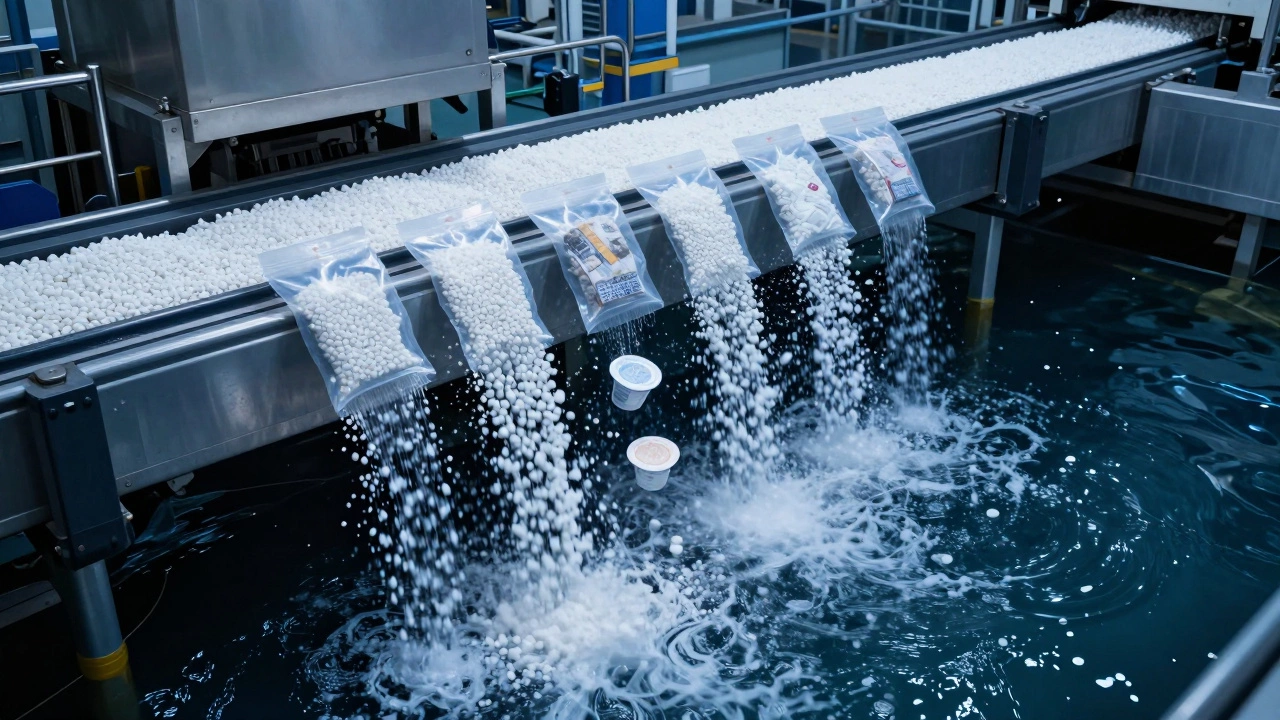
- Mass production - They churn out cheap, low-quality plastic that’s impossible to recycle properly.
- Global export - They ship plastic waste to countries with weak regulations - Indonesia, the Philippines, Nigeria - where it’s often burned or dumped illegally.
- Marketing deception - They fund recycling campaigns that make people feel guilty for not recycling, while quietly lobbying against bans on single-use plastics.
- Designing for disposal - Multi-layered packaging (like chip bags with aluminum lining) can’t be recycled. But it’s cheap to make. So they keep making it.
They profit from every gram of plastic sold. The cleanup? That’s someone else’s problem.
Why Recycling Doesn’t Fix This
Recycling rates for plastic hover around 9% globally. That’s not because people don’t try. It’s because most plastic can’t be recycled.
Think about a yogurt cup. The lid, the cup, the foil seal - each is made from a different type of plastic. Separating them? Too expensive. So they all get tossed into landfills or incinerators. The same goes for clear plastic clamshells, black food trays, and flexible pouches.
Manufacturers know this. They’ve designed products that look recyclable but aren’t. They call it "design for disposal." And they’ve lobbied for years to block laws that would force them to make products that are actually reusable or compostable.
Who Pays the Real Cost?
The ocean doesn’t care who made the plastic. But the people who live near it do. In coastal towns from Lagos to Manila, plastic waste clogs drains, kills fish, and poisons drinking water. Children grow up with respiratory problems from burning plastic. Fishermen lose their livelihoods as nets come up full of trash instead of fish.
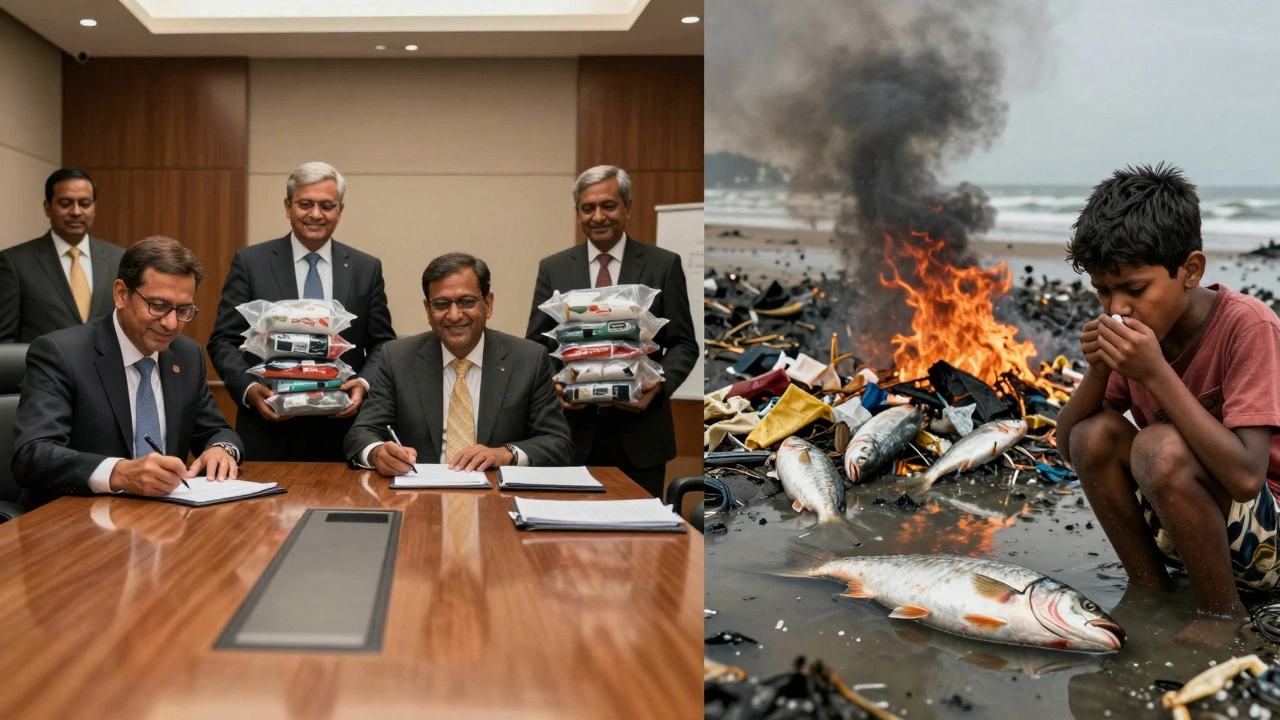
Meanwhile, the CEOs of these companies earn millions. ExxonMobil’s CEO made $28 million in 2024. Dow’s CEO got $23 million. And yet, none of them have publicly committed to cutting plastic production. Instead, they fund "plastic cleanup" charities - a PR move that lets them keep producing.
The Real Solution
Stopping ocean plastic isn’t about better recycling bins. It’s about stopping the flow at the source.
Here’s what actually works:
- Banning single-use plastic - Countries like Canada, the EU, and Kenya have banned plastic bags, straws, and cutlery. Plastic production dropped 30% in those regions within two years.
- Extended Producer Responsibility (EPR) - Laws that make companies pay for the cleanup of their own waste. In Germany, this reduced plastic packaging waste by 40%.
- Designing for reuse - Companies like Loop (backed by Unilever and P&G) are proving that refillable containers work. Consumers don’t mind them. They just need them to be available.
- Ending plastic exports - The U.S. and EU have started blocking plastic waste exports to developing nations. This forces companies to clean up their own supply chains.
The truth? Plastic pollution isn’t a waste problem. It’s a manufacturing problem. And until the companies that make this stuff are held accountable, the ocean will keep paying the price.
What You Can Do
You can’t stop a factory. But you can stop buying from companies that refuse to change.
- Use apps like Break Free From Plastic to scan product barcodes and see who made the packaging.
- Support brands that use glass, metal, or paper instead of plastic.
- Write to your favorite brands. Ask: "Are you cutting plastic production?" If they don’t answer - stop buying.
- Push for local EPR laws. Your city council can require companies to pay for their waste.
The ocean didn’t dump plastic. The factories did. And they’re still doing it - every single day.
Are plastic manufacturing companies legally required to stop polluting the ocean?
No, not directly. There are no global laws that ban plastic companies from producing single-use plastic. Some countries have started passing laws that force companies to pay for waste collection (called Extended Producer Responsibility), but enforcement is weak. Most plastic pollution comes from countries with no such laws at all. The biggest companies operate across borders, making it easy to avoid accountability.
Do recycling programs actually reduce ocean plastic?
Not significantly. Recycling programs were created by plastic companies to shift blame onto consumers. Less than 9% of plastic ever made has been recycled. Most of it ends up in landfills, incinerators, or the environment. Even when you recycle, much of it gets shipped overseas and dumped illegally. Recycling doesn’t fix overproduction - it just makes people feel better about buying more plastic.
Which countries produce the most plastic waste?
The U.S. and China produce the most plastic waste by volume. But per person, countries like the U.S., Germany, and the U.K. produce far more than developing nations. The difference? Wealthier countries export their plastic waste. So while India or Nigeria may have visible plastic pollution, much of it came from Europe or North America. The real issue is production, not location.
Can bioplastics solve ocean plastic pollution?
Not yet. Most "bioplastics" still require industrial composting to break down - which doesn’t exist in most places. If they end up in the ocean, they behave just like regular plastic. Some even take longer to degrade. Companies use bioplastics as a marketing tool, not a solution. The only real fix is reducing production and switching to reusable systems.
Why don’t big companies just stop making so much plastic?
Because plastic is incredibly profitable. It costs less than paper or metal. It’s lightweight, which cuts shipping costs. And it’s designed to be thrown away - which means people buy more of it. Companies like ExxonMobil and Dow make billions from plastic. If they stopped, they’d lose market share. So they lobby governments, fund false recycling campaigns, and delay real change. Profit comes before the planet.