
Manufacturing Evolution Simulator
Control Panel
Select an era to see how production evolved.
Pre-Industrial Era
Before 1760Historical Context
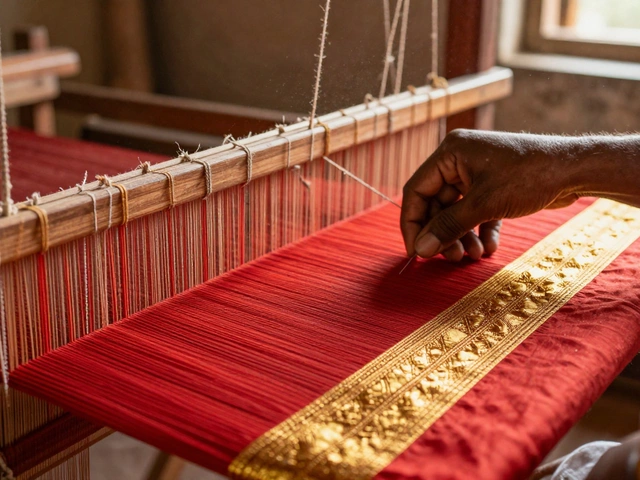
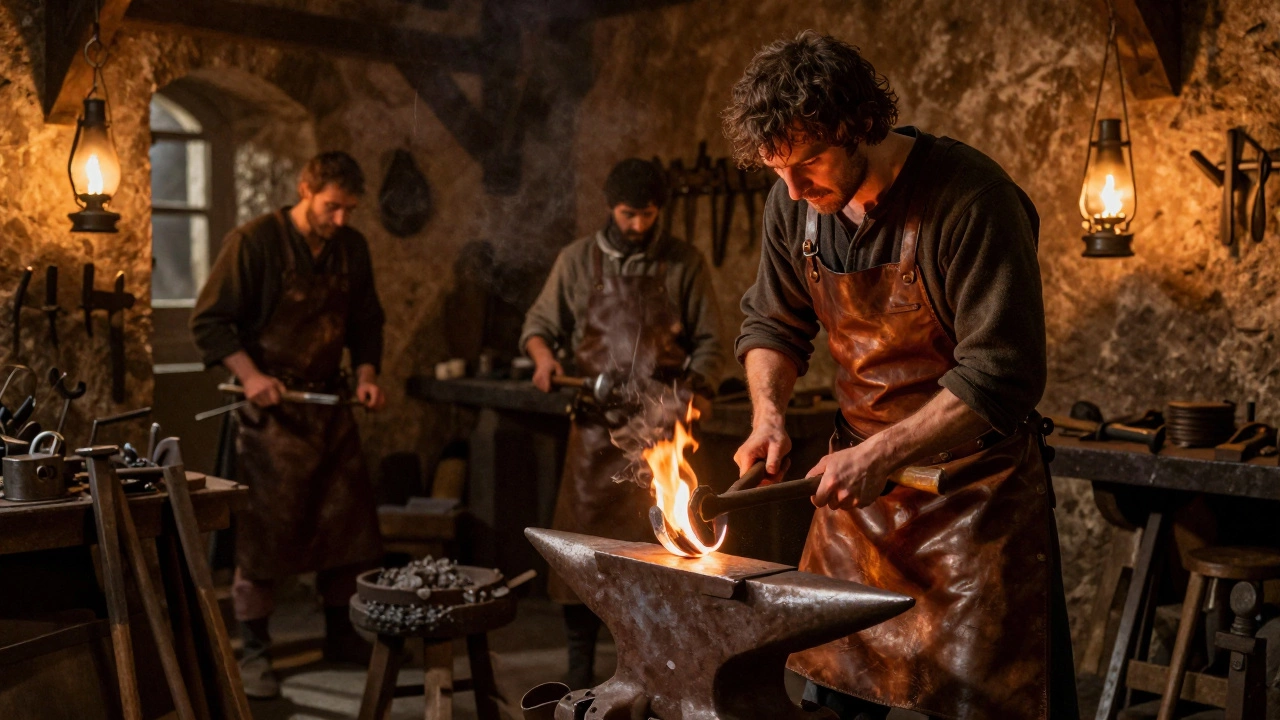
Skilled artisans produced unique goods by hand. Production was slow, expensive, and limited to local demand.
When you look at a smartphone or drive a car, you rarely think about how it got there. You just expect it to work. But that expectation rests on centuries of trial, error, and innovation. People often ask who the father of manufacturing is. The answer isn't one person. It’s a relay race across time.
If you want a single name, most historians point to Henry Ford, who perfected the moving assembly line in 1913. He didn't invent the idea, but he made it scalable. Before him, Eli Whitney standardized parts. Before Whitney, James Watt improved the steam engine. And long before all of them, humans were crafting tools by hand.
Understanding this lineage helps us see where we are today. We aren't just making things; we are managing complex systems of data, robotics, and global supply chains. Let's break down who actually built the foundation of modern industry.
The Pre-Industrial Roots: Craftsmanship and Guilds
Before factories existed, there were workshops. In medieval Europe, guilds controlled production. A blacksmith knew every step of making a horseshoe. This was high-quality, but slow and expensive. You couldn't scale it. If you needed ten thousand horseshoes, you waited years.
This system worked for local needs. It failed when populations grew. The bottleneck was human skill. Each product was unique. There was no standardization. If a part broke, you had to find the original maker or someone with identical skills. That changed everything in the late 18th century.
The Industrial Revolution: Power and Scale
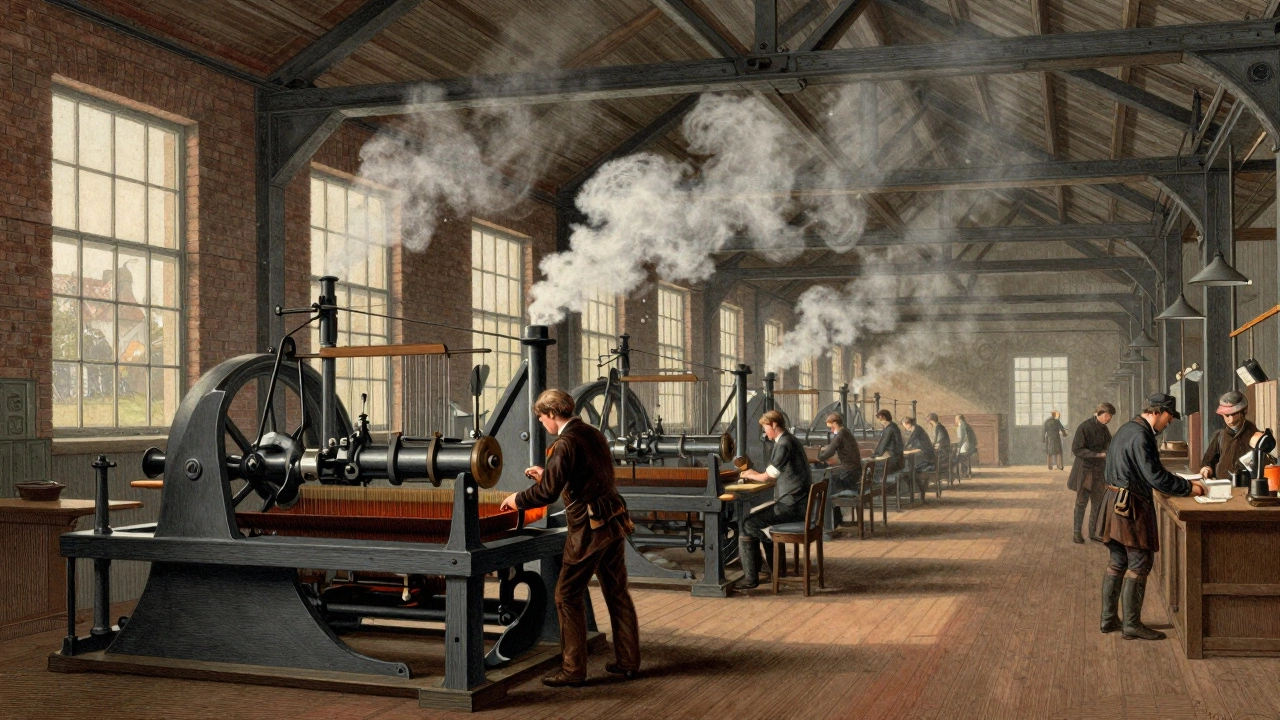
The shift from muscle to machine started with textiles. In England, around 1760, inventions like the Spinning Jenny and the Water Frame automated thread production. But the real game-changer was James Watt's improved steam engine in 1776. Suddenly, factories didn't need to be next to a river. They could be anywhere. Energy became independent of geography.
This era introduced the factory system. Workers gathered under one roof. Machines dictated the pace. Output skyrocketed. Costs dropped. Goods that were once luxury items became available to the middle class. However, quality control was still a nightmare. Parts varied wildly. A wheel from one batch might not fit an axle from another.
Eli Whitney: The Father of Interchangeable Parts
Enter Eli Whitney. Known for the cotton gin, his bigger contribution to manufacturing was interchangeable parts. In 1798, the U.S. government ordered 10,000 muskets. Whitney promised they would be identical. Skeptics laughed. He delivered.
He achieved this through precision jigs and fixtures. Instead of a craftsman filing each lock mechanism by eye, machines cut them to exact specifications. If a part broke, you swapped it out. No custom fitting required. This concept, called the American System of Manufactures, laid the groundwork for mass production. Without interchangeability, assembly lines are impossible.
Henry Ford: Perfecting the Assembly Line
So why do people call Henry Ford the father of manufacturing? Because he connected the dots. In 1913, Ford introduced the moving assembly line at Highland Park, Michigan. Before this, workers moved around a stationary car, bringing tools and parts as needed. It took 12 hours to build a chassis.
Ford flipped the model. The car moved to the worker. Each person performed one specific task repeatedly. The time dropped to 93 minutes. The Model T price fell from $850 to $260 over two decades. This wasn't just efficiency; it was democratization. Cars went from status symbols to essential transport.
Ford also raised wages to $5 a day. Critics said he was crazy. He knew he needed stable customers who could afford the cars he produced. High wages reduced turnover and created a consumer base. This social engineering aspect is often overlooked but crucial to modern labor relations.
Frederick Taylor: Scientific Management
While Ford optimized flow, Frederick Winslow Taylor optimized thought. In the early 1900s, Taylor studied how workers used their time. He timed every motion with a stopwatch. He eliminated wasted movement. This became known as Scientific Management or Taylorism.
Taylor believed management should plan work, and workers should execute it. Separation of planning and doing increased productivity but alienated workers. It treated humans like cogs. Modern manufacturing has softened this approach, focusing on ergonomics and employee input, but the core idea remains: measure performance to improve it.
Post-War Innovations: Lean and Just-in-Time
After World War II, Japan faced resource scarcity. They couldn't afford waste. Toyota developed the Toyota Production System (TPS). Taiichi Ohno pioneered Just-in-Time (JIT) inventory. Instead of stocking piles of parts, materials arrived exactly when needed. This reduced storage costs and exposed inefficiencies quickly.
TPS also emphasized Kaizen, or continuous improvement. Every worker had the authority to stop the line if they spotted a defect. This shifted quality control from inspection at the end to prevention during the process. By the 1980s, Western manufacturers adopted these principles as "Lean Manufacturing." It remains the gold standard for efficiency today.
Industry 4.0: The Digital Factory
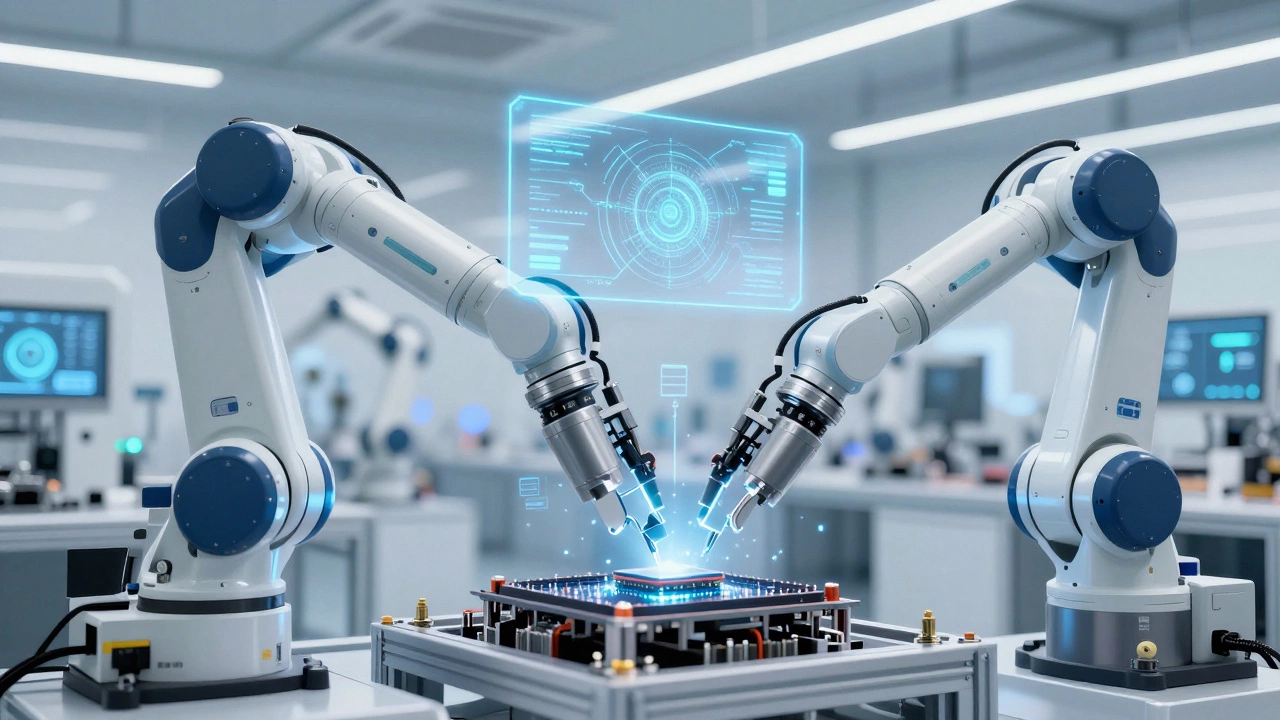
We are now in the fourth industrial revolution. Computers replaced punch cards. Robotics replaced repetitive manual labor. Today, IoT sensors connect machines. Data flows in real-time. Predictive maintenance alerts technicians before a motor fails. AI optimizes supply chains dynamically.
Digital twins allow engineers to simulate entire factories before building them. 3D printing enables rapid prototyping and even final part production. The "father" title is less relevant here because innovation is distributed. Cloud platforms, software developers, and hardware engineers all contribute. Manufacturing is now software-defined.
| Figure | Era | Key Contribution | Impact |
|---|---|---|---|
| James Watt | 1776 | Improved Steam Engine | Enabled factory location independence |
| Eli Whitney | 1798 | Interchangeable Parts | Allowed repair without custom fitting |
| Henry Ford | 1913 | Moving Assembly Line | Mass production, lower costs |
| Taiichi Ohno | 1950s | Just-in-Time Inventory | Reduced waste, improved cash flow |
Government Schemes and Modern Support
Today, manufacturing isn't just about private innovation. Governments play a huge role. Policies shape where factories are built. Tax incentives encourage automation. Grants support green energy transitions. For example, recent initiatives in India and the U.S. focus on reshoring critical supply chains. Subsidies for electric vehicle battery plants illustrate this trend.
These schemes aim to boost employment and national security. They also push sustainability. Regulations force manufacturers to reduce emissions. This creates new markets for recycling technologies and clean materials. The "father" of modern manufacturing might soon be defined by how well companies integrate circular economy principles.
Why Does This History Matter?
Knowing who shaped manufacturing helps you navigate current challenges. When supply chains break, understanding JIT reveals vulnerabilities. When labor shortages hit, remembering Ford’s wage strategy offers solutions. When adopting AI, knowing Taylor’s pitfalls prevents dehumanizing workflows.
History provides context. It shows that technology alone doesn’t win. Organization, economics, and human factors matter equally. The next breakthrough won't come from a single genius. It will emerge from teams combining digital tools with sustainable practices.
Is Henry Ford really the father of manufacturing?
Not entirely. Henry Ford popularized the assembly line, but he built on earlier innovations. Eli Whitney invented interchangeable parts, and James Watt provided the power source. Ford deserves credit for scaling these ideas into a global economic model, making him the face of mass production rather than the sole originator.
What is the difference between craft production and mass production?
Craft production relies on skilled artisans making unique items by hand. It is slow and expensive. Mass production uses standardized parts and specialized labor to create identical goods quickly and cheaply. The shift enabled affordable access to products like cars and electronics for the general public.
How did interchangeable parts change manufacturing?
Before interchangeable parts, every component was custom-fitted. If a part broke, the whole item might be unusable. Standardization allowed any part to replace any other identical part. This simplified repairs, reduced inventory complexity, and enabled the assembly line process.
What is Lean Manufacturing?
Lean Manufacturing is a methodology focused on minimizing waste while maximizing value. Originating from the Toyota Production System, it includes practices like Just-in-Time inventory and continuous improvement (Kaizen). It ensures resources are used only when necessary, improving efficiency and profitability.
How does Industry 4.0 affect traditional manufacturing?
Industry 4.0 integrates digital technologies like IoT, AI, and cloud computing into physical processes. It enables real-time data analysis, predictive maintenance, and flexible production. Unlike rigid assembly lines, smart factories can adapt quickly to changes in demand or design, offering greater agility and customization options.