
Mumbai Textile Market Navigator
Not sure where to shop? Answer these questions to find the perfect market in Mumbai for your requirements.
Recommended Destination
Walk down any street in South Mumbai, from the bustling lanes of Colaba to the historic markets of Crawford Market, and you will feel the weight of history woven into the air. But if you ask a local tailor or a seasoned trader which fabric defines this city, the answer is almost always the same: cotton. Specifically, it is the high-quality, breathable cotton that has fueled Mumbai’s economy for over a century.
Mumbai was not just a port city; it was the engine room of India’s industrial revolution. When the British Empire restricted trade, local entrepreneurs stepped up. They built mills along the Mahim River and turned raw cotton from the Deccan plateau into finished goods that were exported across the globe. Today, while the large mills have closed, the legacy remains in the small workshops, the wholesale markets, and the design studios that still rely on this versatile material.
The Cotton Boom: Why Mumbai Became the Textile Capital
To understand why cotton is famous here, you have to look at the geography. In the late 19th century, the American Civil War disrupted the global supply of cotton. At the same time, railways were being laid across India, connecting the cotton-growing regions of Maharashtra and Gujarat directly to the ports of Bombay (now Mumbai).
This created a perfect storm. Local merchants saw an opportunity. They invested in spinning and weaving mills. By the early 1900s, Mumbai had more textile mills than any other city in Asia. The fabric produced here wasn't just cheap; it was durable and suited for the tropical climate. It became known as "Bombay Cotton" worldwide.
Bombay Cotton is a type of high-grade cotton fabric known for its durability, breathability, and suitability for hot climates, historically produced in Mumbai's textile mills. This fabric became a staple in households across India and was exported to Africa, Southeast Asia, and the Middle East.
The social impact was massive. Thousands of workers migrated from rural areas to the city to work in these mills. This migration shaped the demographic and cultural landscape of Mumbai. The labor movements that started in these factories also played a crucial role in India’s independence struggle. So, when we talk about Mumbai’s fabric, we are talking about the very foundation of modern urban India.
Beyond Basic Cotton: Specialized Fabrics of the City
While plain cotton is the backbone, Mumbai’s textile scene is far more diverse. As the city evolved into a financial and entertainment hub, the demand for fabrics changed. People needed clothes for offices, for parties, and for the glamorous world of Bollywood.
This shift gave rise to several other notable fabrics:
- Silk Blends: With the growth of the film industry, there was a surge in demand for luxurious fabrics. Mumbai became a hub for processing silk blends that offer the sheen of silk with the comfort of cotton or polyester.
- Denim: Surprisingly, Mumbai has a strong denim manufacturing sector. Many brands source their jeans from factories in the suburbs like Andheri and Goregaon. These facilities use advanced technology to produce eco-friendly denim with less water consumption.
- Synthetic Blends: For the everyday commuter dealing with humidity and traffic, pure natural fibers aren't always practical. Mumbai manufacturers excel in creating polyester-cotton blends that resist wrinkling and dry quickly.
However, none of these have achieved the iconic status of cotton. Cotton remains the symbol of the city’s industrial heritage.
Where to Find Mumbai’s Famous Fabrics
If you want to see this fabric culture in action, you need to visit the right places. Mumbai is home to some of the oldest and largest textile markets in Asia.
| Market Name | Specialty | Location |
|---|---|---|
| Bhendi Bazaar | Wholesale cotton, readymade garments, and accessories | South Mumbai |
| Crawford Market | Raw materials, threads, and traditional fabrics | South Mumbai | d>
| Lamington Road | Electronics and textile machinery parts | Central Mumbai |
| Ghatkopar Market | Affordable cotton sarees and daily wear | East Mumbai |
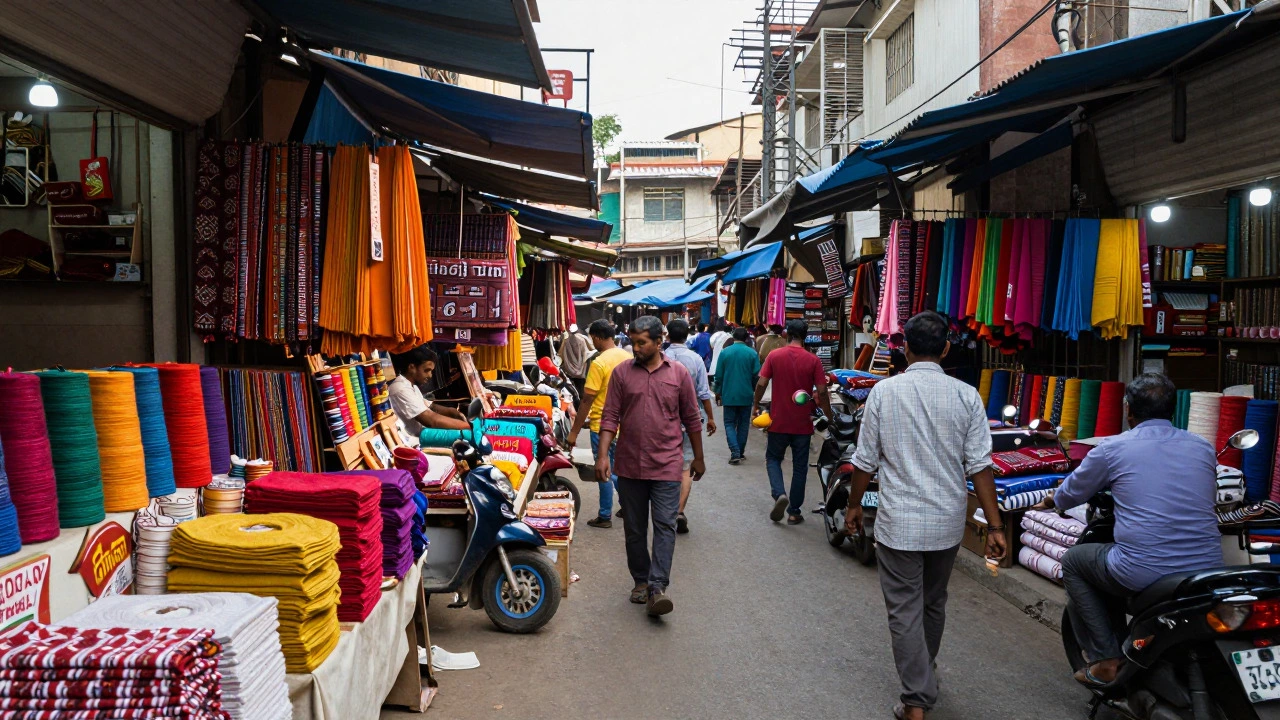
Bhendi Bazaar is one of the oldest and largest wholesale textile markets in Mumbai, known for its vast array of cotton fabrics, garments, and fashion accessories. Walking through Bhendi Bazaar feels like stepping back in time. The narrow streets are lined with shops displaying bolts of colorful cotton. You can find everything from basic white shirting material to intricate printed fabrics used for ethnic wear.
Crawford Market, on the other hand, is more chaotic but equally important. Here, traders buy raw yarn, buttons, zippers, and dyes. It is the heart of the supply chain. If you are a manufacturer, this is where you start your journey.
The Role of Bollywood in Shaping Fabric Trends
You cannot talk about Mumbai’s fashion without mentioning Bollywood. The film industry has a direct influence on what fabrics become popular. When a star wears a specific type of silk or a unique cotton print in a movie, sales spike overnight.
Designers in Mumbai often collaborate with mill owners to create exclusive fabrics for films. This collaboration keeps the textile industry innovative. It pushes manufacturers to experiment with new textures, colors, and finishes. For example, the recent trend towards sustainable fashion has led to a resurgence in organic cotton production in the region.
Moreover, Bollywood costumes require fabrics that look good on camera but are comfortable enough for long shooting hours. This dual requirement has led to the development of specialized blends that are now widely available in retail stores.
Challenges Facing Mumbai’s Textile Industry
Despite its rich history, the industry faces significant challenges. The closure of most large mills in the late 20th century was a major blow. These mills provided stable jobs and drove innovation. Their replacement by smaller, fragmented units has made it harder to maintain consistent quality and scale.
Competition from other countries like Bangladesh and Vietnam is another issue. These nations offer lower labor costs, attracting international buyers. To stay competitive, Mumbai’s manufacturers must focus on niche markets, such as high-end designer fabrics or customized orders.
Infrastructure problems also play a role. Traffic congestion and inadequate storage facilities increase logistics costs. However, the government has introduced various schemes to support small-scale textile businesses. These include subsidies for modernizing machinery and training programs for workers.
How to Identify Authentic Mumbai Cotton
With so many options available, how do you know you are buying genuine Mumbai cotton? Here are a few tips:
- Check the Texture: Authentic Mumbai cotton should feel soft yet sturdy. It should not be overly thin or transparent unless it is specifically designed for lightweight summer wear.
- Look for Weave Quality: High-quality cotton has a tight, even weave. Run your fingers over the fabric. If you feel bumps or loose threads, it might be lower grade.
- Test the Breathability: Hold the fabric up to the light. Good cotton allows some light to pass through but isn’t see-through. It should also feel cool to the touch.
- Ask About Origin: Reputable sellers will know where their fabric comes from. Ask if it is sourced from local mills or imported. Local sourcing ensures better quality control.
Buying from established markets like Bhendi Bazaar or trusted online retailers that specialize in Indian textiles can also help ensure authenticity.
The Future of Textiles in Mumbai
The future looks promising for Mumbai’s textile industry. There is a growing emphasis on sustainability. Consumers are increasingly aware of the environmental impact of fast fashion. This shift is driving demand for organic cotton, recycled polyester, and other eco-friendly materials.
Technology is also playing a bigger role. Digital printing, laser cutting, and automated looms are becoming common in smaller workshops. These technologies allow for greater customization and faster turnaround times.
Additionally, the rise of e-commerce has opened new markets for Mumbai-based manufacturers. They can now sell directly to consumers across India and abroad, bypassing traditional middlemen. This direct-to-consumer model helps them retain more profit and build stronger brand identities.
In conclusion, while Mumbai may no longer be the undisputed king of textile manufacturing, its reputation for quality cotton and innovative design remains intact. The city continues to adapt to changing trends and technological advancements, ensuring that its textile legacy lives on.
Is Mumbai still a major center for textile manufacturing?
Yes, although the large-scale mill industry has declined, Mumbai remains a crucial hub for textile trading, design, and small-scale manufacturing. Markets like Bhendi Bazaar continue to drive a significant portion of India's domestic textile trade.
What makes Mumbai cotton different from cotton produced elsewhere?
Mumbai cotton is renowned for its balance of durability and breathability, tailored for tropical climates. Historically, it was processed in state-of-the-art mills that set high standards for quality and consistency, a reputation that persists today.
Where is the best place to buy wholesale cotton in Mumbai?
Bhendi Bazaar is the premier destination for wholesale cotton fabrics in Mumbai. Crawford Market is also excellent for sourcing raw materials and traditional textiles.
How has Bollywood influenced Mumbai's textile industry?
Bollywood drives trends by showcasing specific fabrics and styles in films. This creates immediate consumer demand, encouraging manufacturers to innovate with new prints, blends, and luxury materials to meet the needs of costume designers and fans alike.
Are there sustainable textile options available in Mumbai?
Yes, there is a growing segment of manufacturers in Mumbai focusing on organic cotton, recycled fibers, and low-impact dyeing processes. This shift is driven by both global environmental concerns and local consumer preference for eco-friendly products.