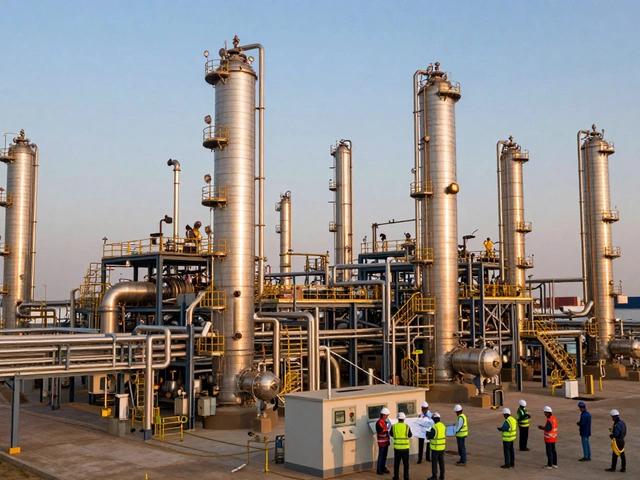

Metal Strength Comparison Tool
Select two metals below to compare their key properties side by side.
Comparison
VSKey Differences
Winner in Tensile Strength
Best Use Cases
When people ask what is the strongest metal, they usually have one image in mind: an unbreakable shield or a skyscraper that laughs at earthquakes. But in the world of materials science, "strength" isn't just one thing. It’s a messy, multi-dimensional puzzle. Are we talking about tensile strength (how much you can pull it before it snaps)? Compressive strength (how much weight it can take before crushing)? Or hardness (how resistant it is to scratching)?
If you’re looking for the absolute hardest natural element, Tungsten takes the crown with a melting point of 3,422°C. If you need something that won’t corrode in seawater while holding up a jet engine, Titanium is your best friend. But if you want the material that builds bridges, cars, and factories-the backbone of modern industry-it’s all about engineered Steel.
The Misunderstood Concept of "Strength"
Before we pick a winner, we need to define the playing field. In engineering, we don’t just say a metal is "strong." We measure it.
- Tensile Strength: The stress needed to break a material when pulled apart. Think of stretching a rubber band until it pops, but with metal.
- Compressive Strength: How much load a material can bear before deforming or collapsing. This matters for pillars and foundations.
- Hardness: Resistance to surface indentation or scratching. Diamond is hard, but it’s brittle. Steel can be both hard and tough.
- Ductility: How much a metal can stretch without breaking. Gold is ductile; cast iron is not.
A metal might win in one category and fail miserably in another. For example, Cast Iron has incredible compressive strength but shatters like glass if you hit it with a hammer because it lacks ductility.
The Natural Contenders: Pure Elements
If we look at pure metals found in nature, the competition is tight. Here are the heavy hitters.
| Metal | Tensile Strength (MPa) | Key Characteristic | Primary Use |
|---|---|---|---|
| Tungsten | 1,500 - 2,000 | Highest melting point | Lightbulb filaments, armor-piercing ammo |
| Chromium | 1,200 - 1,600 | Extreme hardness | Plating, stainless steel alloying |
| Titanium | 900 - 1,200 | High strength-to-weight ratio | Aerospace, medical implants |
| Iron | 200 - 400 | Magnetic, cheap | Raw material for steel |
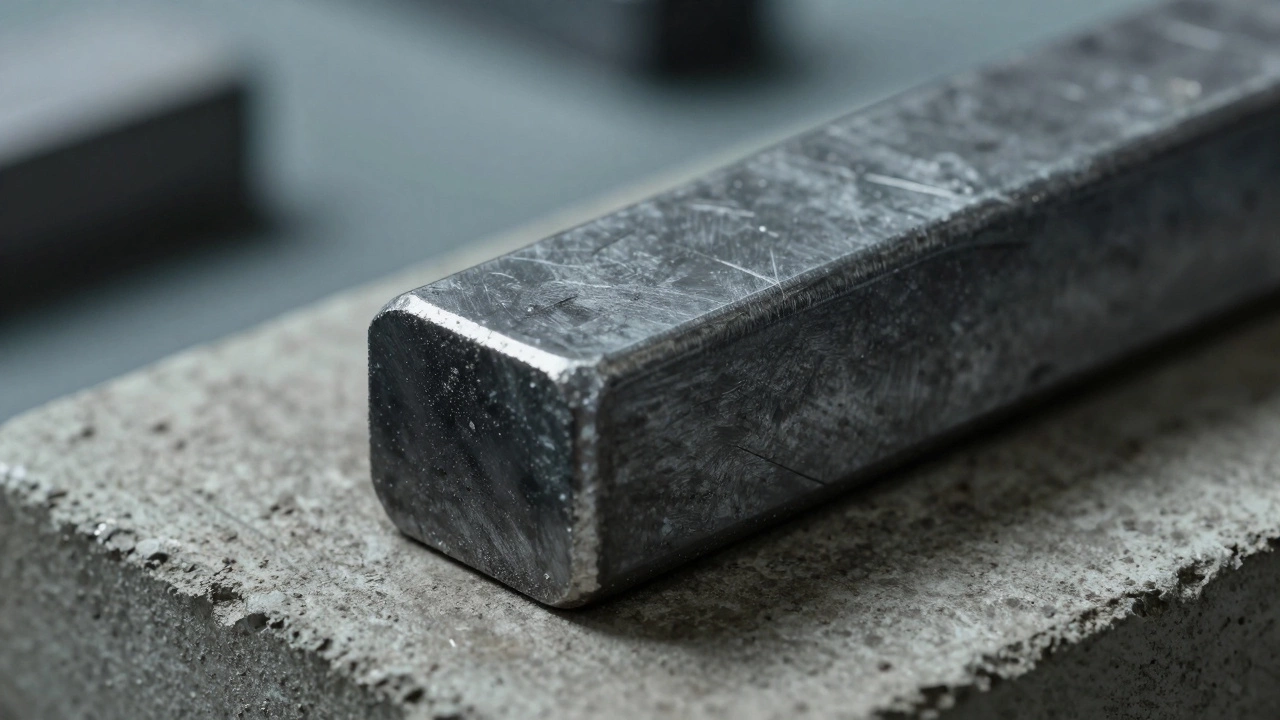
Tungsten is often cited as the strongest natural metal because of its sheer density and heat resistance. However, it’s also incredibly brittle. Drop a tungsten bar on concrete, and it might crack. That makes it useless for structures that need to flex or absorb impact.
Titanium is lighter than steel but stronger than many aluminum alloys. It’s the go-to for aircraft frames where every gram counts. But it’s expensive-often five times the cost of steel-and difficult to machine.
The Real Champion: Engineered Alloys
In the real world, we rarely use pure metals. We mix them. This process, called Alloying, creates materials with properties far superior to their base components. When we talk about the "strongest metal" in practical applications, we’re talking about alloys.
Maraging Steel: The Heavyweight Fighter
If you need raw tensile strength, Maraging Steel is arguably the strongest structural metal available commercially. Developed in the 1960s, this ultra-high-strength steel combines iron with nickel, cobalt, and molybdenum.
Maraging steel can achieve tensile strengths of over 2,500 MPa (megapascals). To put that in perspective, standard mild steel used in construction beams hovers around 400-500 MPa. Maraging steel is more than five times stronger. It’s used in rocket motor casings, satellite structures, and high-performance tooling. The downside? It’s pricey and requires precise heat treatment to unlock its potential.
High-Strength Low-Alloy (HSLA) Steel
For general manufacturing and construction, HSLA Steel is the workhorse. By adding small amounts of vanadium, niobium, or columbium to carbon steel, manufacturers get a material that is significantly stronger than plain carbon steel but still weldable and formable. This is what you find in car frames, pipelines, and bridge cables.
Carbon Fiber Reinforced Polymers (The Non-Metal Competitor)
It’s worth noting that if you strip away the word "metal," Carbon Fiber often beats metals in specific strength (strength per unit weight). It’s used in Formula 1 cars and aerospace. But it doesn’t conduct electricity, it’s susceptible to impact damage from sharp objects, and it’s not a metal. So, it stays out of our top spot today.
Why Steel Dominates Manufacturing
So, if maraging steel is so strong, why isn’t everything made from it? Why do we still see billions of tons of standard Carbon Steel produced annually?
It comes down to cost, scalability, and versatility. Birmingham, England, was once the "City of a Thousand Trades" largely because of its iron and steel industry. Today, global steel production exceeds 1.8 billion metric tons per year. That scale drives costs down.
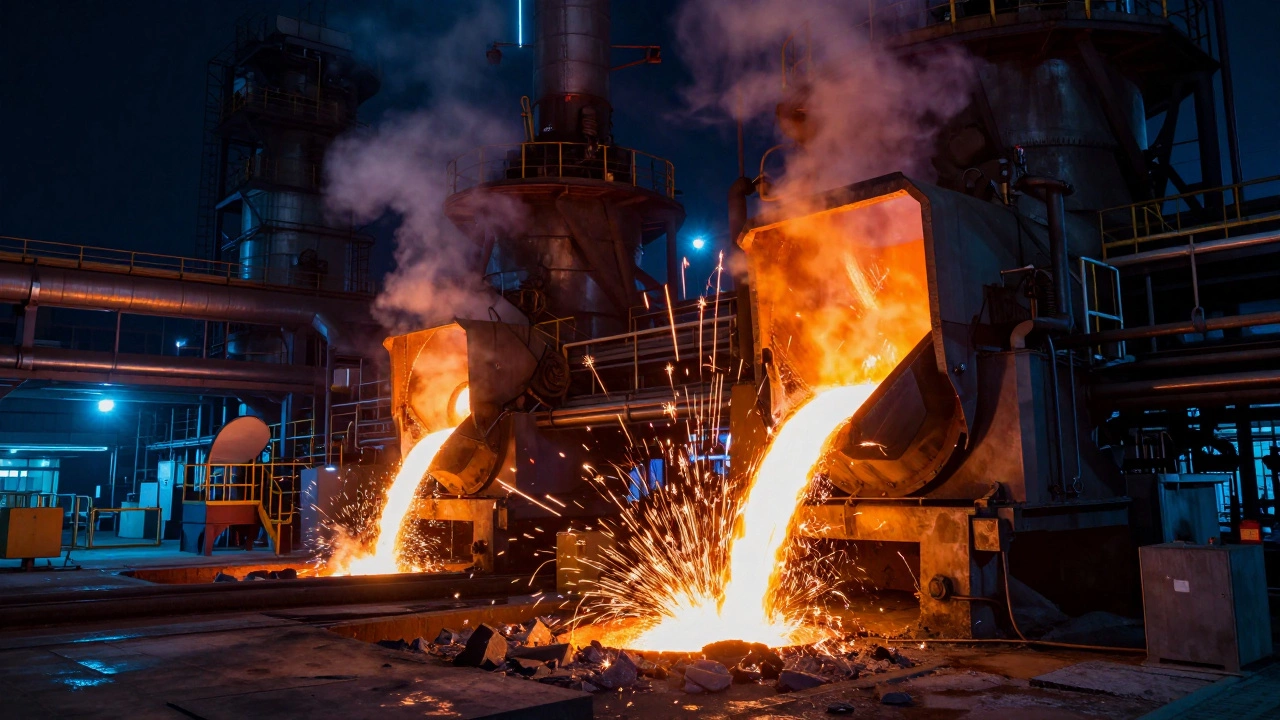
Steel manufacturing plants are marvels of efficiency. From blast furnaces converting iron ore into molten iron to electric arc furnaces recycling scrap metal, the industry has optimized every step. You can tweak the chemical composition of steel to make it magnetic, corrosion-resistant (stainless), or incredibly hard (tool steel).
No other metal offers this range. Aluminum is light but soft. Copper conducts electricity but is too weak for structural loads. Titanium is strong but prohibitively expensive for mass-market goods like washing machines or rebar.
How Steel Gets Its Strength
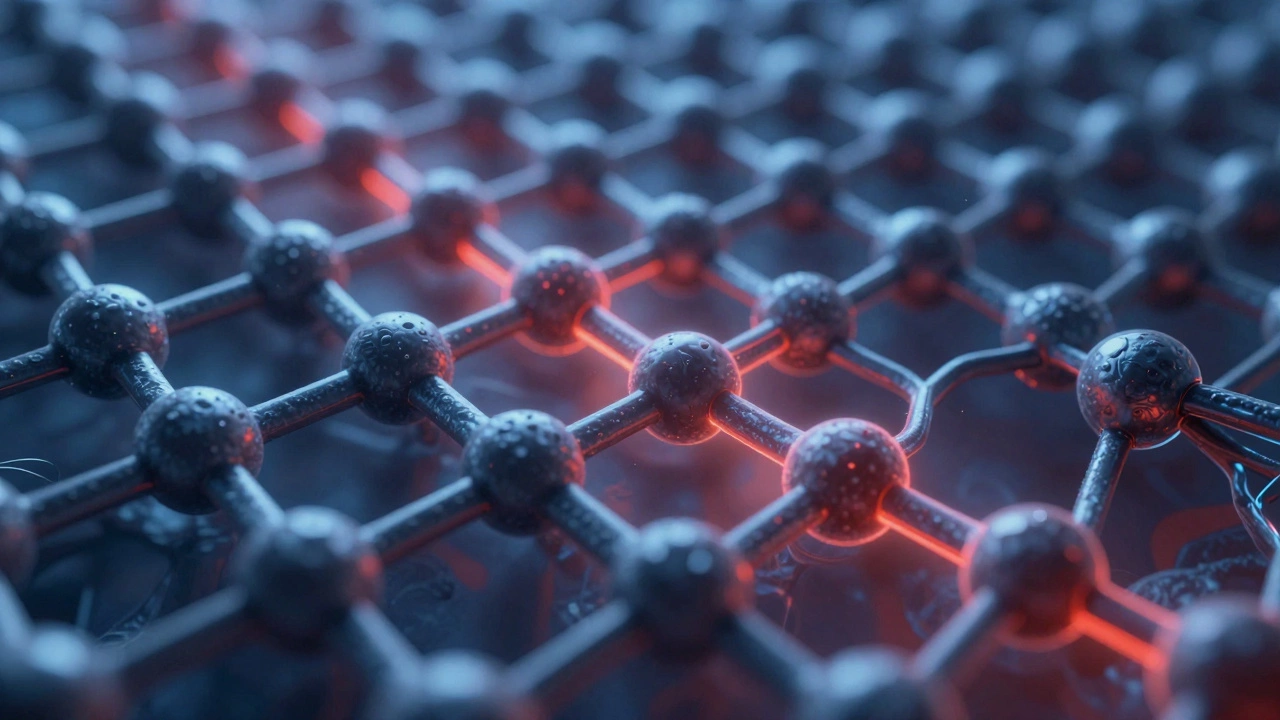
The secret to steel’s strength lies in its microstructure. Pure iron is relatively soft. But when you add carbon (usually between 0.02% and 2.1%), the carbon atoms squeeze into the spaces between iron atoms in the crystal lattice. This distorts the structure, making it harder for layers of atoms to slide past each other-a process known as dislocation movement.
Manufacturers control this through several methods:
- Heat Treatment: Heating steel to specific temperatures and then quenching (rapidly cooling) it in water or oil locks the carbon in place, creating a hard structure called martensite.
- Work Hardening: Physically bending or rolling the metal strains the crystal structure, increasing strength but reducing ductility.
- Grain Refinement: Smaller grains in the metal structure mean more boundaries for cracks to stop against, leading to tougher material.
This is why a paperclip (made of spring steel) can bend back and forth many times, while a cast-iron skillet will crack if dropped. The same base elements, different processing.
Frequently Asked Questions
Is tungsten stronger than steel?
Tungsten has a higher tensile strength than most types of steel, but it is much more brittle. Steel is generally tougher, meaning it can absorb energy and deform without breaking. For structural applications, steel is preferred. For high-heat applications like rocket nozzles, tungsten is often used.
What is the strongest metal used in construction?
High-Strength Low-Alloy (HSLA) steel and reinforced carbon steel are the standards in construction. They offer the best balance of strength, durability, and cost-effectiveness for building skyscrapers, bridges, and infrastructure.
Can steel be stronger than titanium?
Yes. While titanium has a better strength-to-weight ratio, high-grade steels like maraging steel have higher absolute tensile strength than titanium alloys. However, titanium is lighter and more corrosion-resistant, which is why it’s favored in aerospace.
Why is steel considered the backbone of industry?
Steel is versatile, recyclable, and scalable. It can be manufactured in vast quantities at a low cost compared to other strong metals. Its properties can be tailored for almost any application, from razor blades to ship hulls, making it indispensable to modern manufacturing.
What makes maraging steel so strong?
Maraging steel gets its strength from a precipitation-hardening process rather than carbon content. It contains nickel, cobalt, and molybdenum, which form fine particles within the metal matrix during heat treatment, blocking dislocation movement and resulting in extreme tensile strength without sacrificing toughness.
Is gold a strong metal?
Pure gold is actually quite soft and malleable. It has low tensile strength compared to structural metals. This is why jewelry gold is often alloyed with copper or silver to increase its hardness and durability for everyday wear.