
Manufacturing Type Selector
Select Your Manufacturing Scenario
When you think about how things are made - from your smartphone to a car to a simple screw - there are only two fundamental ways factories do it. These aren’t just buzzwords or fancy terms. They’re the backbone of every factory on the planet. And if you’re trying to understand manufacturing, whether you’re starting a business, working in supply chain, or just curious, you need to know these two: job shop manufacturing and mass production.
Job Shop Manufacturing: Custom, One-at-a-Time
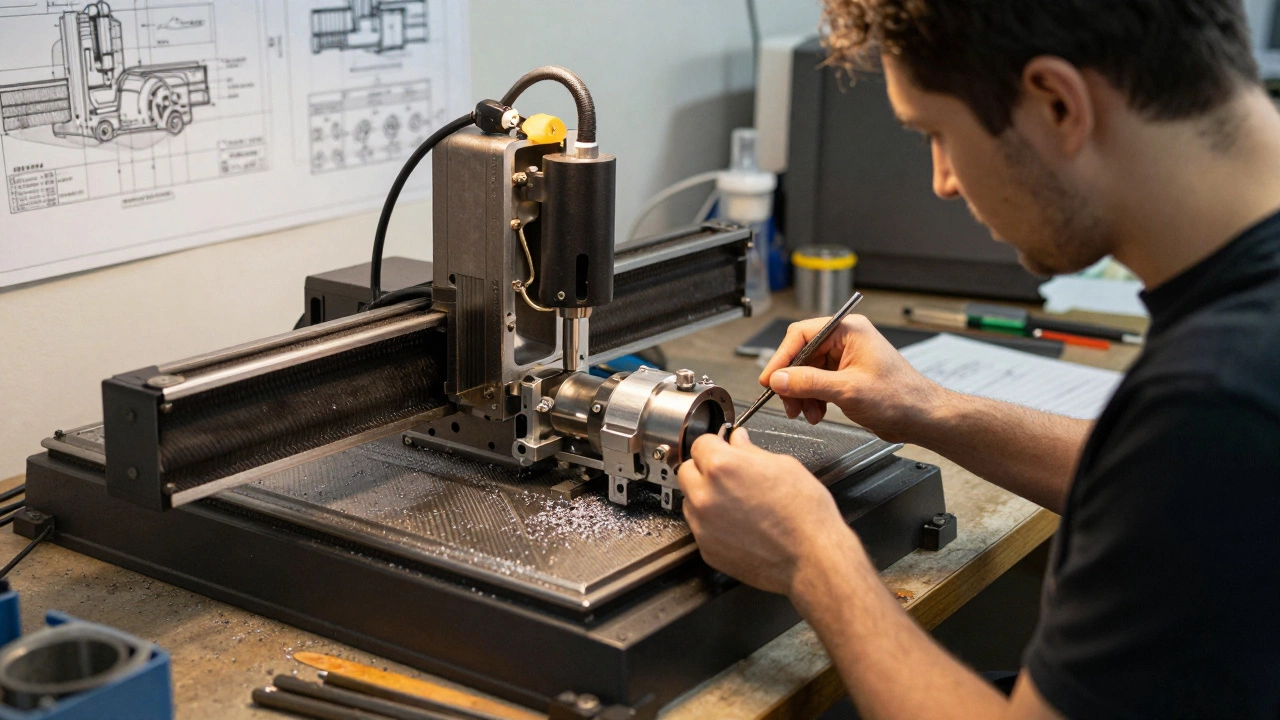
Imagine a small workshop where every job is different. A machine shop builds a single custom gear for a vintage tractor. A furniture maker crafts a one-of-a-kind oak dining table. A medical device company assembles a prototype prosthetic limb. That’s job shop manufacturing. It’s not about volume. It’s about precision, flexibility, and solving unique problems.
This type of manufacturing thrives on skilled labor and adaptable equipment. Workers don’t repeat the same task all day. They switch between tasks - drilling, welding, finishing - depending on the order. Machines are set up once, used for one job, then reconfigured for the next. There’s no assembly line. No fixed sequence. Every product has its own roadmap.
Job shops are common in aerospace, defense, medical devices, and custom machinery. A single order might be for 5 units. Or 1. The cost per unit is high because setup time and labor are spread across so few items. But the value isn’t in volume - it’s in specialization. Companies like SpaceX rely on job shop methods to build rocket components that no one else makes.
Key traits:
- Low volume, high variety
- High labor intensity
- Flexible equipment and skilled workers
- Long setup times
- Custom orders, not stock items
Mass Production: Repeat, Scale, Repeat
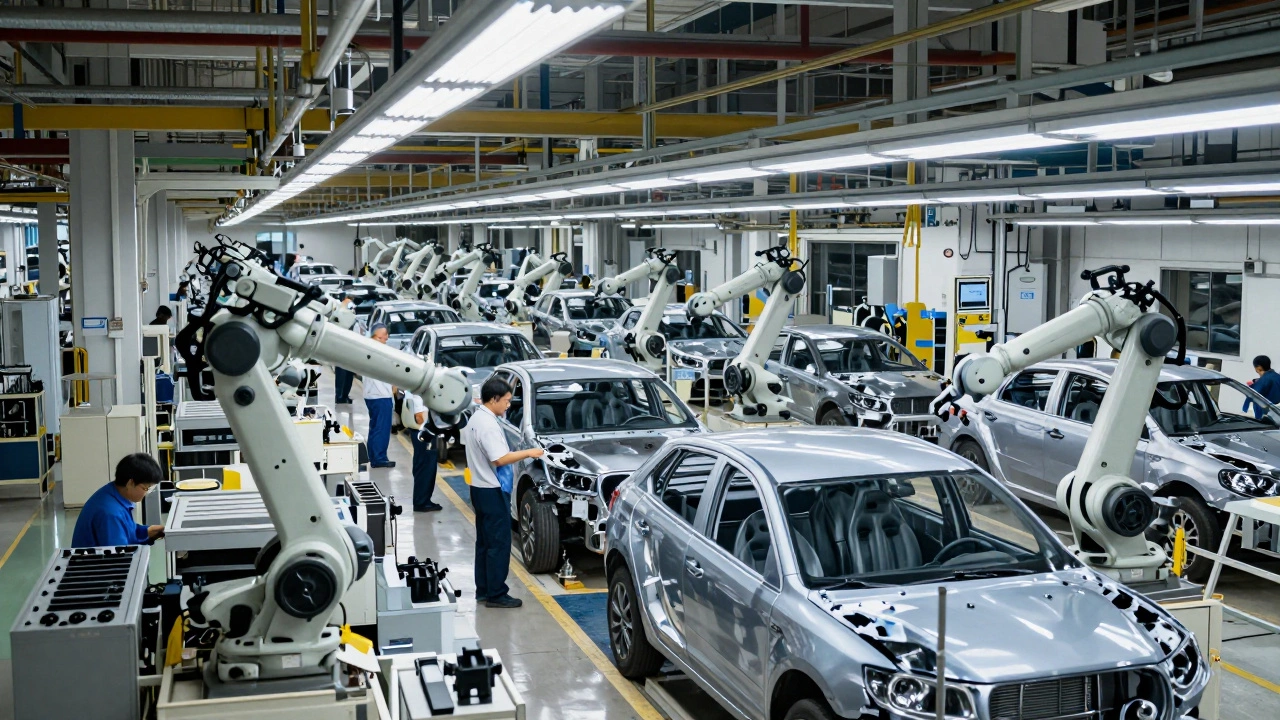
Now think of a car factory. Thousands of identical vehicles roll off the line every day. Same engine. Same dashboard. Same tire placement. That’s mass production. It’s the opposite of job shop. Here, the goal isn’t uniqueness - it’s consistency, speed, and low cost per unit.
Mass production uses assembly lines, automated machinery, and standardized parts. Workers do one task over and over: install a bolt, weld a joint, test a circuit. Machines are fixed in place. Tools are calibrated for one exact job. The product moves from station to station, and every step is timed to the second.
This method exploded in the early 1900s with Henry Ford’s Model T. Before that, cars were hand-built. Ford’s system cut production time from 12 hours to 90 minutes. Today, it’s everywhere - smartphones, bottled water, toothpaste, light bulbs. If you’ve ever bought something cheap and identical to millions of others, mass production made it possible.
Mass production works best when demand is huge and stable. If the product changes even a little - say, a new color or a different button layout - the whole line has to be retooled. That’s expensive. So companies using this method stick to proven designs for years.
Key traits:
- High volume, low variety
- Low labor cost per unit
- Fixed, automated processes
- Short cycle times
- Standardized products
Why These Two Matter More Than You Think
Most manufacturing articles throw around terms like “batch production” or “continuous flow.” But those are just variations of the two main types. Batch production? It’s job shop scaled up - a few hundred units at a time. Continuous flow? It’s mass production with no breaks - like oil refining or chemical plants.
Understanding the difference helps you make smarter decisions. If you’re launching a new product, should you build 10 prototypes in a job shop? Or jump straight to mass production? If you’re choosing a supplier, are they set up for customization or scale? If you’re investing in a factory, what kind of equipment should you buy?
Here’s a real example: A startup makes smart water bottles. They test 50 units with different sensors and designs. They use a job shop. Once they pick the best design, they switch to mass production to make 100,000 units. That’s the full lifecycle - from custom to volume.
What About Government Schemes?
Government programs often push manufacturers toward one type or the other. In countries like India, China, or Germany, subsidies are tied to scale. Tax breaks for automation? That favors mass production. Grants for R&D in custom medical devices? That supports job shops.
For example, India’s Production Linked Incentive (PLI) scheme rewards companies that increase output of electronics. It doesn’t care if you make one custom drone - it wants you to make 10 million smartphones. That’s mass production. Meanwhile, the U.S. Defense Production Act funds custom parts for military gear - job shop territory.
So if you’re reading about government manufacturing schemes, ask: Is this helping companies build more of the same thing? Or is it helping them build something new? The answer tells you which type of manufacturing the policy supports.
Which One Should You Use?
There’s no “better” type. It’s about fit.
Use job shop manufacturing if:
- Your product is unique or customized
- You serve niche markets (e.g., medical, aerospace, luxury goods)
- You’re testing prototypes or small runs
- You need flexibility to change designs often
Use mass production if:
- You’re selling the same product to millions
- Your design is stable and won’t change for years
- You need to cut costs per unit as low as possible
- You have predictable, high-volume demand
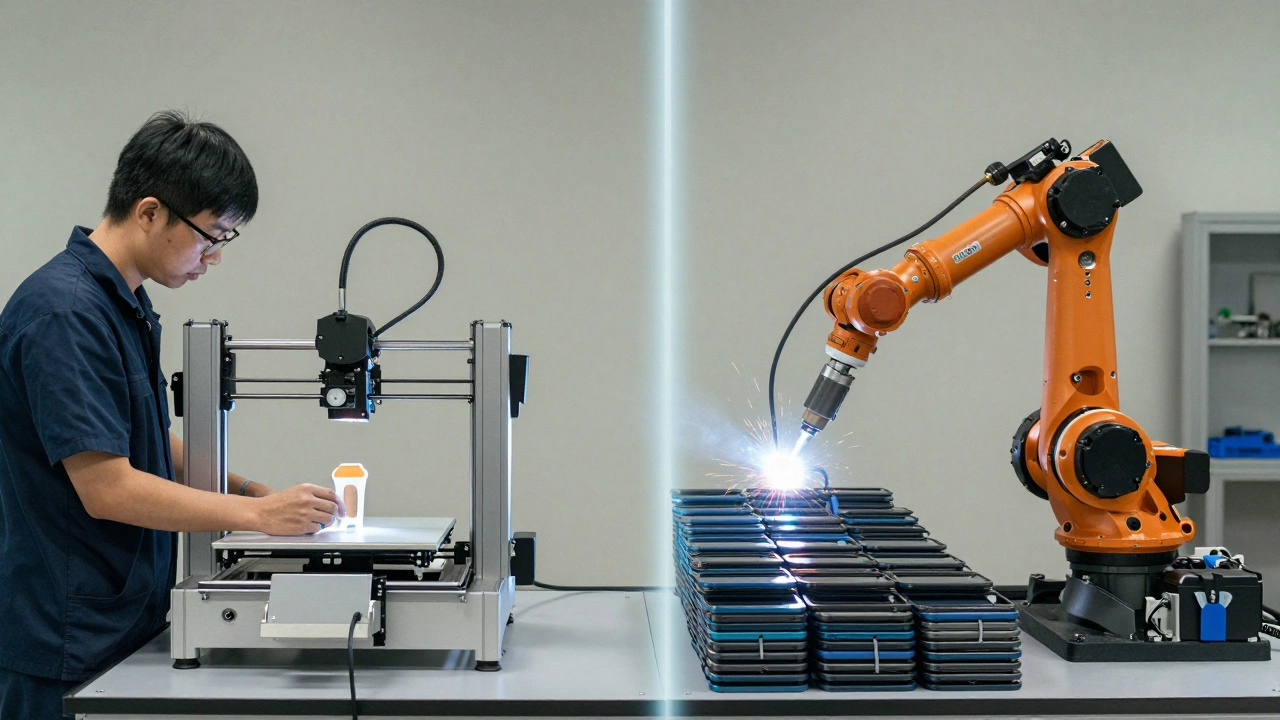
Many companies mix both. A company might use job shops for custom client orders and mass production for their standard line. That’s called hybrid manufacturing - and it’s becoming more common as automation gets smarter.
The Bottom Line
Manufacturing doesn’t have dozens of complex models. At its core, it’s one of two things: making unique things one at a time, or making the same thing thousands of times. Everything else is just a variation.
If you remember this, you’ll understand why some factories look like workshops and others look like sci-fi sets. You’ll know why custom gear costs $500 and a phone costs $300. And you’ll see why government policies push so hard for scale - because mass production moves economies.
Start with these two. Master them. Then everything else makes sense.
What’s the difference between job shop and batch manufacturing?
Job shop manufacturing makes one-off or very small batches - often just 1 to 10 units - with high customization. Batch manufacturing makes larger groups of the same product - say 500 to 5,000 units - but still switches between products. Batch is a middle ground: more volume than job shop, but less automation than mass production.
Can a company use both types of manufacturing?
Yes, and many do. A company like Tesla uses mass production for its standard Model 3s, but runs job shop lines for custom configurations, prototype testing, or specialized parts. Hybrid setups let you serve both mass markets and niche customers without sacrificing efficiency.
Why does mass production have lower costs per unit?
Because setup costs - like tooling, training, and machine calibration - are spread over thousands of units. In job shop, you pay those costs for every single job. In mass production, you pay them once, then repeat. Automation and standardized parts also cut labor and waste.
Are job shops outdated in modern manufacturing?
No. In fact, they’re growing. With demand for customization rising - in healthcare, luxury goods, and tech - job shops are thriving. Modern CNC machines and digital design tools make them faster and more precise than ever. They’re not relics - they’re essential for innovation.
How do government incentives affect manufacturing type?
Most government programs reward scale. Tax credits for automation, grants for export volume, subsidies for hiring workers in industrial zones - all favor mass production. But some programs, like defense R&D funding or medical device innovation grants, specifically support job shop work because it creates unique, high-value products.