
Indian Textile Industry Export Growth Calculator
Growth Parameters
Analysis Results
Enter parameters and click calculate to see the growth analysis.
Key Industry Metrics (2026)
#2
Global Producer Rank
45M+
People Employed
70%
Synthetic Fiber Import Dependency
~2.3%
Contribution to National GDP
The buzz around Indian textiles is louder than ever. As we move through 2026, the sector stands at a critical crossroads. It is no longer just about cheap labor; it is about scale, sustainability, and smart infrastructure. For anyone looking to understand where the money is flowing and where the risks lie, the current landscape offers a mix of massive government backing and stubborn structural hurdles.
If you are a manufacturer, an investor, or simply someone tracking global supply chains, you need to know what is actually happening on the ground right now. The story isn't simple. It’s a tale of record-breaking export targets clashing with energy costs that keep rising. Let’s break down the real situation in the Indian textile industry today.
The Big Picture: Growth vs. Reality
India is the world’s second-largest producer and exporter of textiles. That title carries weight. In 2025-26, the sector contributed roughly 2.3% to the national GDP and provided employment to over 45 million people directly and indirectly. But numbers can be misleading if you don’t look closer.
The government has set an ambitious target: to boost textile exports to $200 billion by 2030. Currently, we are hovering around the $45-50 billion mark for total textile and apparel exports. To hit that 2030 goal, the industry needs to grow at a compound annual growth rate (CAGR) of nearly 15%. Is that realistic? Only if certain bottlenecks are cleared immediately.
The good news? Demand is strong. Global brands are actively diversifying away from single-source dependencies, largely due to geopolitical tensions involving China. This "China Plus One" strategy has been a significant tailwind for Indian manufacturers. However, supply capacity hasn't scaled up fast enough to capture all that diverted demand. Many orders still slip to Vietnam and Bangladesh because they have more integrated value chains.
| Metric | Current Value / Status | Global Rank |
|---|---|---|
| GDP Contribution | ~2.3% | N/A |
| Employment | 45+ Million | #2 (after China) |
| Export Value (Total) | $48 Billion (approx.) | #2 (after China) |
| Cotton Production | 32 Million Bales | #1 |
| Synthetic Fiber Dependency | 70% Imported | N/A |
The Game Changer: PM MITRA Parks
If there is one initiative defining the industry in 2026, it is the Prime Minister's Mega Integrated Textile Region and Apparel (PM MITRA) Scheme. Launched a few years ago, these industrial parks are finally coming online.
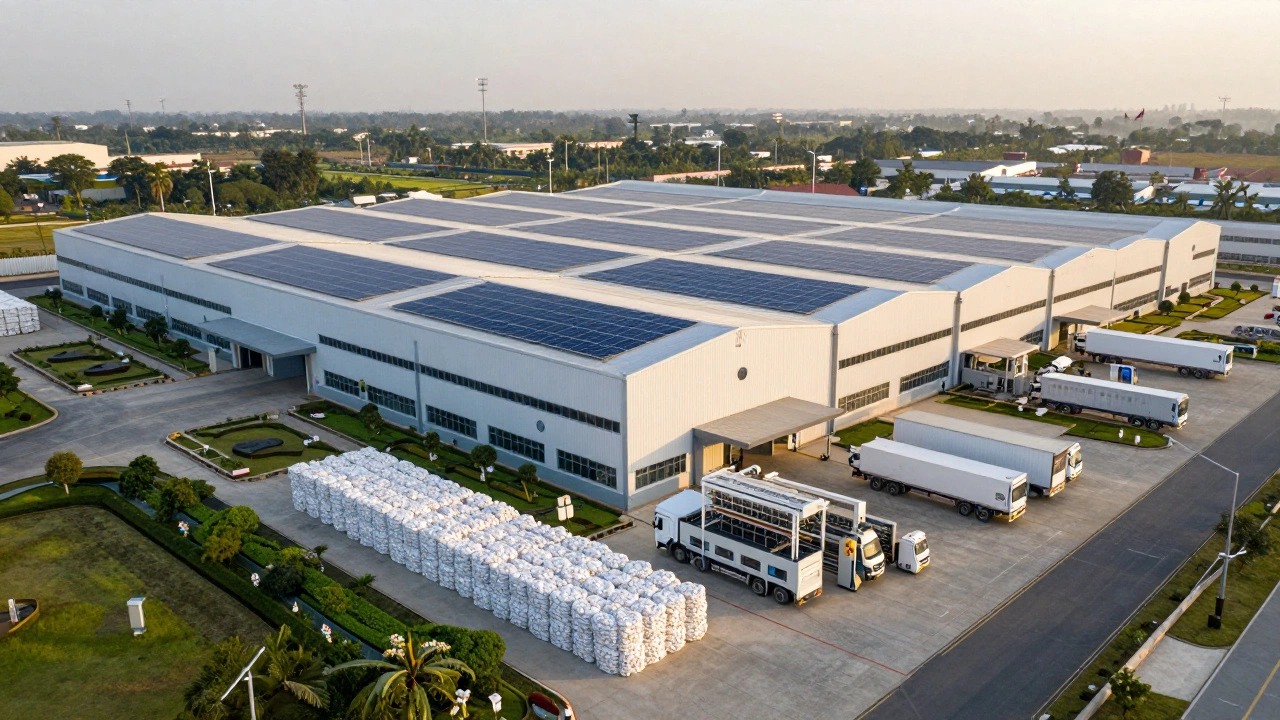
The idea is simple but powerful: create dedicated zones with ready-to-use infrastructure. We are talking about common effluent treatment plants, reliable power supply, gas pipelines, and logistics hubs all under one roof. The first few parks in Tamil Nadu, Telangana, and Madhya Pradesh have started attracting major players. Companies like Reliance Industries and Adani Group have shown interest in setting up large-scale units within these parks.
Why does this matter? Because historically, Indian textile manufacturing was fragmented. Small workshops operated in isolation, lacking access to modern technology or clean energy. PM MITRA aims to cluster them, creating economies of scale. By 2026, early data suggests that factories located within MITRA parks are seeing a 15-20% reduction in operational costs due to shared utilities and streamlined logistics.
The Cotton Advantage and the Synthetic Gap
India is a cotton powerhouse. We produce about 32 million bales annually, making us the largest producer globally. This gives us a natural advantage in the natural fiber segment. Brands looking for organic cotton or sustainable linen find India to be a top destination.
However, the modern fashion world runs on synthetics. Polyester, nylon, and acrylic make up the bulk of global clothing production. Here, India faces a serious challenge. We import roughly 70% of our synthetic fibers. This dependency creates two problems:
- Cost Volatility: When global oil prices fluctuate, the cost of polyester spikes, squeezing margins for Indian garment makers.
- Supply Chain Risk: Relying on imports for raw materials makes long-term planning difficult.
To fix this, the government introduced the Production Linked Incentive (PLI) scheme for man-made fibers. The goal is to encourage domestic production of polymer-based textiles. Early results are promising, with new chemical plants coming online in Gujarat and Maharashtra. But it will take another 2-3 years before India becomes self-sufficient in synthetics.
Export Markets: Who Is Buying?
Your customers dictate your strategy. In 2026, the export map looks slightly different than it did five years ago.
- United States: Still the largest buyer, accounting for nearly 30% of India’s textile exports. American retailers are increasingly seeking ethical sourcing partners, which plays to India’s strength in traceability.
- European Union: A close second. However, EU buyers are becoming stricter about carbon footprints. New regulations like the Carbon Border Adjustment Mechanism (CBAM) mean Indian exporters must prove their products are green. This is pushing companies to invest in solar power and water recycling.
- Brazil and Africa: Emerging markets. Trade agreements under the African Continental Free Trade Area (AfCFTA) present opportunities for Indian finished garments to enter African markets with lower tariffs.
A key trend is the rise of "nearshoring." While India benefits from being far from China, some Western brands prefer Mexico or Turkey for speed. To compete, Indian manufacturers are focusing on faster turnaround times using digital inventory systems.
Technology and Automation: The Silent Revolution
You might think of textile mills as dusty, noisy places with manual looms. That image is outdated. In 2026, automation is reshaping the sector.
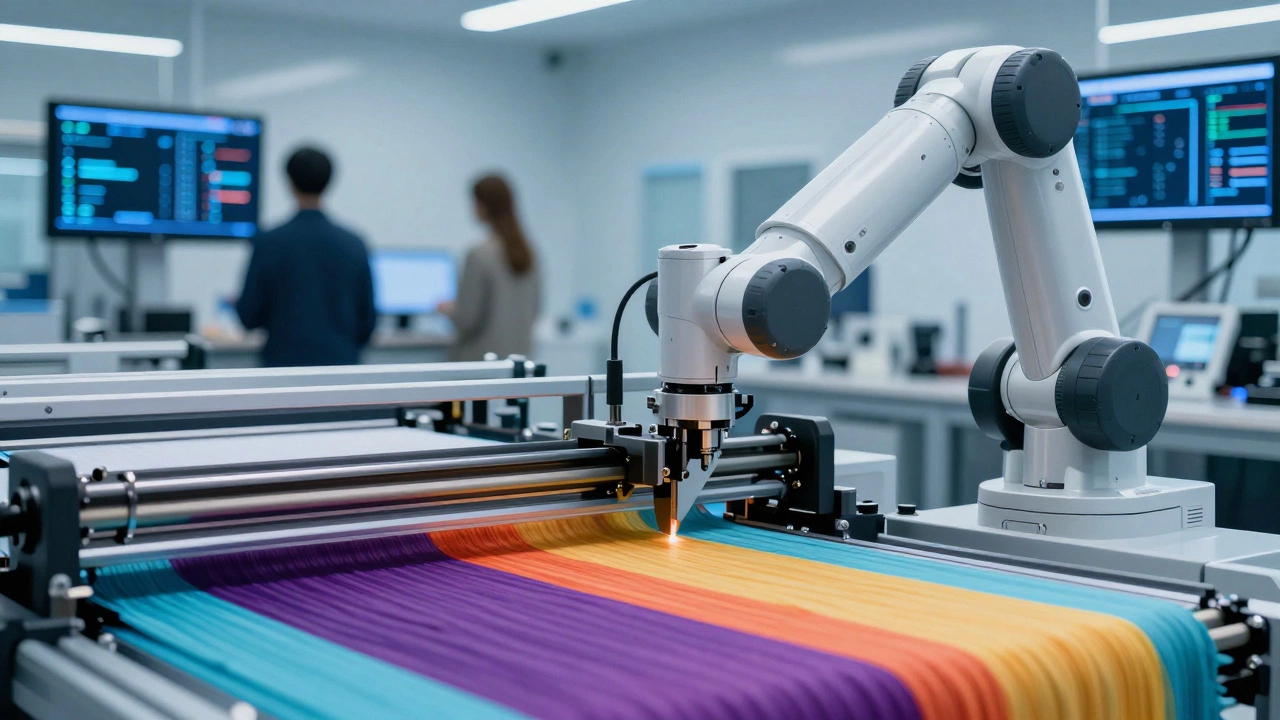
Larger players are adopting AI-driven quality control cameras that detect fabric defects in real-time. Robotic cutting machines are reducing material waste by up to 10%. Digital printing technology allows for small-batch, customized orders without the high setup costs of traditional dyeing methods.
This shift is crucial because it addresses the labor shortage issue. Younger generations in India are less interested in working in traditional mill environments. Automation helps maintain productivity while improving working conditions. Companies investing in Industry 4.0 technologies are reporting higher efficiency rates and better compliance with international safety standards.

Challenges That Can’t Be Ignored
It’s not all positive news. Several headwinds threaten to slow down growth.
Energy Costs: Textile processing is energy-intensive. Electricity and fuel costs in India remain higher compared to competitors like Bangladesh and Vietnam. High energy bills eat into profit margins, especially for small and medium enterprises (SMEs).
Water Scarcity: Dyeing and finishing require massive amounts of water. With groundwater levels dropping in key textile hubs like Tirupur and Surat, environmental regulations are tightening. Factories facing shutdowns due to pollution norms are a recurring headline. Sustainable water management is no longer optional; it’s a survival requirement.
Skill Gap: While we have plenty of workers, we lack skilled technicians who can operate advanced machinery. Vocational training programs exist, but they often lag behind industry needs. Bridging this gap requires closer collaboration between educational institutions and manufacturers.
Sustainability: From Buzzword to Business Model
In 2026, sustainability is not a marketing gimmick. It is a prerequisite for doing business. Global brands like H&M, Zara, and Nike have committed to net-zero emissions. They demand transparency from their suppliers.
Indian manufacturers are responding. There is a surge in investments in circular economy models-recycling textile waste into new fibers. Companies are adopting closed-loop water systems and switching to renewable energy sources. Some regions are even experimenting with blockchain to track the journey of a cotton bale from farm to final product, ensuring authenticity and ethical labor practices.
For smaller players, this transition is expensive. Government subsidies for green technology adoption are helping, but many SMEs still struggle to afford the upfront capital. This could lead to further consolidation in the industry, with larger firms acquiring smaller ones to meet sustainability benchmarks.
What Does This Mean for You?
If you are considering entering the Indian textile market, timing is key. The infrastructure improvements from PM MITRA and PLI schemes are creating a more favorable environment than ever before. However, success will depend on how well you adapt to the new rules of the game: automation, sustainability, and integration.
Don’t just focus on low-cost labor. Focus on value addition. Develop expertise in niche areas like technical textiles, medical fabrics, or eco-friendly dyes. Build relationships with global brands early, showing them your commitment to ethical and green practices. And keep an eye on policy changes-the government is likely to introduce more incentives for domestic manufacturing in the coming months.
The Indian textile industry is resilient. It has weathered crises before. Now, with strategic support and technological upgrades, it is poised for a significant leap forward. The question is not whether India will remain a major player, but how quickly it can climb to the top tier alongside China and Vietnam.
Is the Indian textile industry growing in 2026?
Yes, the industry is experiencing steady growth driven by government initiatives like PM MITRA and PLI schemes, as well as increased global demand for diversified supply chains. Export values are rising, though challenges in energy costs and synthetic fiber dependency persist.
What are the main challenges facing textile manufacturers in India?
Key challenges include high energy costs, dependence on imported synthetic fibers, water scarcity affecting dyeing processes, and a skill gap in operating advanced automated machinery. Environmental compliance is also becoming stricter.
How does PM MITRA benefit textile businesses?
PM MITRA provides integrated industrial parks with ready-made infrastructure such as power, water, waste treatment, and logistics. This reduces setup time and operational costs for manufacturers, encouraging clustering and economies of scale.
Who are the biggest export markets for Indian textiles?
The United States is the largest buyer, followed by the European Union. Emerging markets in Brazil and Africa are also gaining importance due to trade agreements and changing consumer preferences.
Is India self-sufficient in textile raw materials?
India is self-sufficient in cotton, being the world's largest producer. However, it imports about 70% of its synthetic fibers like polyester and nylon, though domestic production is increasing due to recent incentive schemes.
How is sustainability impacting the Indian textile sector?
Sustainability is now a critical requirement for exporting to Europe and the US. Manufacturers are investing in renewable energy, water recycling, and circular economy practices to meet strict international environmental standards and consumer demands.