How Food Is Processed: From Raw Ingredients to Shelf-Stable Products
When you open a carton of milk, grab a frozen meal, or bite into a bag of chips, you’re consuming the result of how food is processed, the series of physical and chemical steps that turn raw agricultural products into safe, convenient, and shelf-stable food items. Also known as food manufacturing, this process isn’t just about adding preservatives—it’s about control, safety, and consistency at every stage. Most people think of food processing as something industrial and unnatural, but even simple actions like washing, chopping, or boiling are forms of processing. The real goal? To make food safer, last longer, and taste better—without losing its nutritional value.
Food science, the study of how food behaves under different conditions, is the backbone of everything from pasteurizing milk to making plant-based meat mimic the texture of beef. Without it, we wouldn’t know how heat kills bacteria, why sugar preserves jam, or how vacuum sealing stops spoilage. Behind every packaged product are seven core unit operations, the basic building blocks used in every food production line: cleaning, mixing, separation, heating, drying, size reduction, and packaging. These aren’t fancy terms—they’re the same steps used in home kitchens, just scaled up and automated. A tomato becomes sauce through cleaning, chopping, heating, and sealing. Grain becomes cereal through drying, flaking, toasting, and coating. It’s all the same logic, just faster and bigger.
What you eat isn’t random. It’s engineered. The reason your bread rises, your yogurt stays thick, and your frozen veggies don’t turn to mush is because someone tested how moisture, pH, temperature, and time interact. And it’s not just about big brands. Small manufacturers in India and elsewhere are using these same principles to make local snacks, spices, and dairy products that last longer and reach more people. You don’t need a lab to understand this—you just need to know what’s happening when you open a package. The next time you see a list of ingredients, ask: What steps got this here? How was it preserved? Why does it look and taste this way?
Below, you’ll find real examples of how food moves from field to fork—what’s changed in the last decade, who’s leading the innovation, and how even small-scale producers are using simple tech to compete with giants. You’ll see the science behind everyday products, the hidden costs of convenience, and why some processing methods are smarter than others. No fluff. Just clear, practical insight into the systems that feed the world.
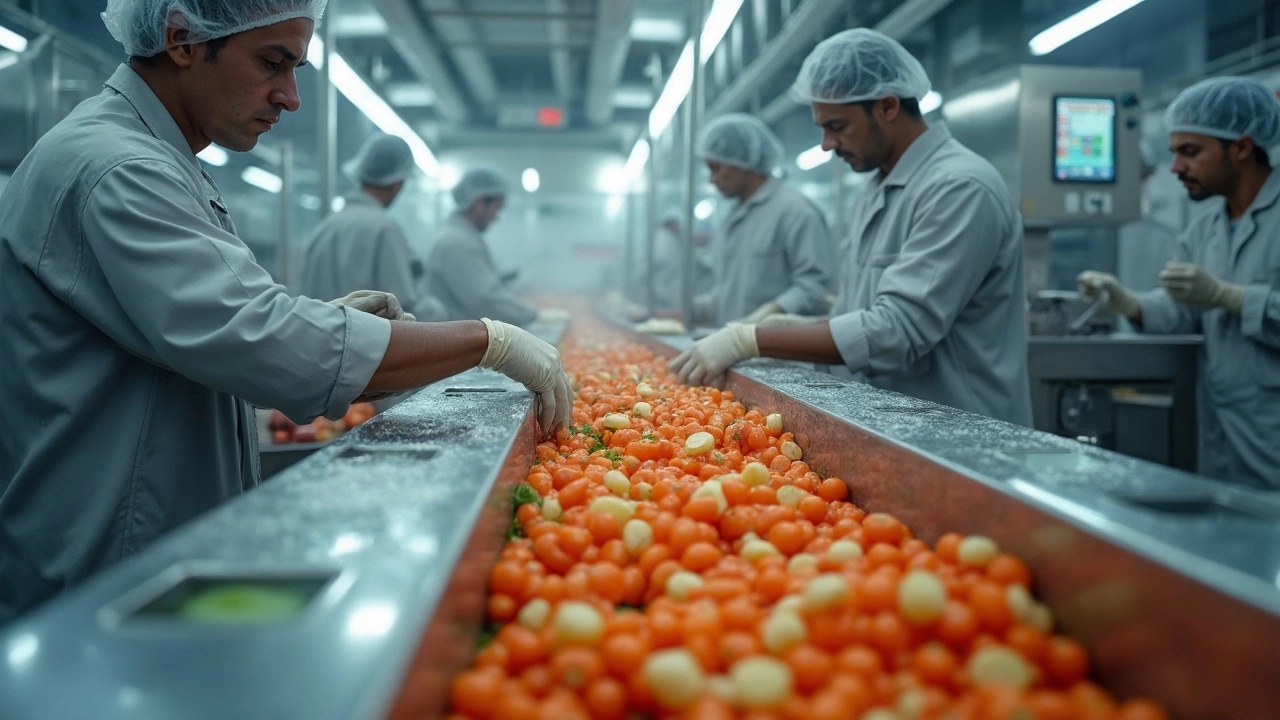
Unit Operations of Food Processing: What Actually Happens in the Plant?
Curious what's really happening inside a food processing plant? This article breaks down the key unit operations, step by step. From how raw ingredients get cleaned to how they're turned into the snacks you find on your shelf, everything is covered with simple examples. Dive into the basics and pick up real tips on making food safer, tastier, and longer-lasting. It's practical, jargon-free, and perfect for anyone who wants to know how their food is made.
Food Processing
Latest Posts



Tags
- manufacturing
- small scale manufacturing
- plastic manufacturing
- plastic pollution
- India
- food processing
- textile industry
- government schemes
- electronics manufacturing
- small business
- steel manufacturing
- startup ideas
- production
- textile manufacturers India
- manufacturing business ideas
- business ideas
- chemical manufacturers India
- electronics manufacturing India
- steel manufacturing plants
- plastic manufacturers