Demand in Manufacturing: What Drives It and Where It’s Growing Fast
When we talk about demand, the real-world need for products that drives production, hiring, and investment in factories. Also known as market demand, it’s not just about how many people want something—it’s about who’s willing to pay for it, and where the supply chain can actually deliver. In India, demand isn’t just rising—it’s reshaping entire industries. From Gujarat’s chemical plants to Tamil Nadu’s electronics hubs, factories are expanding because real customers are buying, not because someone predicted a trend.
Demand doesn’t live in a vacuum. It’s tied to Indian manufacturing, the network of small and large factories producing goods locally for global markets. When demand for steel climbs, companies like Nucor in the U.S. ramp up—but so do Indian steel fabricators supplying bridges, solar mounts, and housing. When demand for pharmaceuticals spikes, Biocon and other Indian drug makers don’t just meet it—they outproduce global rivals. And when demand for cheap electronics grows, consumers in the U.S. and Europe look to India, not just China, for the best prices.
Some demand is quiet but massive: high-demand chemicals, substances like phenol and methanol that go into everything from plastics to medicines. Gujarat alone makes nearly half of India’s chemicals because demand from textile, paint, and pharma makers never drops. Other demand is sudden and loud—like the spike in orders for handcrafted furniture after global buyers tired of mass-produced Chinese pieces. That’s why Indian woodworkers are now exporting more than ever.
Demand also kills industries. If a product becomes too expensive to make, or if consumers switch to something better, factories shut down. That’s why some manufacturing sectors will vanish in the next 15 years—not because of technology, but because the demand dried up. The smart players don’t wait for demand to show up. They spot it early: in rising import costs, in local material shortages, in government policies like Gujarat’s textile incentives, or in the growing number of people who’d rather buy a locally made gadget than a shipped-in one.
What you’ll find in these posts isn’t theory. It’s proof. Real examples of how demand drives factories in India—from the smallest home-based makers turning scrap into profit, to the biggest chemical producers scaling up to meet global needs. You’ll see who’s winning, who’s losing, and where the next big wave of demand is already building.
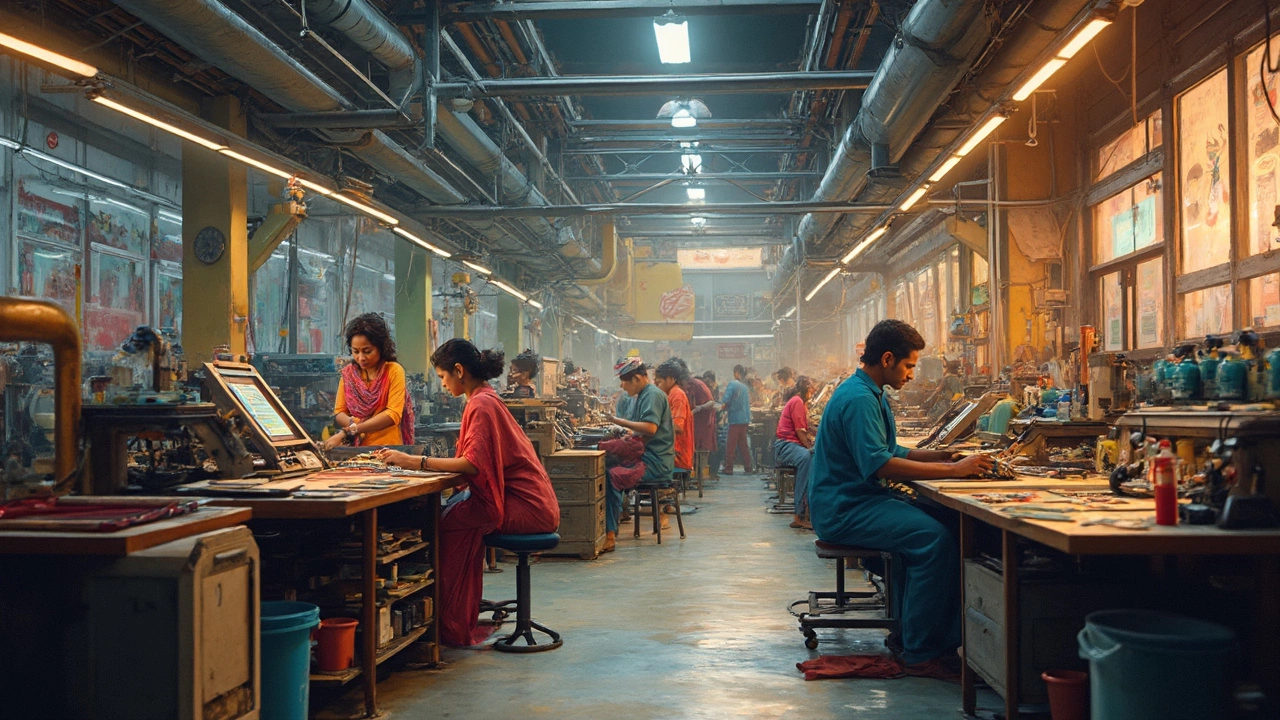
The Everlasting Demand for Manufacturing Business Ideas
Manufacturing businesses are a staple in our world, consistently meeting needs and driving innovation. As we dive into the nuts and bolts of why certain manufacturing businesses remain in demand, you'll uncover the trends that keep them thriving. From essentials we can't live without to new technological advances, there's always an opportunity waiting. Explore the types of businesses that have stood the test of time and the tips for staying relevant in an ever-changing market.
Manufacturing Business Ideas
Latest Posts




Tags
- manufacturing
- small scale manufacturing
- plastic manufacturing
- India
- plastic pollution
- food processing
- textile industry
- government schemes
- electronics manufacturing
- small business
- steel manufacturing
- startup ideas
- production
- textile manufacturers India
- manufacturing business ideas
- business ideas
- chemical manufacturers India
- electronics manufacturing India
- steel manufacturing plants
- manufacturing business