
Steel Selection Calculator
Select Your Application
Key Requirements
Environmental Conditions
When you think about steel, you might picture skyscrapers, cars, or bridges. But not all steel is the same. The difference between good steel and great steel comes down to where it’s made, how it’s made, and who’s watching the process. If you’re asking what country makes the best quality steel, the answer isn’t just about output numbers-it’s about precision, consistency, and decades of refinement.
Japan: The Precision Masters
Japan doesn’t just make steel-it perfects it. Companies like Nippon Steel and Kobe Steel have built reputations on ultra-pure, ultra-consistent grades used in high-end automotive parts, aerospace components, and precision machinery. Their secret? Strict control over impurities. Japanese steelmakers often target sulfur and phosphorus levels below 0.002%, far tighter than global averages. This matters because even tiny amounts of these elements can cause cracks under stress. In 2024, Japanese steel was the top choice for Tesla’s battery casings and Toyota’s high-strength chassis frames. Why? Because when your car’s safety depends on a single sheet of steel, you don’t gamble.
Germany: Engineering-Driven Excellence
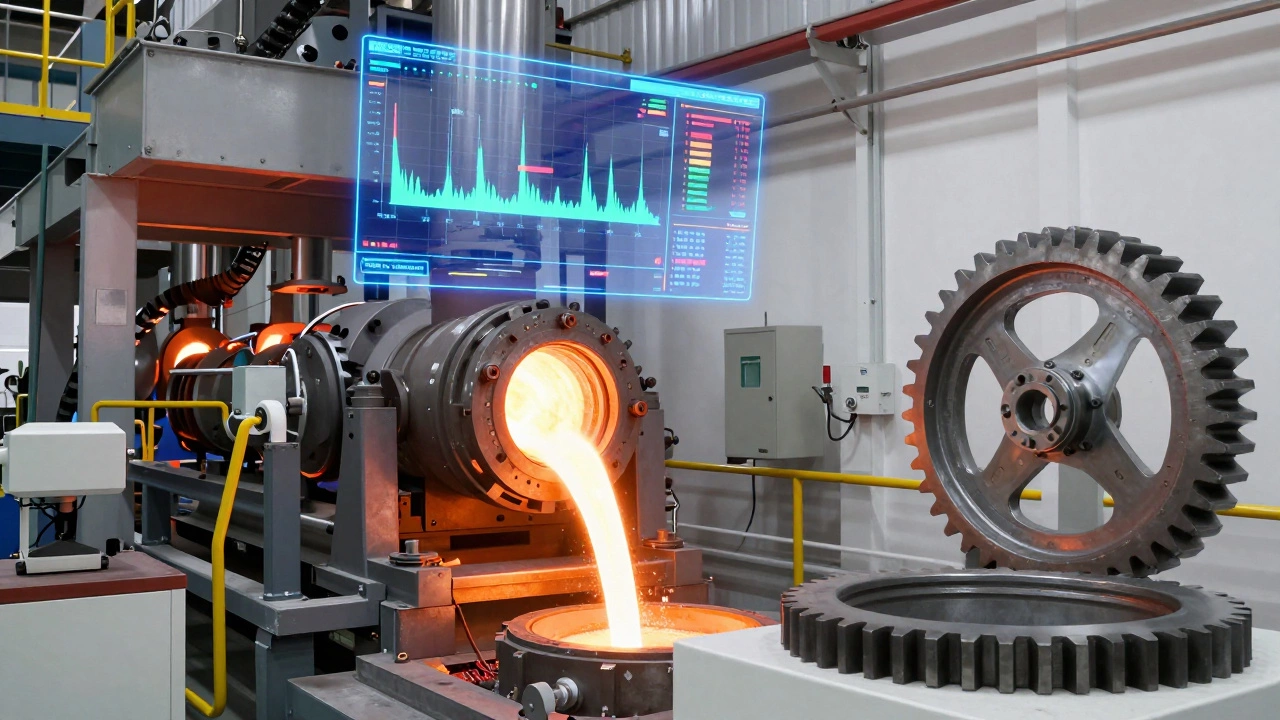
German steel is the backbone of Europe’s industrial might. ThyssenKrupp and Salzgitter produce grades that meet DIN and EN standards so exact, they’re often used as benchmarks worldwide. Think of the steel in a German luxury car’s suspension system or the gears inside a CNC machine. It’s not just strong-it’s predictable. German mills use advanced spectrometry and AI-driven quality control to monitor every batch. A single ton of high-grade German steel can be tracked from raw ore to finished product with real-time data logging. This level of traceability is rare. When Boeing needs steel for landing gear that must survive 50,000 flight cycles without failure, they turn to Germany. It’s not about bragging rights-it’s about reliability.
South Korea: Scale Meets Sophistication
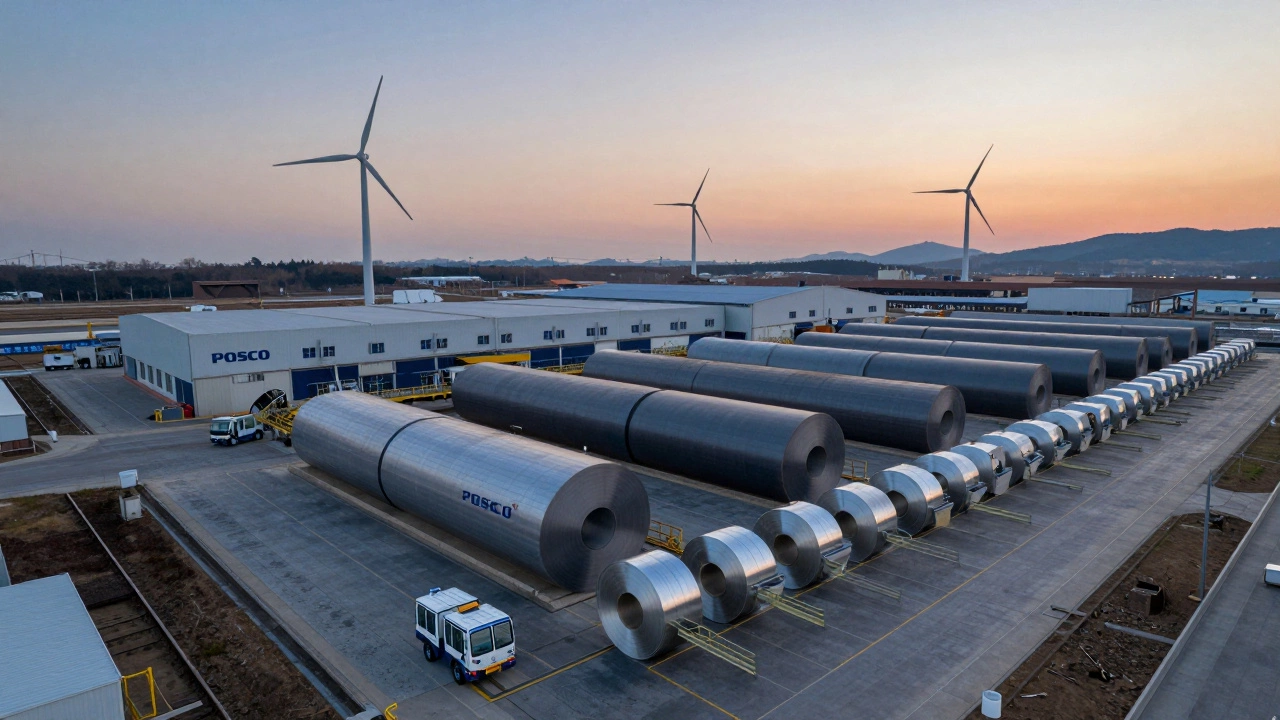
POSCO, South Korea’s steel giant, is the only company in the world that produces both ultra-thin galvanized steel for smartphones and massive shipbuilding plates in the same facility. Their innovation? Integrated production. They control everything from iron ore mining in Australia to final rolling in Pohang. This vertical control means fewer quality gaps. POSCO’s HRC-700 grade steel, used in electric vehicle battery enclosures, is 30% stronger than standard automotive steel but weighs less. In 2025, Hyundai and Kia sources 70% of their high-strength steel from POSCO. It’s not just about volume-it’s about matching performance to design.
United States: Reviving the Backbone
The U.S. has seen a quiet steel revival. Companies like Nucor and Steel Dynamics have rebuilt their mills with electric arc furnaces that melt scrap metal with 70% less energy than traditional blast furnaces. Their specialty? High-strength low-alloy (HSLA) steel for construction and wind turbines. In 2024, U.S.-made steel was used in over 80% of new wind turbine towers installed in North America. Why? Because it resists corrosion from salt air and extreme temperatures better than imported alternatives. The U.S. doesn’t lead in volume anymore, but it leads in specialized, sustainable grades. If you need steel that lasts 30 years in a coastal environment, American mills are your best bet.
China: Volume vs. Quality
China produces nearly half the world’s steel. But quantity doesn’t equal quality. While Chinese mills like Baowu and HBIS can churn out millions of tons, many still struggle with inconsistent carbon content and surface defects. That’s why Western automakers and aerospace firms avoid Chinese steel for critical parts. There are exceptions-some Chinese mills now produce high-end tool steel for cutting dies used in German factories. But these are niche products, not the norm. Most Chinese steel still meets basic construction standards, not the 0.001% purity thresholds required for medical devices or jet engines.
What Defines ‘Best Quality’ Anyway?
There’s no single metric for the best steel. It depends on what you’re building. For a bridge, you need ductility and weldability. For a razor blade, you need hardness and edge retention. For a wind turbine, you need fatigue resistance. The top steel-producing countries don’t compete on who makes the most-they compete on who makes the right kind for the job. Here’s what actually matters:
- Purity: Levels of sulfur, phosphorus, nitrogen, and oxygen. Lower is better.
- Consistency: Every batch must match the specs-no surprises.
- Traceability: Can you track the heat number back to the furnace and ore source?
- Testing: Are samples tested under real-world stress, not just lab conditions?
- Standards: Does it meet ASTM, ISO, JIS, or DIN specs for your industry?
Japan and Germany dominate in high-purity, high-consistency grades. South Korea leads in advanced alloy development. The U.S. excels in sustainable, high-performance specialty steels. China leads in volume, but not in reliability for critical applications.
How to Choose the Right Steel for Your Project
If you’re sourcing steel for manufacturing, don’t just pick the cheapest option. Ask these questions:
- What industry standard does your part need to meet? (e.g., ASTM A572 for structural beams, ISO 9001 for quality systems)
- Will this part face high stress, heat, or corrosion? If yes, go for alloyed or coated grades.
- Can the supplier provide mill test reports (MTRs) for every batch?
- Do they offer third-party certification from organizations like SGS or Bureau Veritas?
- Have they supplied this exact grade to other clients in your field?
Many manufacturers save money upfront by buying cheap steel-then pay ten times more later in recalls, warranty claims, or structural failures. The best quality steel isn’t expensive because it’s premium. It’s expensive because it prevents disasters.
Where to Find Reliable Steel Suppliers
Don’t rely on Alibaba listings or generic distributors. Go direct to mills or authorized distributors with traceable supply chains. In Europe, look for partners certified under EN 10204 3.1 or 3.2. In North America, check the American Iron and Steel Institute’s member list. For Japan and South Korea, work with trading houses like Mitsubishi Corporation or POSCO International-they handle the logistics and quality checks for you.
Some companies even send inspectors to the mill before shipment. It’s an extra cost, but for critical applications, it’s worth it. One Birmingham-based manufacturer lost $2.3 million in 2023 when a batch of imported steel failed stress tests. They now send inspectors to Japan and Germany every quarter.
What’s Changing in 2025?
Steel is evolving. Carbon-neutral steel is no longer a marketing buzzword-it’s a requirement. Nippon Steel plans to launch zero-emission steel by 2026 using hydrogen reduction. ArcelorMittal’s HIsarna process in the Netherlands cuts CO2 by 50%. The U.S. Inflation Reduction Act is funding electric furnace upgrades. By 2030, 40% of global steel will be produced with low-carbon methods.
This shift favors countries with strong R&D and clean energy access. Japan, Germany, and the U.S. are ahead. China is catching up, but slowly. If you’re investing in long-term manufacturing, choose steel that’s not just high-quality today-but sustainable tomorrow.
Is Japanese steel really the best for all applications?
No. Japanese steel excels in ultra-pure, high-precision applications like automotive and aerospace, but it’s overkill for basic construction. For structural beams or fencing, cheaper grades from the U.S. or Europe perform just as well. Quality should match the use case.
Can I trust steel from China for my product?
It depends. For non-critical parts like shelving or decorative elements, Chinese steel is fine. For anything that bears load, handles stress, or must meet safety standards, avoid it unless you have verified mill test reports and third-party certification. Many suppliers mislabel Chinese steel as Japanese or German-always verify the origin.
Why is German steel so expensive?
German steel costs more because of strict quality controls, traceability systems, and labor standards. You’re paying for consistency across thousands of tons. One batch won’t vary from the next. That reliability saves money in the long run by reducing scrap, rework, and failures.
Does the U.S. produce any high-grade steel anymore?
Yes. U.S. mills like Nucor and Allegheny Technologies produce some of the highest-strength low-alloy (HSLA) steels in the world, especially for wind energy, defense, and oil & gas. They’ve invested heavily in electric arc furnaces and automation. Their steel is now preferred in many high-tech applications over imported grades.
How do I verify the quality of steel before buying?
Always ask for a Mill Test Report (MTR) that includes chemical composition, mechanical properties, and heat number. Cross-check it with the supplier’s certification (EN 10204 3.1 or 3.2). If they can’t provide it, walk away. You can also send a sample to an independent lab like SGS for testing-costs around $200-$500, but it’s cheaper than a product recall.
Final Thought: Quality Isn’t a Country-It’s a Process
The best steel doesn’t come from a flag on a map. It comes from mills that treat every ton like it’s going into something that matters. Whether it’s a child’s bicycle frame or a nuclear reactor component, the difference between success and failure often comes down to a single sheet of steel. Choose wisely. Don’t just buy steel. Buy confidence.