
Small Business Profit Calculator
Estimated Profit
Based on your inputs and industry benchmarks
Profit Margin
Percentage of revenue after costs
Starting a business doesn’t mean you need a warehouse, a team of 10 people, or a $50,000 loan. Some of the most profitable and easiest businesses to start are right under your nose-especially in small scale manufacturing. You don’t need to build cars or make microchips. You need to solve a small, everyday problem with your hands, a few tools, and some basic materials.
Why Small Scale Manufacturing Is the Easiest Path
Most people think manufacturing means big factories, assembly lines, and heavy machinery. But small scale manufacturing is different. It’s about making things in small batches, often from home or a garage, with minimal overhead. The key? You’re not competing with Amazon. You’re solving a local need.
Think about it: people in your neighborhood buy candles, soap, or wooden phone stands. They don’t care if it’s made in China. They care if it’s well-made, looks good, and arrives quickly. That’s your opening.
According to the U.S. Small Business Administration, over 60% of small manufacturers operate with fewer than five employees. Many start with just one person. You don’t need a degree. You don’t need investors. You just need to make something people want to buy.
Top 5 Easiest Small Scale Manufacturing Businesses to Start
Here are five real, low-cost manufacturing ideas that people are already making money with right now-no fancy equipment needed.
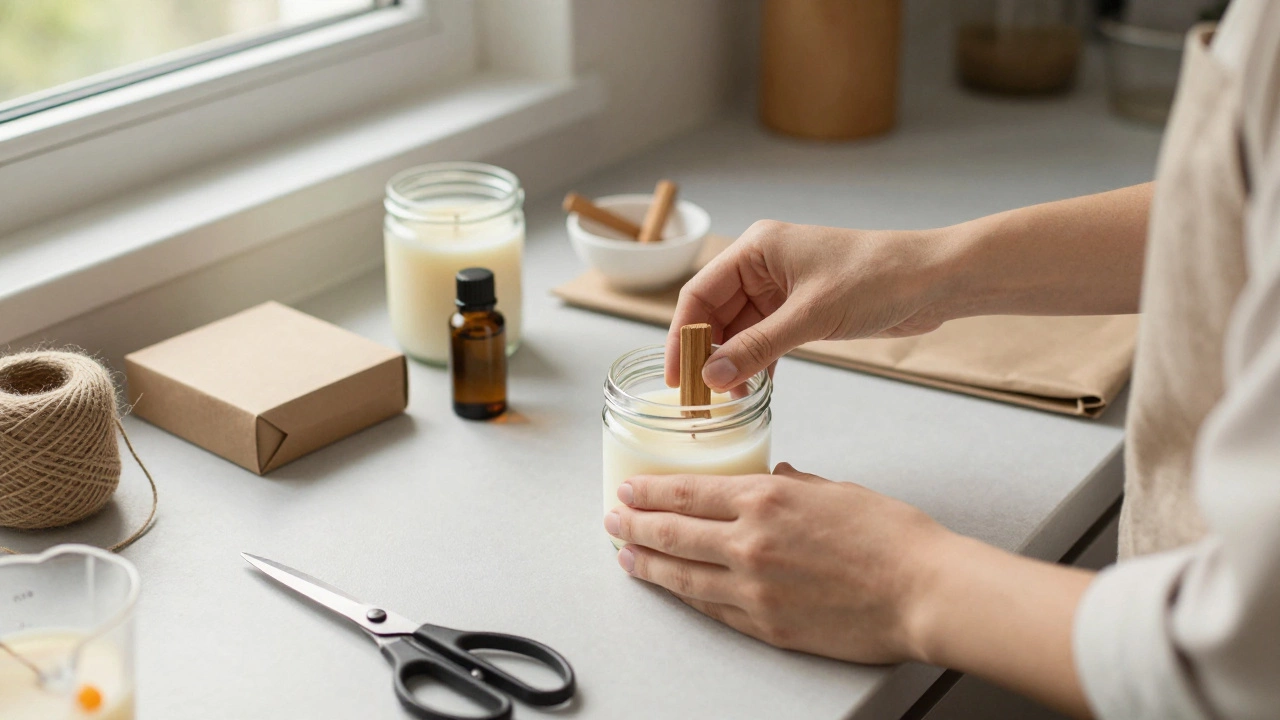
- Handmade candles - Wax, wicks, essential oils, and jars. You can start with under $100. Sell them on Etsy, at farmers markets, or to local boutiques. Profit margins? Often 70-80%. A single candle selling for $15 costs less than $3 to make.
- Custom soap bars - Cold process soap needs lye, oils, and molds. You can make 20 bars in a weekend. Add natural colors and scents like lavender or oatmeal. Local spas and gift shops will buy them wholesale for $4-$6 each.
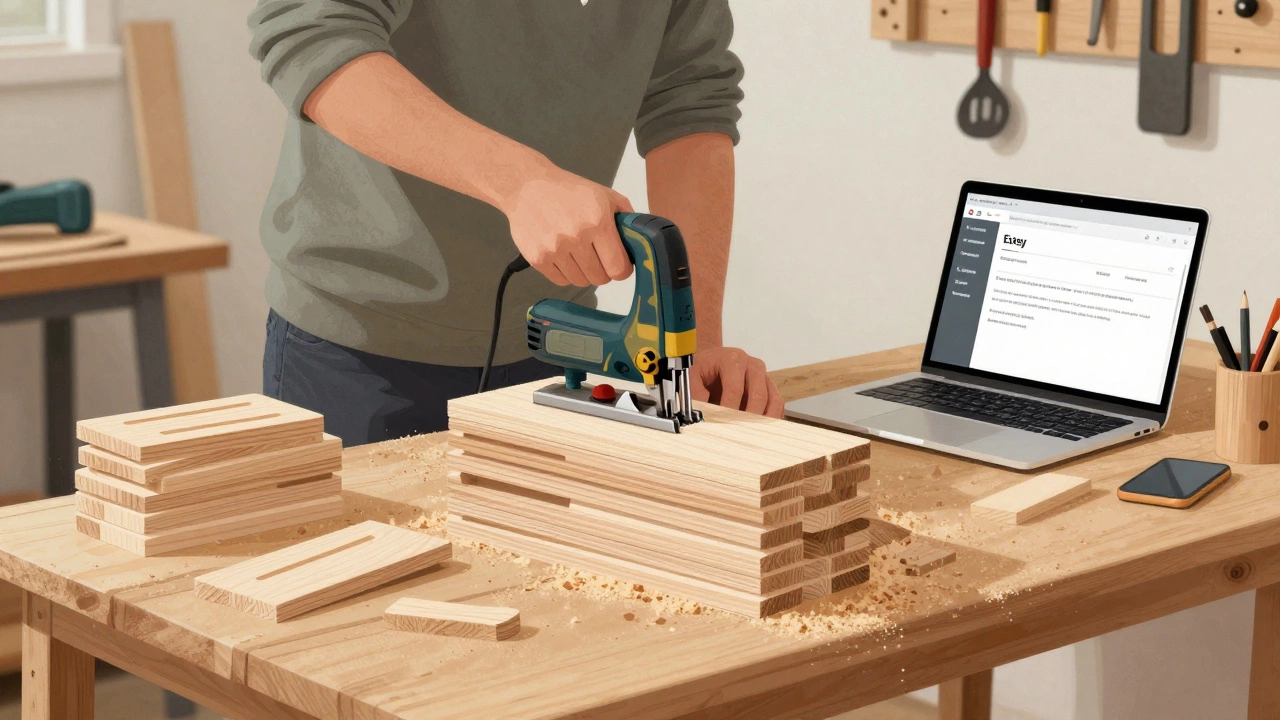
- Wooden phone stands - Buy a $20 laser cutter or use a simple jigsaw. Cut pine or bamboo into simple shapes. Sand, stain, and package. Sell for $12-$20. One wood sheet can make 15-20 stands. No inventory risk-you make them as orders come in.
- Custom embroidered patches - A $150 embroidery machine (like the Brother SE400) can stitch logos, names, or designs onto fabric. People buy these for jackets, backpacks, and hats. You can offer personalization. A patch costs 50 cents to make, sells for $8-$12.
- Beeswax food wraps - Cotton fabric, beeswax, pine resin, and jojoba oil. Melt, coat, and dry. These replace plastic wrap. Eco-conscious buyers pay $10-$15 for a set of three. You can make 30 wraps in a morning.
Notice a pattern? All of these use materials you can buy in bulk online. All can be made in a kitchen or garage. None require permits beyond basic home business registration.
What Makes These Businesses ‘Easy’?
Easy doesn’t mean no work. It means low barriers. Here’s what makes these options truly simple:
- No inventory buildup - Make-to-order means you don’t waste money on unsold stock.
- Low startup cost - Most of these start under $500. Some under $200.
- No employees needed - You can handle everything alone until you hit 50+ orders a week.
- Quick learning curve - YouTube tutorials show you how to make soap, candles, or patches in under 30 minutes.
- Easy to scale - Once you get steady sales, you can hire a helper, buy a second machine, or move to a small rented space.
Compare that to starting a bakery (requires commercial kitchen, health inspections, refrigeration) or a plastic molding business (needs injection machines, air conditioning, safety gear). Those are hard. These? They’re doable on a weekend.
Where to Sell Without a Website
You don’t need to build an e-commerce site to start selling. Here’s how real people are making their first $1,000:
- Etsy - The #1 marketplace for handmade goods. Search ‘candles’ or ‘wooden phone stand’-you’ll see hundreds of shops making $2,000-$10,000/month.
- Facebook Marketplace - Post photos of your products. Local buyers show up within hours. No fees. No shipping needed.
- Local craft fairs - Pay $25-$50 for a booth. Sell 20 items at $15 each? That’s $300 in one day. Repeat monthly.
- Word of mouth - Give 3 free samples to your local coffee shop owner. They’ll put them on the counter. People ask where they came from. You get orders.
One woman in Ohio started making beeswax wraps in her kitchen. She gave 10 to friends. Three of them posted on Instagram. Within 6 weeks, she was selling 150 wraps a month. She didn’t run ads. She didn’t hire anyone. She just made something useful and let people see it.
What You Need to Get Started (No Fluff)
You don’t need a business plan written in Word. You need this:
- A clear product idea (pick one from the list above)
- Basic tools (scissors, measuring cups, heat source, sandpaper)
- Suppliers (Amazon, Alibaba, local craft stores)
- A way to take photos (phone camera works)
- A free listing on Etsy or Facebook Marketplace
That’s it. No accountant. No lawyer. No LLC unless you want it (and even then, you can wait until you hit $5,000 in sales).
Most people overcomplicate this. They spend weeks researching “the perfect niche” or “the best branding.” Don’t. Make one product. Take a photo. List it. See if someone buys it. That’s your validation.
Common Mistakes to Avoid
Even easy businesses fail when people skip the basics.
- Trying to make 10 products at once - Focus on one. Master it. Then expand.
- Overpricing - Don’t charge $30 for a candle that costs $2 to make. People compare prices. Start at $12-$18.
- Waiting for perfection - Your first batch won’t be flawless. That’s fine. Sell it anyway. Feedback beats theory.
- Ignoring packaging - A plain jar with a sticker looks cheap. Use kraft paper, twine, or a simple printed label. It adds value.
- Not tracking costs - Write down what you spend on materials, shipping, and time. If you’re not making at least 50% profit, adjust.
One man in Texas made wooden keychains from scrap wood. His first ones had rough edges. He sold them for $5. People loved them. He spent $20 on a sanding block. Next batch was smoother. He raised the price to $8. Sales doubled.

How to Know If It’s Working
You’ll know your business is real when:
- Someone buys without you asking
- You get repeat customers
- You run out of stock before you planned to make more
- People ask if you take custom orders
That’s your signal. It’s not a hobby anymore. It’s a business. Now you can think about scaling: adding a second product, hiring a helper, or listing on Amazon Handmade.
Realistic Timeline: From Zero to First Sale
Here’s what a real timeline looks like:
- Day 1-2: Pick your product. Buy materials.
- Day 3: Make 5-10 samples.
- Day 4: Take photos with your phone. Write a simple description.
- Day 5: List on Etsy or Facebook Marketplace.
- Day 6-10: Share with 5 friends. Ask them to share with one person.
- Day 12: First sale. $12. You’re a manufacturer.
That’s it. No waiting. No funding. No permission needed.
What’s Next After Your First Sale?
Once you make your first $100, do this:
- Reinvest 50% into better materials or tools
- Ask your customer: “What else would you like?”
- Make one new product based on their answer
- Keep listing on one platform until you hit 50 sales
You don’t need to go viral. You don’t need to be the biggest. You just need to be consistent. Make something. Sell it. Improve it. Repeat.
Small scale manufacturing isn’t about grand plans. It’s about small actions that add up. The easiest business to start is the one you already have the skills to make.
Do I need a business license to start a small manufacturing business?
In most places, you don’t need a special manufacturing license if you’re making handmade goods from home and selling under $10,000 a year. But you may need a general business license from your city or county. Check your local government website. If you’re selling food-related items like soap or candles, some states require a cottage food permit-but only if you’re using ingredients that fall under food safety rules. Always verify local rules, but don’t let paperwork stop you from starting.
Can I start this business with no money?
You can start with under $50 if you already have basic tools. For example, use old jars for candles, repurpose fabric scraps for patches, or cut wood from leftover boards. Many people start by making gifts for friends-then those friends pay them for more. That’s how the first sales happen. Money follows action, not the other way around.
How long does it take to make a profit?
If you make and sell your first product within two weeks, you can see profit in 30 days. For example, make 10 candles for $15 total, sell them for $150, and you’ve made $135 profit after materials. Time investment? 4-6 hours. That’s a $22-$30 hourly return. Most people make their first profit before month’s end.
Is handmade manufacturing sustainable long-term?
Yes-if you treat it like a business. Many handmade manufacturers grow into full-time incomes. Some scale to $100,000/year by adding new products, hiring part-time help, or selling wholesale to local stores. Others stay small and make $3,000-$5,000/month on the side. Sustainability comes from consistency, not size. People will always want well-made, personal, locally-made things.
What if I’m not crafty or good with my hands?
You don’t need to be an artist. You just need to follow a simple process. Watch a 10-minute YouTube video on making soap or candles. Buy a kit that includes instructions. Do it once. Then again. You’ll get better. Most people who start these businesses had never made anything before. They just started. Skill comes from doing, not waiting to feel ready.
Start small. Make something. Sell it. Repeat. That’s how real businesses are built-not with loans or investors, but with simple, repeated actions.