
India Car Color Legality Checker
Select the scenario that matches your situation to find out if it's legal and what steps you need to take.
✅ Fully Legal
Buying a car in any factory-painted shade is perfectly legal. Just ensure the color is correctly mentioned in your Registration Certificate (RC) at the time of purchase.
⚠️ Conditional Legality
Repainting or wrapping is legal ONLY IF you update your RC. Failure to do so can lead to fines for document mismatch.
- Apply for permission at your local RTO.
- Obtain NOC if the car is under finance.
- Complete the painting/wrapping process.
- Present vehicle for physical inspection at RTO.
- Update your Registration Certificate (RC).
❌ Illegal
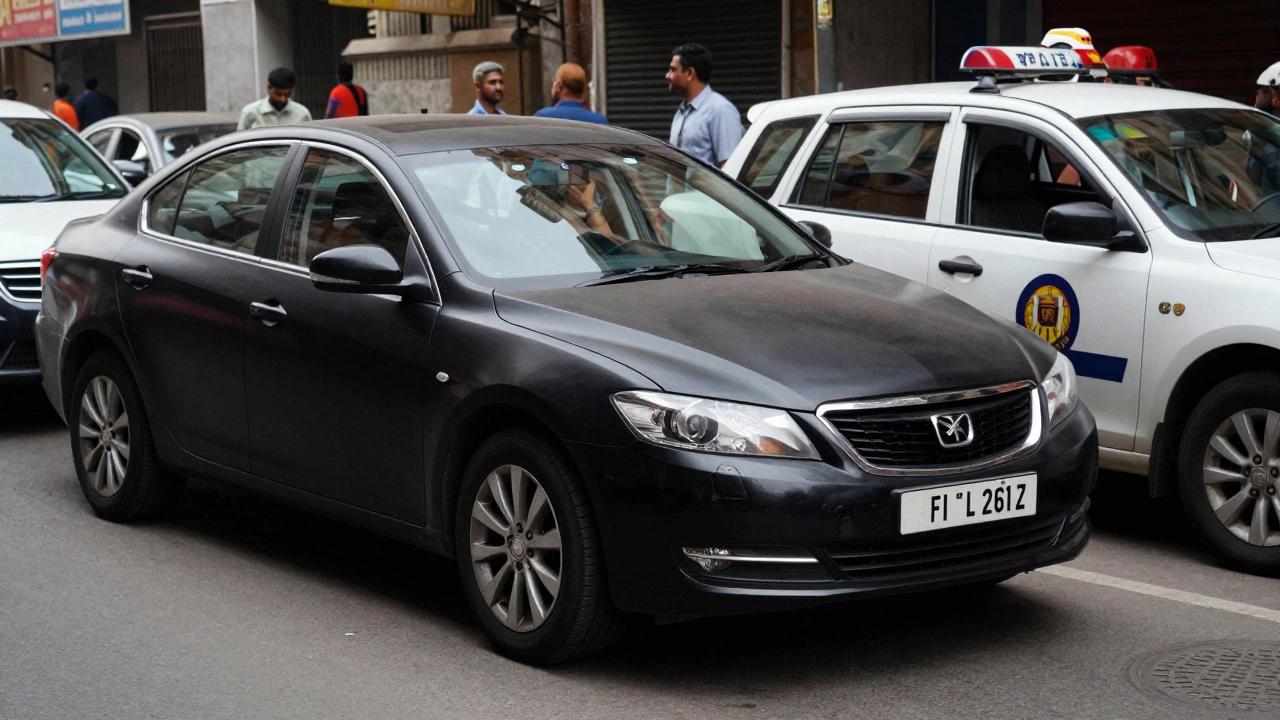
Painting your private vehicle to mimic police, emergency services, or official government liveries is a criminal offense (impersonation). This can result in heavy fines or vehicle seizure.
🚫 Restricted
Red beacons (Lal Batti) and specific emergency lighting are reserved for high-ranking officials and emergency services. Unauthorized use is banned and may lead to confiscation of the equipment.
The Truth About "Banned" Colors
Let's clear the air. If you walk into a showroom and buy a bright yellow or deep purple car, you aren't breaking any laws. Automobile manufacturers like Tata Motors or Mahindra can sell any color they please. The "ban" people talk about is actually a restriction on unauthorized color changes and the use of colors that mimic official emergency or government vehicles. For example, you cannot paint your private car in a way that makes it look like a police vehicle or an ambulance. Using specific patterns of red and blue flashing lights or painting a vehicle in the exact livery of the Indian Police Service is illegal. This isn't because the color itself is banned, but because impersonating a government official is a criminal offense. If your car looks too much like a state-owned emergency vehicle, you're likely to be pulled over and fined.The RTO Color Change Process
Most people get into trouble not because of the color they chose, but because they forgot to tell the government about it. Your car's registration certificate (RC) explicitly lists the color of the vehicle. If you decide to change your white sedan to a matte black beast, you can't just do it and drive away. If a traffic cop notices that your car is blue but your RC says "Silver," you can be charged with driving a vehicle that doesn't match its registration documents. This is a common pitfall for car enthusiasts who love wrapping their cars in vinyl or doing custom paint jobs. To do this legally, you have to follow a specific workflow:- Visit your local Regional Transport Office (RTO) to apply for permission to change the color.
- Get a No Objection Certificate (NOC) if your vehicle is under finance.
- Once you have permission, paint the car or apply the wrap.
- Bring the vehicle back to the RTO for physical inspection.
- Pay the required fee to have the color updated on your Registration Certificate.
Special Colors and Government Privileges
While no color is banned for the public to *own*, some colors and markers are restricted to specific roles. In India, the use of certain flags or high-visibility markers on cars is strictly regulated. For years, there was a lot of confusion around the "Red Beacon" (Lal Batti) on cars. For decades, the red light was a symbol of power and was reserved for the President, Prime Minister, and high-ranking officials. In 2017, the government banned the use of these beacons for almost everyone to remove the "VIP culture." Similarly, the use of specific colors for commercial vehicles is mandatory. For instance, auto-rickshaws in different cities have specific color schemes (like the yellow and green mix in Delhi) to ensure they are easily identifiable as commercial transport. If you try to paint a private car to look like a commercial taxi, you'll find yourself in a legal mess.| Scenario | Legality | Requirement | Penalty for Violation |
|---|---|---|---|
| Buying a factory-colored car | Legal | Standard RC registration | None |
| Repainting/Wrapping a car | Legal (with approval) | Update RC at RTO | Fine for document mismatch |
| Mimicking Police/Ambulance | Illegal | Not permitted | Heavy fine/Vehicle seizure |
| Using Red Beacons (Lal Batti) | Banned (mostly) | Reserved for specific offices | Confiscation of light |
The Impact of Color on Resale and Safety
Beyond the law, there's the practical side of choosing a color in the Indian climate. While not banned, certain colors are "socially" or "economically" discouraged. Dark colors, especially black and deep navy, absorb more heat. In a city like Chennai or Delhi, where summer temperatures hit 45°C, a black car becomes an oven. This increases the load on your Air Conditioning system, which in turn can slightly lower your fuel efficiency. From a safety perspective, white, silver, and light grey are the most popular choices in India for a reason. They are more visible at night and during heavy monsoon rains, reducing the risk of collisions. More importantly, they hold their value better. If you plan to sell your car in three years, a white or silver car will almost always find a buyer faster than a neon green or bright orange one.
Common Myths vs. Reality
There is a persistent myth that gold-colored cars are banned or reserved for royalty. This is completely false. You can buy a gold-wrapped or gold-painted car as long as it's registered correctly. Another rumor is that matte finishes are illegal. They aren't, but some RTO officials might struggle to categorize "Matte Charcoal" on a form that only has "Grey" or "Black" as options. This usually leads to a bit of back-and-forth at the office, but it's not a ban. Another point of confusion is the use of "camouflage" paint. While you can paint your car in a camo pattern, doing so in a way that looks like a Indian Army vehicle can lead to questioning by security forces. It's always better to avoid patterns that look like official military gear.Summary of Compliance for Car Owners
If you're thinking about changing your car's look, remember that the law cares more about the paperwork than the pigment. The Motor Vehicles Act is designed to ensure that every vehicle on the road can be identified accurately by the police. If your car's physical appearance matches the description on your RC, you are generally safe. Avoid the temptation to skip the RTO visit. It might seem like a hassle to spend a day at a government office, but a simple check-post inspection can turn into a nightmare if your documents are wrong. Always keep your updated RC handy and avoid any modifications that involve flashing lights or official government symbols.Can I wrap my car in a different color without RTO permission?
Technically, no. Any change in the exterior color of the vehicle, whether it's paint or a vinyl wrap, must be updated on the Registration Certificate (RC). While a temporary wrap might go unnoticed, you risk being fined during a routine traffic check or when renewing your insurance and fitness certificate.
Is it illegal to have a black car in India?
Not at all. Black is one of the most popular colors for luxury cars and SUVs in India. There is no law banning black vehicles; the only restriction is that you cannot use unauthorized black-out tints on your windows that exceed the legal transparency limits set by the Supreme Court.
What happens if I change my car color without updating the RC?
If caught, you can be fined for providing incorrect information on your vehicle documents. In some cases, the police may impound your vehicle until you provide proof that the color change has been approved by the RTO and updated on your RC.
Are there any colors reserved specifically for government officials?
There are no specific "colors" banned for the public, but certain markings, liveries, and lighting systems (like the red and blue beacons) are reserved for the police and emergency services. Using these to impersonate an official is a serious crime.
Does changing the color affect my car insurance?
Yes, it can. Insurance companies base their policies on the vehicle details provided in the RC. If you change the color and don't inform the insurer, they may reject a claim, arguing that the vehicle being claimed for is not the same one described in the policy.