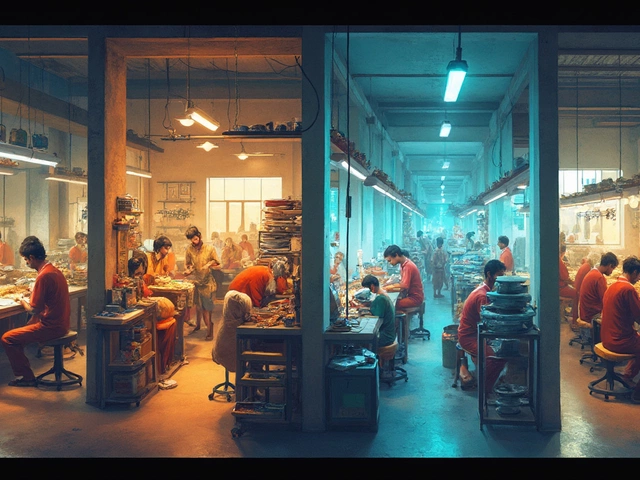
Military Steel Cost Calculator
The US military pays a premium for domestic steel to ensure national security. Calculate the cost difference between US-made steel and imported alternatives based on tonnage and time period.
Domestic Steel
Base cost: $1,200/ton
$600,000
Imported Steel
Base cost: $800/ton
$400,000
The US military doesn’t just need guns, tanks, and fighter jets-it needs steel that can take a beating and keep working. From the hull of a Virginia-class submarine to the armor plating on an Abrams tank, the steel used in defense equipment isn’t something you can buy off the shelf. It has to meet exacting standards: extreme toughness, resistance to heat and corrosion, and the ability to perform under pressure in the harshest environments. So who actually makes this steel?
Primary Steel Suppliers to the US Military
The US Department of Defense doesn’t rely on one single company. Instead, it works with a small group of domestic mills that have the capacity, certifications, and history to deliver military-grade steel consistently. The top names include Nucor, ArcelorMittal USA, and United States Steel Corporation.
Nucor, headquartered in Charlotte, North Carolina, is the largest steel producer in the US by volume. Its electric arc furnace technology allows it to recycle scrap steel into high-quality alloys suitable for defense applications. Nucor supplies flat-rolled steel used in armored vehicles and ship components. They’ve held contracts with the Navy since the 1990s and are one of the few mills with certified production lines for ASTM A514 and A517 steels-grades specifically required for high-strength armor.
ArcelorMittal USA, the American branch of the global giant, operates major plants in Indiana and Ohio. Their Gary Works facility is one of the largest integrated steel mills in North America. They produce thick plate steel used in naval vessels, including aircraft carriers and destroyers. Their steel meets MIL-SPEC standards and is often used in hull structures that must withstand underwater explosions. The company has invested over $2 billion since 2018 to upgrade its rolling and heat-treatment lines to meet evolving defense needs.
United States Steel Corporation, or U.S. Steel, has been supplying steel to the military since World War II. Their Edgar Thomson Plant in Pennsylvania and Big River Steel in Arkansas produce specialty alloys like 4340 and 300M steel-materials used in landing gear, turbine shafts, and missile casings. U.S. Steel is one of the few mills certified under the AS9100 aerospace and defense quality standard, which is mandatory for suppliers working on classified military programs.
Why Domestic Production Matters
The US military insists on sourcing steel domestically for national security reasons. Relying on foreign suppliers-especially from countries like China or Russia-creates risks. A disruption in trade, geopolitical tensions, or export restrictions could leave defense contractors without critical materials.
In 2022, the Department of Defense updated its Defense Production Act priorities to include steel and other critical metals. The goal: ensure at least 70% of steel used in defense systems comes from US-based mills. This isn’t just policy-it’s law. The Berry Amendment requires that all clothing, textiles, and steel used by the military be 100% American-made. There are no exceptions.
That’s why even when foreign steel is cheaper, the Pentagon pays a premium. A ton of military-grade steel from Nucor can cost $1,200, while imported steel might be $800. But the difference isn’t just price-it’s control. Domestic mills allow for faster turnaround, direct communication with engineers, and the ability to adjust specifications on short notice. In a conflict, that matters.
What Makes Steel ‘Military-Grade’?
Not all steel is created equal. Regular construction steel can crack under impact or warp at high temperatures. Military steel is engineered differently. Here’s what sets it apart:
- Composition: Military alloys often include nickel, chromium, molybdenum, and vanadium. These elements increase hardness, toughness, and resistance to fatigue.
- Heat treatment: Steel is heated and cooled in precise cycles to achieve the right grain structure. For example, 300M steel is vacuum arc remelted to remove impurities and ensure uniformity.
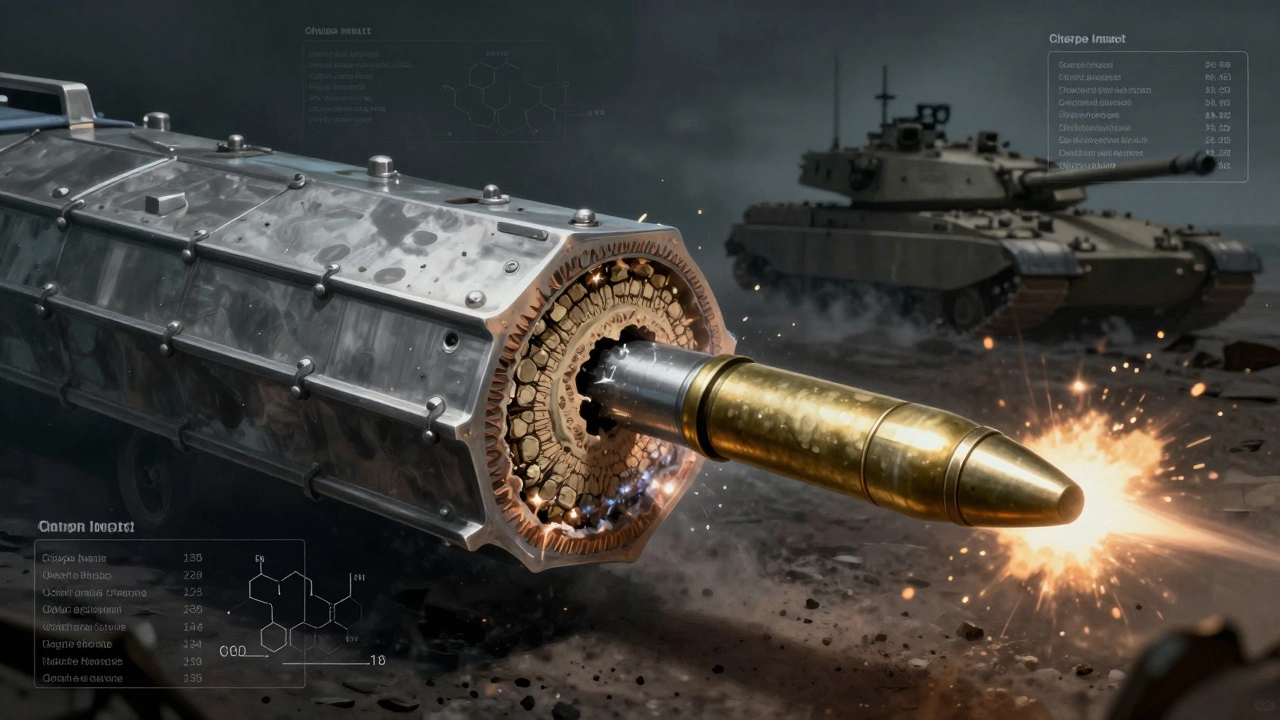
- Testing: Every batch undergoes Charpy impact tests, tensile strength checks, and non-destructive testing like ultrasonic scanning. A single batch can be rejected if one sample fails.
- Certification: Mills must maintain ISO 9001, AS9100, and MIL-STD-129 compliance. Documentation for each heat of steel is tracked for decades.
For example, the steel used in the F-35 Lightning II’s landing gear must withstand over 10,000 landing cycles without failure. That’s not something you get from a random supplier. It takes a mill that’s been doing this for 50 years.
Smaller Mills and Specialty Producers
While Nucor, ArcelorMittal, and U.S. Steel handle the bulk, smaller mills play crucial roles too. Companies like Carpenter Technology in Pennsylvania produce superalloys used in jet engines and missile components. Their alloy 718, a nickel-chromium-based material, is used in turbine blades that operate at over 1,500°F.
Other niche players include Allegheny Technologies, which makes titanium-steel composites for stealth aircraft, and Ryerson, which acts as a distributor but also co-develops custom alloys with defense contractors. These companies don’t make millions of tons like the big players, but they supply the high-performance materials that make advanced weapons possible.
How the Military Chooses Its Steel Suppliers
The selection process is rigorous. Companies must go through a multi-year qualification process. It starts with submitting material test reports, followed by on-site audits by Defense Logistics Agency (DLA) inspectors. The mill must prove it can maintain consistent quality across thousands of tons of production.
Once qualified, suppliers are added to the Qualified Products List (QPL) for specific steel grades. Defense contractors like Lockheed Martin, General Dynamics, and BAE Systems can only source from QPL-approved mills. If a mill’s quality slips-even once-it can be removed from the list. That’s happened before. In 2020, a mid-sized mill lost its contract after a batch of armor plate failed impact testing at Aberdeen Proving Ground.
Long-term contracts are common. Nucor has had a continuous contract with the Navy since 2001. That kind of stability allows mills to invest in new equipment, train specialized workers, and build deep expertise.
Challenges Facing the Industry
Despite its importance, the US military steel industry faces serious challenges. One is the aging workforce. The average age of a steelworker in a defense mill is 52. Fewer young people are entering the field, and training takes years. The industry is losing 500 skilled workers a year to retirement.
Another issue is energy. Electric arc furnaces use a lot of electricity. As the grid shifts toward renewables, mills are under pressure to reduce carbon emissions. Nucor and U.S. Steel are investing in hydrogen-based steelmaking technologies to meet future environmental standards without sacrificing quality.
Supply chain bottlenecks also remain a problem. Even with domestic production, some raw materials like high-purity scrap or rare alloying elements still come from abroad. The Pentagon is now funding domestic mining projects in Alaska and Montana to secure those inputs.
What’s Next for Military Steel?
The future of military steel isn’t just about making stronger alloys-it’s about making smarter ones. Researchers at Oak Ridge National Laboratory are developing self-healing steel that can repair micro-cracks using embedded nanoparticles. Early tests show these steels can extend the life of armor by up to 40%.
3D printing is also entering the scene. Companies like Raytheon are experimenting with printing steel components layer by layer, reducing waste and enabling complex geometries that traditional rolling can’t achieve. While still in early stages, this could change how parts are sourced and repaired in the field.
For now, though, the backbone of US military steel remains the same: a handful of trusted mills, skilled workers, and decades of experience. It’s not glamorous. But without it, the military’s most critical equipment simply wouldn’t exist.
Is all steel used by the US military made in the USA?
Yes, under the Berry Amendment, all steel used in military equipment must be produced in the United States. This applies to everything from tank armor to ship hulls. There are no exceptions, even if foreign steel is cheaper or more readily available.
What kind of steel is used in military tanks?
Military tanks like the M1 Abrams use high-hardness steel alloys such as MIL-A-12560 and MIL-A-46100. These are specially heat-treated to resist penetration from armor-piercing rounds. The exact composition is classified, but they typically include chromium, nickel, and molybdenum for toughness and durability.
Can private companies buy military-grade steel?
Yes, but only if they’re approved suppliers or work with defense contractors. Mills like Nucor and U.S. Steel sell military-grade steel to commercial companies that build armored vehicles for police or private security. However, they won’t sell it directly to individuals or unvetted businesses due to export controls and security restrictions.
How is military steel different from regular steel?
Military steel has tighter chemical controls, undergoes more rigorous testing, and is heat-treated to exact specifications. It’s designed to perform under extreme stress, temperature, and impact. Regular steel might bend or crack under similar conditions. Military steel is also traceable-every batch is logged and tested for decades.
Why doesn’t the US just import cheaper steel?
Importing steel would create a national security risk. If a foreign country cuts off supply during a conflict, the US military could be left without critical materials. Domestic production ensures control, reliability, and rapid response. Even if it costs more, the Pentagon considers it essential.