
Chemical Distribution Value Calculator
Compare Distribution Options
Calculate whether buying directly from manufacturers or using a distributor provides better value for your business based on size, volume, and compliance needs.
Value Analysis
Your business needs for chemical distribution.
Based on industry data from the article. For small/mid businesses (< 5,000 liters/month), distributors typically provide 30-40% faster delivery and 15-25% cost savings through logistics optimization and compliance support.
When you think of chemicals, you might picture lab beakers or factory smokestacks. But behind every bottle of cleaner, every fertilizer on a farm, or every ingredient in your shampoo is a complex global supply chain-and someone has to move it all. That’s where chemical distributors come in. They don’t make the chemicals, but they make sure they get from the factory to the factory, the warehouse to the pharmacy, the farm to the grocery store. So who’s the biggest player in this invisible but essential industry?
The Top Dog: Brenntag
As of 2026, Brenntag is the largest chemical distributor in the world. Headquartered in Essen, Germany, the company handles over 100,000 chemical products across more than 70 countries. It serves industries like food, water treatment, pharmaceuticals, agriculture, and personal care. In 2025 alone, Brenntag reported revenue of nearly €14 billion, with a global workforce of more than 22,000 people. That’s bigger than most Fortune 500 companies you’ve heard of.Brenntag didn’t get there by accident. It grew by buying up smaller distributors across Europe, North America, and Asia. In 2021, it acquired Univar Solutions’ European operations, which instantly made it the market leader in Europe. Then in 2023, it snapped up a major distributor in Brazil, giving it a solid foothold in Latin America. Each acquisition added warehouses, trucks, and customer relationships-not just more sales numbers.
How Brenntag Works
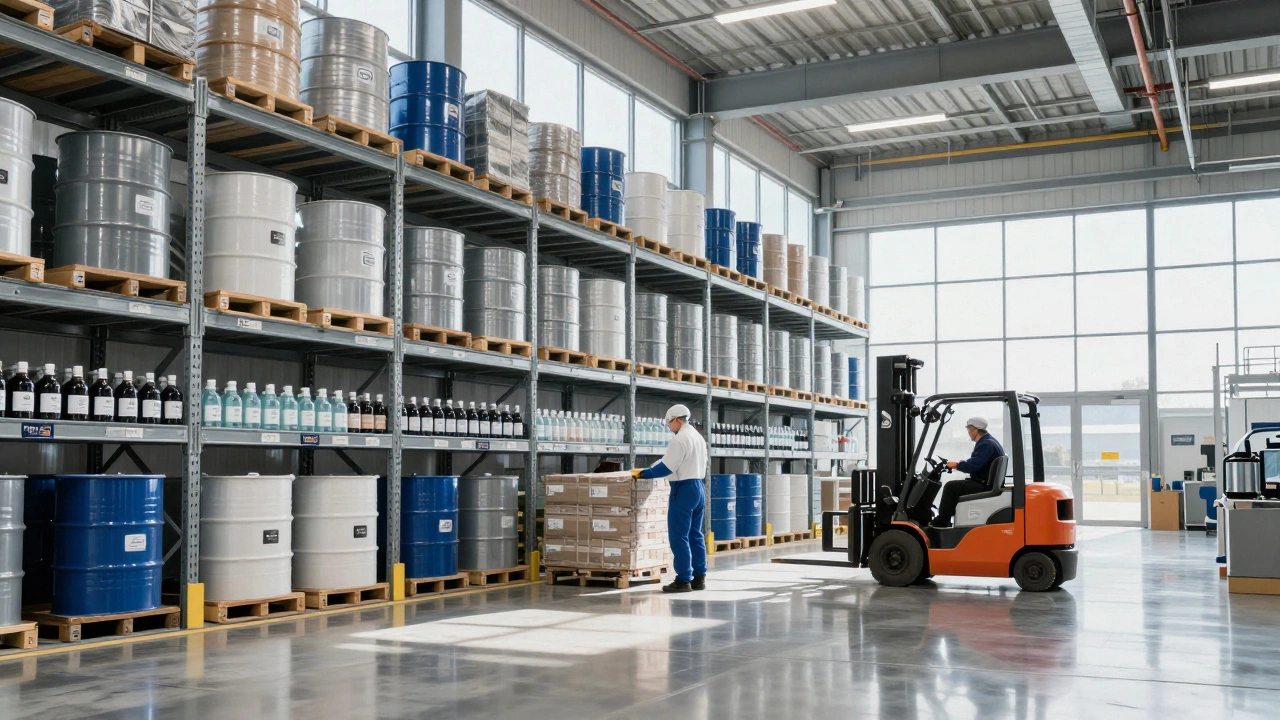
You might think chemical distribution is just shipping barrels from point A to point B. It’s not. Chemicals are dangerous, regulated, and often need special handling. One wrong temperature, one mix-up in labeling, and you could have a spill, a recall, or worse.Brenntag’s real strength is its logistics network. It owns over 500 distribution centers worldwide. Each one is equipped to handle everything from flammable solvents to food-grade additives. Staff are trained in GHS labeling, SDS management, and hazardous material transport. They don’t just deliver chemicals-they help customers comply with local regulations in 40+ countries. For a small paint manufacturer in India, that means Brenntag can supply the right solvent, handle the import paperwork, and even advise on safe storage.
They also offer blending and repackaging services. A customer in Vietnam might need 500 liters of a specific detergent formula. Brenntag doesn’t just ship a 20,000-liter drum. They mix, dilute, and bottle it to exact specs. That’s called value-added logistics-and it’s why companies pay a premium to work with them instead of buying directly from the producer.
Who’s Next? Other Major Players
Brenntag leads, but it’s not alone. The top five global chemical distributors all have revenues over $5 billion:- Brenntag - €14 billion revenue (2025)
- Univar Solutions - $10.8 billion revenue (2025)
- IMCD Group - €5.7 billion revenue (2025)
- Synthomer - $5.3 billion revenue (2025)
- Albemarle Corporation - $5.1 billion revenue (2025)
Univar Solutions, based in the U.S., used to be the market leader before Brenntag’s acquisitions. It still holds strong in North America and has deep ties with pharmaceutical and food-grade chemical suppliers. IMCD, a Dutch company, focuses more on specialty chemicals-things like flavors, fragrances, and high-end additives used in cosmetics and electronics. Synthomer is strong in polymer additives and coatings. Albemarle, while technically a producer too, has a massive distribution arm for lithium compounds and bromine products.
Why Distribution Matters More Than You Think
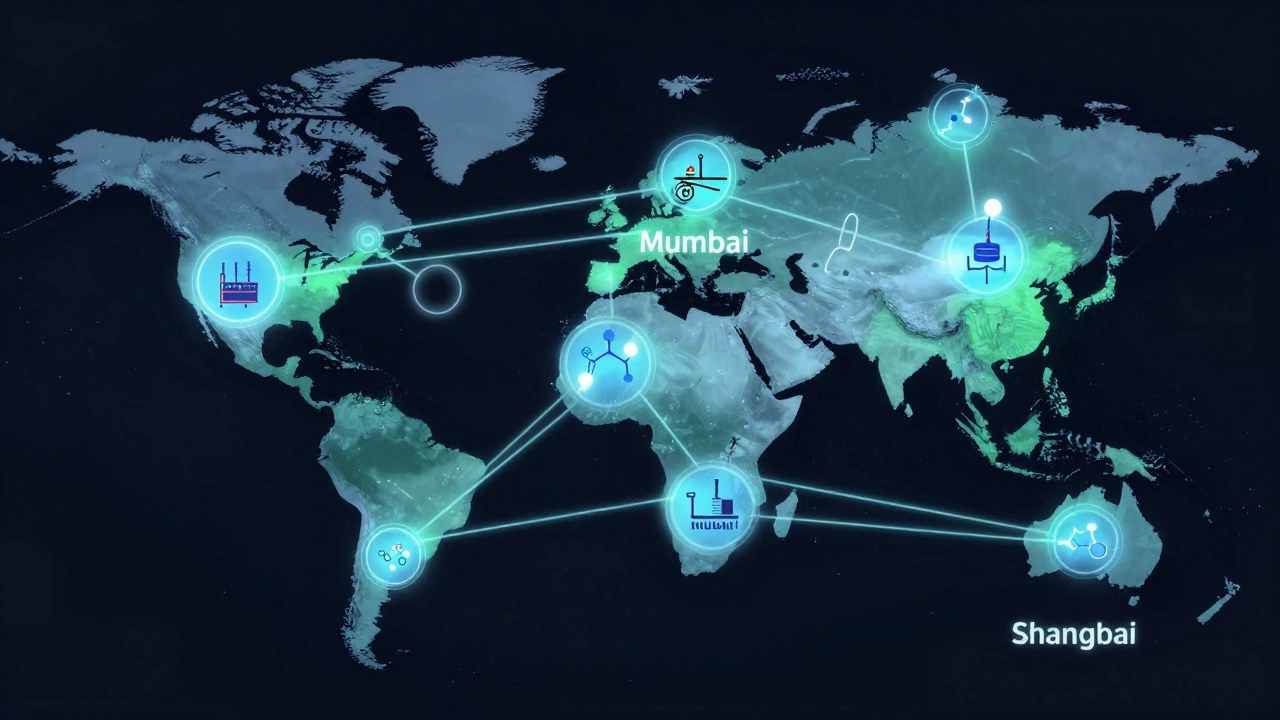
Most people assume big chemical companies like BASF, Dow, or Sinopec sell directly to end users. In reality, over 80% of industrial chemicals are moved through distributors. Why? Because it’s cheaper, faster, and safer.Imagine you’re a small detergent maker in Mumbai. You need 10 different raw materials: surfactants, preservatives, fragrances, thickeners, and solvents. Do you want to order each one from a different supplier in Germany, China, and the U.S.? You’d be juggling 10 different contracts, 10 different shipping schedules, and 10 different compliance forms. Now imagine one company handles all of it-same invoice, same delivery window, same safety documentation. That’s the value of a distributor.
Distributors also help with inventory. They keep stock on hand so manufacturers don’t have to. If a factory in Pune runs low on a key ingredient, they can get it delivered the next day instead of waiting six weeks for a new shipment from China.
How Indian Companies Fit In
India is one of the fastest-growing chemical markets in the world. It’s the third-largest producer of pharmaceutical chemicals and the fifth-largest in agrochemicals. But Indian manufacturers don’t just sell to local buyers-they export globally. And that’s where global distributors like Brenntag come in.Indian companies like Aarti Industries, PI Industries, and UPL rely on distributors to get their products into Europe and North America. Brenntag doesn’t just ship from India-it helps Indian suppliers meet international standards. For example, if a pesticide manufacturer in Gujarat needs to export to the EU, Brenntag can help them repackage the product with EU-compliant labels, handle REACH registration paperwork, and even advise on alternative formulations to meet stricter safety rules.
Some Indian distributors are growing too. Companies like Deepak Nitrite and Gujarat Fluorochemicals are expanding their own logistics networks. But they still depend on global players for access to markets in Latin America, Africa, and Southeast Asia. It’s a partnership, not a competition.

What’s Changing in Chemical Distribution
The industry is changing fast. Three big trends are reshaping how chemicals move around the world:- Digitization - Distributors now offer online portals where customers can order, track shipments, and download safety sheets in real time. Brenntag’s platform, Brenntag Connect, lets users place orders in under 90 seconds.
- Sustainability - Customers want greener supply chains. Distributors are switching to electric delivery trucks, using bio-based packaging, and offering carbon-neutral shipping options. Brenntag has pledged to cut emissions by 50% by 2030.
- Supply Chain Resilience - After pandemic disruptions and geopolitical tensions, companies want backups. Distributors are now keeping dual sources for key chemicals and building regional stockpiles. A distributor in Texas might now hold extra inventory of a chemical that’s usually shipped from China.
These changes aren’t just about being eco-friendly-they’re about staying in business. If you can’t deliver on time, or if your safety records are messy, you lose customers. The biggest distributors are investing millions in tech and training to stay ahead.
What This Means for Buyers
If you’re buying chemicals-whether you’re running a small lab in Bangalore or a plant in Delhi-you have choices. You can buy direct from a manufacturer, or go through a distributor. Here’s the reality:- Buy direct if you need huge volumes (10,000+ liters), have your own logistics, and know the regulations inside out.
- Use a distributor if you need flexibility, multiple products, fast delivery, or help with compliance. That’s the case for 90% of small and mid-sized businesses.
The biggest distributor isn’t always the cheapest. But for most users, the total cost of ownership-including time, risk, and delays-is lower with a trusted partner like Brenntag.
Final Thought: It’s Not About Size-It’s About Service
The largest chemical distributor isn’t the biggest because it has the most warehouses. It’s the biggest because it solves real problems. It connects a farmer in Rajasthan to a fertilizer compound in Germany. It gets a pharmaceutical ingredient from a lab in Mumbai to a clinic in Nairobi. It helps a small business in Chennai avoid regulatory fines and delivery delays.When you ask who the largest chemical distributor is, the answer isn’t just a name. It’s a system. And that system keeps the global economy running-one chemical at a time.