
Food Production Equipment Calculator
Calculate Your Equipment Needs
Answer a few questions to determine if you need a single food processor or a complete processing unit for your business.
Equipment Recommendation
Note: Costs are estimated based on UK market prices.
People often use the terms processor and processing unit interchangeably when talking about food manufacturing. But they’re not the same thing-and mixing them up can lead to bad equipment choices, wasted money, or even safety issues on the production line.
What Is a Food Processor?
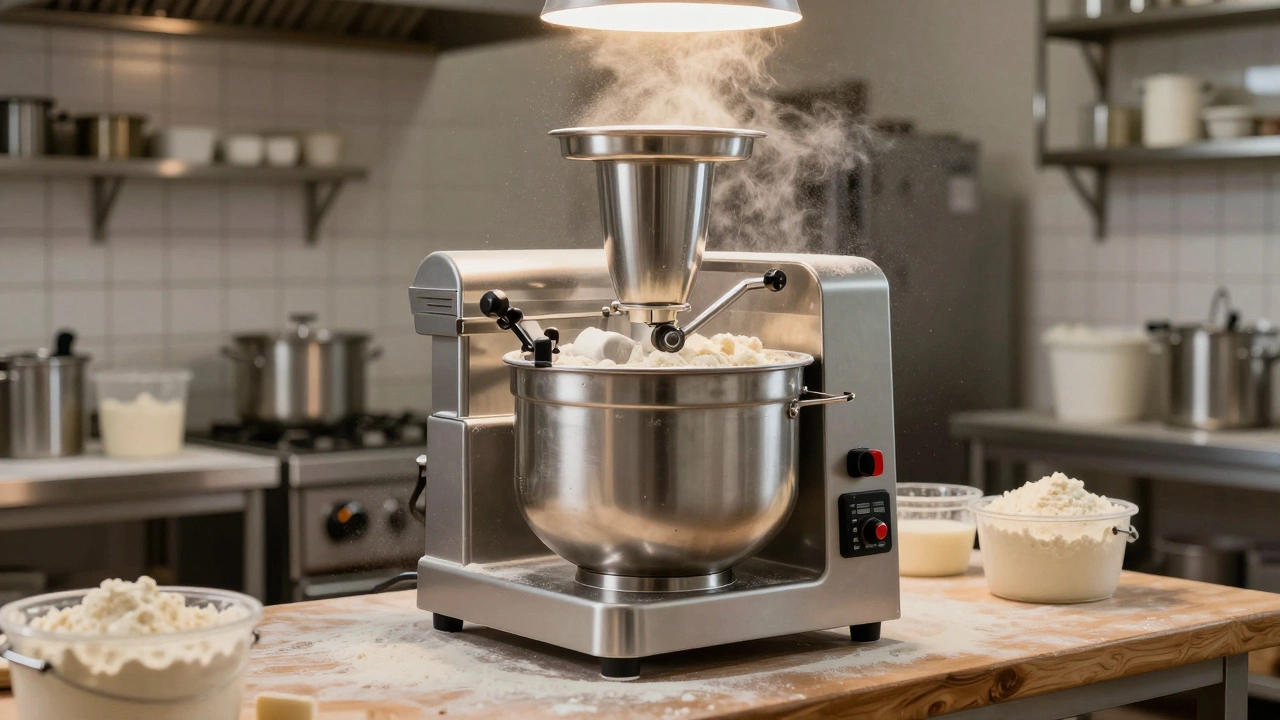
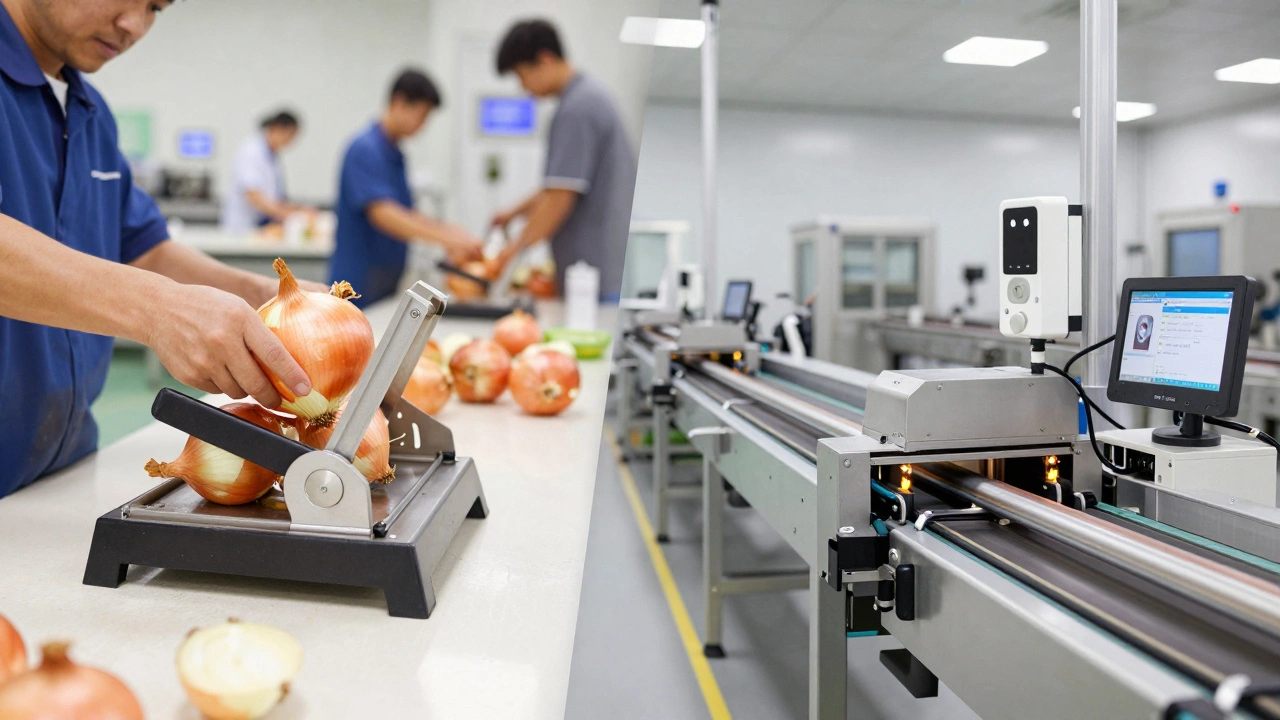
A food processor is a single machine designed to perform one or more specific tasks on food. Think of it like a kitchen appliance scaled up for industrial use. Common examples include meat grinders, vegetable slicers, dough mixers, or fruit pulpers. These machines are built to handle a defined job-chopping, blending, mixing, or cutting-and they usually do it quickly and consistently.
In a small-scale bakery, a food processor might be a 50-liter mixer that blends flour, water, yeast, and salt into dough. In a juice factory, it could be a centrifugal pulper that separates pulp from orange juice. The key point? A processor does a single function or a tightly grouped set of functions. It’s a tool, not a system.
Food processors are often modular. You can plug one in, run it, and take it out when you’re done. They’re easy to clean, maintain, and replace. Most run on standard industrial power and don’t need complex control systems. If your plant needs to chop 2,000 kg of onions per hour, you buy an onion chopper. That’s your processor.
What Is a Processing Unit?
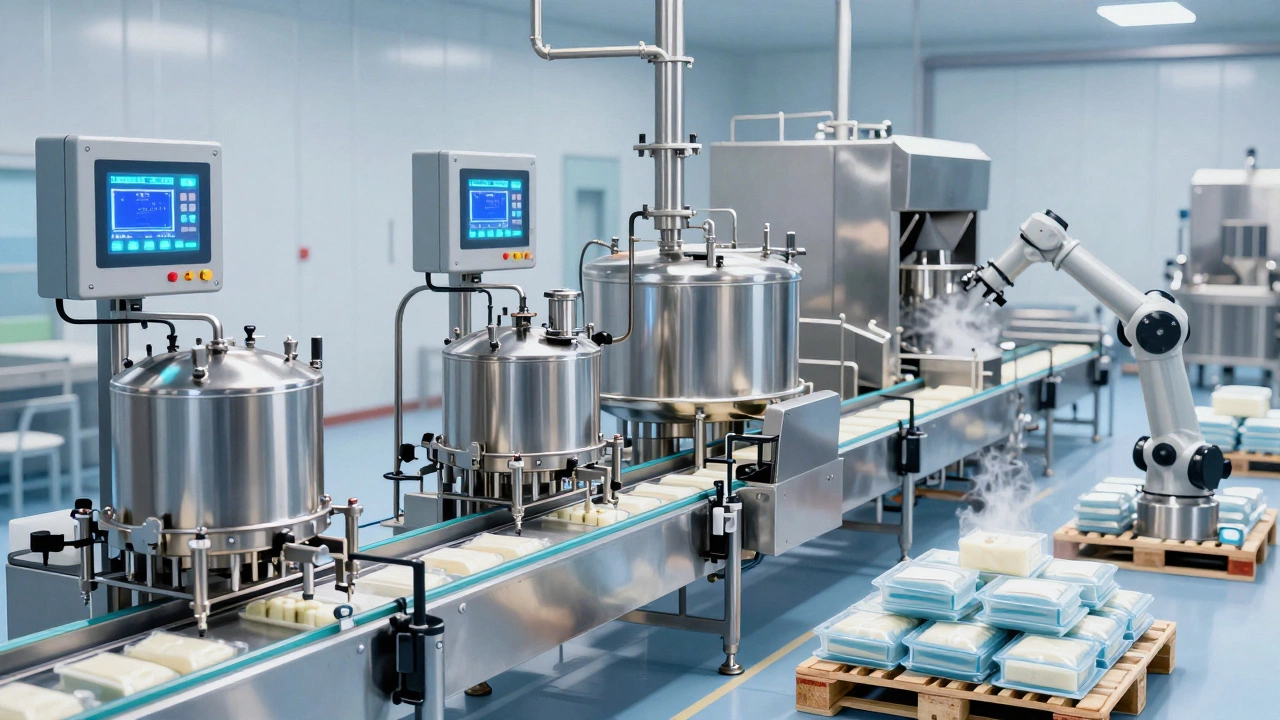
A processing unit is an entire system made up of multiple processors, conveyors, sensors, control panels, and sometimes even packaging stations-all linked together to turn raw ingredients into a finished product. It’s not one machine. It’s a workflow.
For example, a yogurt processing unit includes: a milk pasteurizer, a homogenizer, a cooling tank, a fermentation chamber, a filling machine, a cap sealer, and a labeling station. Each of these is a separate processor, but together they form a single processing unit. The whole system runs on automated controls, often with PLCs (Programmable Logic Controllers) that monitor temperature, flow rates, and timing.
In a canned tomato plant, the processing unit might start with washing tomatoes, then move them to a steam peeler, then a cutter, then a cooker, then a vacuum sealer, and finally a metal detector before boxing. Every step is connected. If one processor fails, the whole unit stops. That’s the difference.
Key Differences at a Glance
| Feature | Food Processor | Processing Unit |
|---|---|---|
| Definition | A single machine performing one or few related tasks | A complete system of multiple machines working together |
| Scope | Task-specific (e.g., slicing, grinding) | End-to-end production (raw input → finished product) |
| Complexity | Low to moderate | High-requires integration, automation, and control systems |
| Control System | Manual or basic timer | PLC, HMI, sensors, feedback loops |
| Scalability | Easy to add or replace | Requires redesign if you change one component |
| Cost | £2,000-£25,000 | £50,000-£1,000,000+ |
| Typical Use Case | Small batch production, pilot lines, specialty foods | High-volume commercial production (e.g., snacks, dairy, canned goods) |
Why This Distinction Matters
If you’re starting a small food business making pickles, you don’t need a full processing unit. You need a vegetable washer, a cutter, a brine mixer, and a bottling machine. Buying a £300,000 automated line for 500 jars a day is overkill-and financially risky.
On the other hand, if you’re supplying supermarkets with ready-to-eat meals, you need a processing unit. Why? Because you need consistency, speed, hygiene certification, and traceability. A single processor can’t handle all that. You need sensors to track temperature during cooking, robots to place meals into trays, and barcode scanners to link each batch to its ingredients.
Regulatory bodies like the UK Food Standards Agency and the EU’s HACCP standards require documented control points. That’s only possible with a processing unit that logs data at every stage. A standalone processor? It just chops. It doesn’t record.
Common Misconceptions
One myth is that a bigger processor equals a processing unit. Not true. A 500-liter industrial mixer is still just a processor. It doesn’t become a unit until it’s linked to a feeder, a pasteurizer, a filler, and a cleaner-in-place system.
Another mistake is assuming all food factories have processing units. Many do-but only if they’re producing packaged, shelf-stable, or high-volume goods. A local jam maker using a steam kettle and hand-filling jars? That’s a collection of processors, not a unit.
Even some manufacturers mislabel things. You’ll see ads saying “Complete Processing Unit for Fruit Juice” when they’re just selling a pump, a filter, and a bottle filler. That’s not a unit-it’s a sales pitch.
How to Choose the Right Setup
Ask yourself these three questions:
- How much product do you need to make per day? Under 500 kg? Stick with processors. Over 2,000 kg? You need a unit.
- Do you need traceability? If you’re selling to retailers or exporting, yes. That means sensors, logs, and automation.
- Can you afford downtime? A processing unit has more parts, so more things can break. But if one part fails, the whole line stops. Processors? Swap one out in an hour.
Start small. Use processors to test recipes and volumes. Once you’ve proven demand and nailed your process, then invest in a processing unit. Many successful food brands in the Midlands did exactly that-began with a few machines in a rented unit, then scaled up over three years.
Real-World Example: Birmingham-Based Snack Producer
A company in Birmingham started making roasted chickpeas in 2023. First, they used a tabletop oven, a manual separator, and a hand-held scale. That’s three processors. They sold at farmers’ markets and online.
By 2025, they were selling 15,000 bags a week. They needed consistency, speed, and hygiene certification. So they bought a processing unit: an automated feeder that dropped chickpeas onto a conveyor, a rotating oven with temperature sensors, a cooling tunnel, a bagging machine with date stamping, and a metal detector. The whole system runs on one PLC. They now export to Germany and France.
They didn’t start with the unit. They grew into it.
What Happens When You Mix Them Up?
Buying a processing unit when you only need a processor? You’ll waste tens of thousands on unused automation. You’ll spend more on maintenance, training, and energy than you earn.
Buying a processor when you need a unit? You’ll end up with inconsistent products, manual bottlenecks, and failed inspections. One batch might be overcooked because the oven wasn’t synced with the filler. Another might have metal fragments because there’s no detector.
Either way, it’s expensive. The average food business in the UK that missteps here loses between £15,000 and £80,000 in wasted equipment, lost time, and compliance fines.
Final Takeaway
A food processor is a tool. A processing unit is a factory. One does a job. The other does an entire process. Knowing the difference isn’t just technical-it’s financial, legal, and operational.
If you’re starting out, start with processors. Keep it simple. Prove your product. Then, when volume and demand justify it, build or buy a processing unit. That’s how the smart ones grow.
Can a food processor be part of a processing unit?
Yes, absolutely. A processing unit is made up of multiple food processors working together. For example, a meat processing unit includes a grinder, a stuffer, a smoker, and a slicer-all individual processors linked into one system.
Do all food factories need a processing unit?
No. Only businesses producing high-volume, packaged, or regulated food products need a full processing unit. Small producers making jams, pickles, or baked goods often use standalone processors and still meet safety standards.
Is a processing unit always automated?
Most modern processing units are automated, but not all. Some small-scale units use manual controls with mechanical linkages. However, automation is required for compliance with HACCP and EU food safety standards in commercial production.
How much does a basic food processing unit cost?
A basic processing unit for small-scale food production-like for snacks or sauces-typically costs between £50,000 and £150,000. This includes conveyors, cleaning systems, filling machines, and basic automation. Larger units for dairy or canned goods can exceed £500,000.
Can I upgrade a processor into a processing unit later?
Sometimes. If your processors are modular and have standard interfaces (like IP65-rated connections or common conveyor sizes), you can integrate them into a unit later. But many low-cost processors aren’t designed for this. Plan ahead if you think you’ll scale up.
If you're considering equipment for your food business, don't just ask what machine you need. Ask what system you need. That’s the real question.