Manufacturer Definition: What It Really Means and How It Powers Indian Industry
At its core, a manufacturer, a business that transforms raw materials or components into finished goods using tools, labor, and processes. Also known as a producer, it’s the hidden engine behind everything from your morning coffee cup to the steel frame of a new bridge. This isn’t just about factories with smokestacks. A manufacturer can be a single person in a garage making handcrafted wooden furniture, a small workshop in Gujarat stitching textiles, or a massive plant in Pune assembling electronics. What matters isn’t size—it’s the act of making something tangible from nothing.
Manufacturing in India isn’t just about copying global designs anymore. It’s about innovation at scale. Take small manufacturer, a business with fewer than 50 employees that builds custom or niche products. These are the unsung heroes turning scrap plastic into phone stands, or leftover fabric into reusable bags. They don’t need huge budgets—just a clear idea and the will to produce. Meanwhile, industrial manufacturing, large-scale production using automated systems and heavy machinery is booming in states like Gujarat and Tamil Nadu, where chemical plants, steel fabricators, and electronics assembly lines are setting new speed records. These two types—small and industrial—are not opposites. They feed each other. A small manufacturer might use steel parts made by a big plant. A big plant might rely on a small supplier for custom packaging or specialized fasteners.
The manufacturing process, the step-by-step method of turning inputs into outputs, from design to delivery is where real value is created. It’s not magic. It’s cleaning, mixing, heating, cutting, assembling, and testing. In food processing, it’s how raw sugarcane becomes packaged sugar. In steel, it’s how iron ore becomes beams for skyscrapers. In plastics, it’s how pellets become phone cases. Every single post in this collection ties back to this process. You’ll find stories of people who started with nothing but a machine and an idea. You’ll see how Indian manufacturers are beating global giants on price, speed, and quality. And you’ll learn which industries are growing—and which ones are fading fast.
This isn’t a textbook. It’s a real-world map of who’s making what, where, and how. Whether you’re looking to start your own small manufacturing business, source products from India, or just understand how the stuff you use gets made—what follows is your guide. No fluff. Just facts, examples, and the kind of practical insight you won’t find in a corporate brochure.
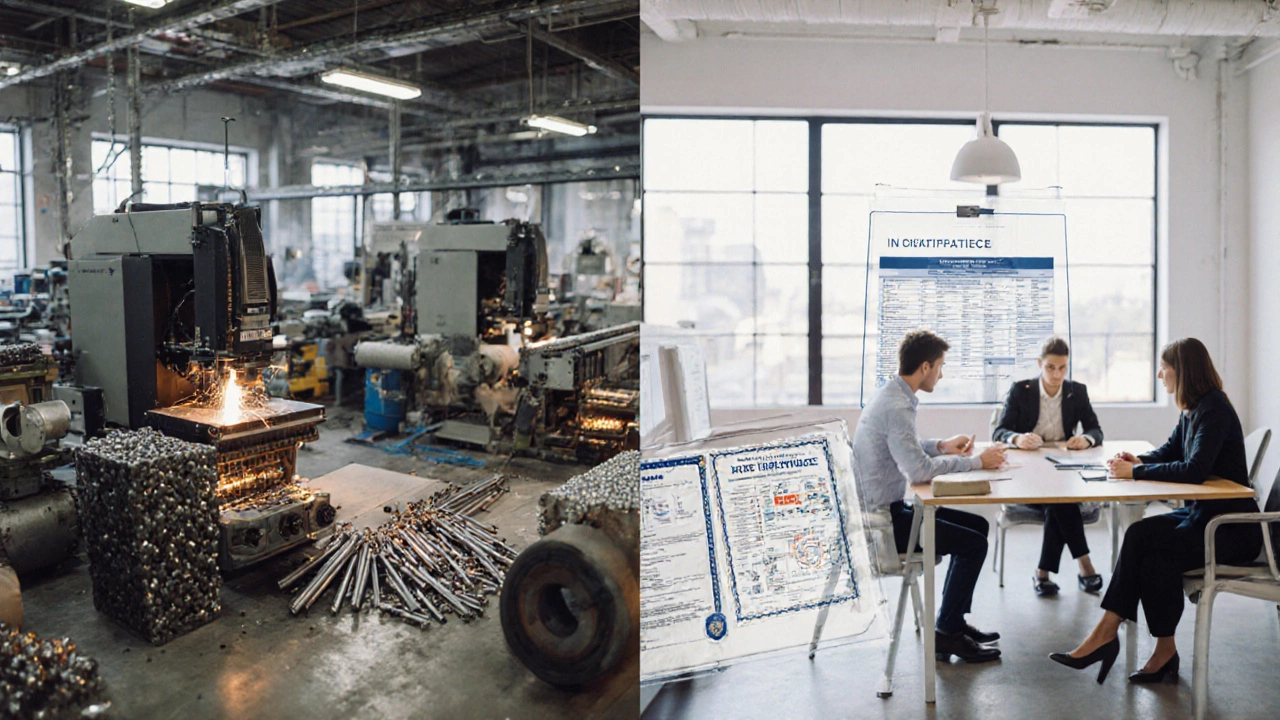
What Qualifies as a Manufacturer? Clear Criteria and Real‑World Examples
Learn the exact legal criteria that define a manufacturer, from facility control to licensing, tax benefits, and real-world examples.
Manufacturing
Latest Posts

Tags
- manufacturing
- small scale manufacturing
- plastic manufacturing
- plastic pollution
- India
- food processing
- textile industry
- government schemes
- electronics manufacturing
- small business
- steel manufacturing
- startup ideas
- production
- textile manufacturers India
- manufacturing business ideas
- business ideas
- chemical manufacturers India
- electronics manufacturing India
- steel manufacturing plants
- plastic manufacturers