
Find Your Perfect Furniture Match
Answer these quick questions to see which competitor challenges IKEA's dominance for your specific needs.
Your Recommended Competitor
Walk into any major metro city in India today, and you’ll notice a shift. The days of buying furniture solely from local carpenters or dusty roadside showrooms are fading. In its place is a sleek, organized, and often digital-first experience. IKEA, the Swedish retail giant, entered this space with massive fanfare, promising flat-pack efficiency and Scandinavian design at accessible prices. But here’s the twist: while IKEA gets the headlines, it isn’t the only player dominating the Indian living room. In fact, for every customer who walks into an IKEA store in Hyderabad or Mumbai, there are dozens shopping elsewhere.
Why? Because the Indian consumer is complex. We value customization over standardization. We prefer solid wood over particleboard. And we increasingly want delivery within 48 hours, not next week. This specific set of preferences has created a fertile ground for fierce competition. If you’re looking to understand who is actually challenging IKEA’s dominance, you need to look beyond just "furniture stores." You need to look at tech-enabled startups, legacy retailers, and direct-to-consumer disruptors that have cracked the code on what Indian homes actually need.
The Rise of Tech-Enabled D2C Disruptors
If IKEA represents the traditional big-box retailer model, companies like Pepperfry represent the digital counter-revolution. Pepperfry started as an aggregator but evolved into a hybrid model that owns its own manufacturing units under the brand MM Interiors. This allows them to control quality and speed, something IKEA struggled with initially due to long supply chains.
What makes Pepperfry a genuine threat? It’s the logistics network. While IKEA relies on large warehouse distribution, Pepperfry built a last-mile delivery infrastructure called Pepperfry Logistics that handles bulky items better than most courier services. They offer assembly services included in the price, addressing a major pain point: Indians hate assembling their own furniture. Unlike IKEA’s DIY culture, Pepperfry understands that convenience is king.
| Brand | Primary Model | Key Strength | Target Audience |
|---|---|---|---|
| Pepperfry | Hybrid (Online + Offline Stores) | Extensive SKU range & Assembly Services | Middle-class urban households |
| Urban Ladder | Direct-to-Consumer (D2C) | Modern aesthetics & Fast delivery | Young professionals & Millennials |
| Nilkamal | Legacy Retailer | Durability & Rural reach | Budget-conscious families |
| Home Centre | Premium Retail | Design-led collections & Experience | Affluent buyers |
Urban Ladder: The Aesthetic Alternative
While Pepperfry competes on variety, Urban Ladder competes on style. Founded by Rajiv Srivatsa, Urban Ladder identified a gap in the market: modern, mid-range furniture that didn’t look "cheap" but wasn’t priced like luxury imports. Their strategy is pure Direct-to-Consumer (D2C). By cutting out middlemen, they offer high-quality materials-like solid teak and engineered wood-at prices that undercut many offline showrooms.
Urban Ladder’s biggest weapon against IKEA is agility. IKEA moves slowly because it’s a global entity with rigid product cycles. Urban Ladder launches new collections every few weeks, responding instantly to trends seen on Instagram or Pinterest. For a young couple furnishing their first apartment in Bangalore or Gurgaon, Urban Ladder offers curated bundles-"The Starter Pack" or "The Home Office Setup"-that solve decision fatigue. IKEA asks you to build your own solution; Urban Ladder sells you a finished lifestyle.
The Legacy Giants: Nilkamal and Godrej Interio
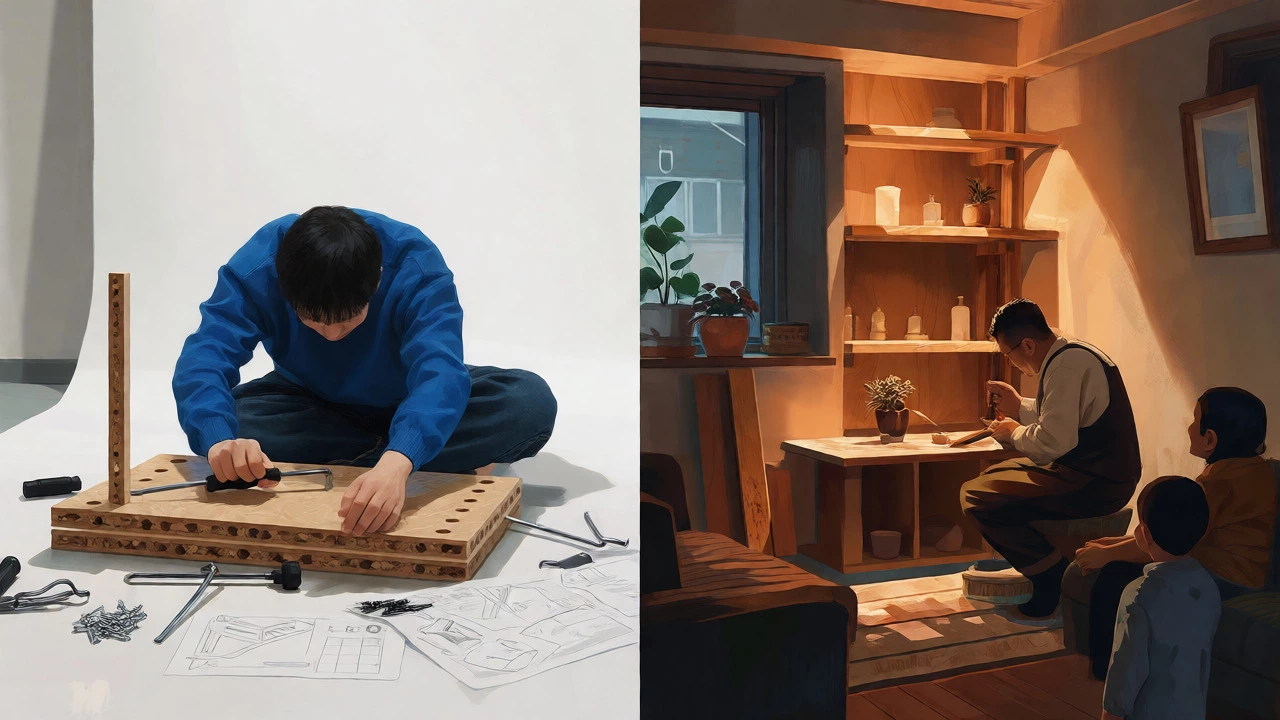
It’s easy to ignore old-school brands when talking about digital disruption, but that’s a mistake. Nilkamal is arguably the deepest-rooted competitor to IKEA in terms of sheer volume and geographic penetration. While IKEA focuses on Tier-1 cities, Nilkamal dominates Tier-2 and Tier-3 towns. Why does this matter? Because India’s growth story isn’t just in metros.
Nilkamal’s strength lies in plastic and metal furniture, segments where IKEA barely plays. An Indian household might buy a sofa from IKEA but will almost certainly buy storage cabinets, chairs, and utility items from Nilkamal. Similarly, Godrej Interio leverages the trust associated with the Godrej brand. Known for steel almirahs, Godrej has expanded into wooden furniture and office solutions. Their advantage is durability perception. When an Indian buyer thinks "long-lasting," they think Godrej. IKEA’s particleboard construction, while affordable, doesn’t always convey that same sense of permanence to the older generation.
Premium Experience Players: Home Centre and Livspace
For those who view furniture as an investment rather than a commodity, Home Centre (part of Landmark Group) poses a different kind of challenge. Home Centre operates physical stores that feel more like boutique experiences than warehouses. They focus on premium fabrics, imported finishes, and interior design consultations. IKEA’s self-service model can feel cold to buyers who want hand-holding. Home Centre provides that human touch.
Then there’s Livspace, which attacks IKEA from the renovation angle. Livspace isn’t just selling a chair; they’re selling a modular kitchen or a full bedroom makeover. Their technology platform allows customers to visualize 3D designs before buying. This end-to-end service model captures the high-value segment of the market-homeowners renovating entire spaces-who might otherwise consider IKEA for individual pieces but choose Livspace for integrated solutions.
Why Local Carpenters Still Win
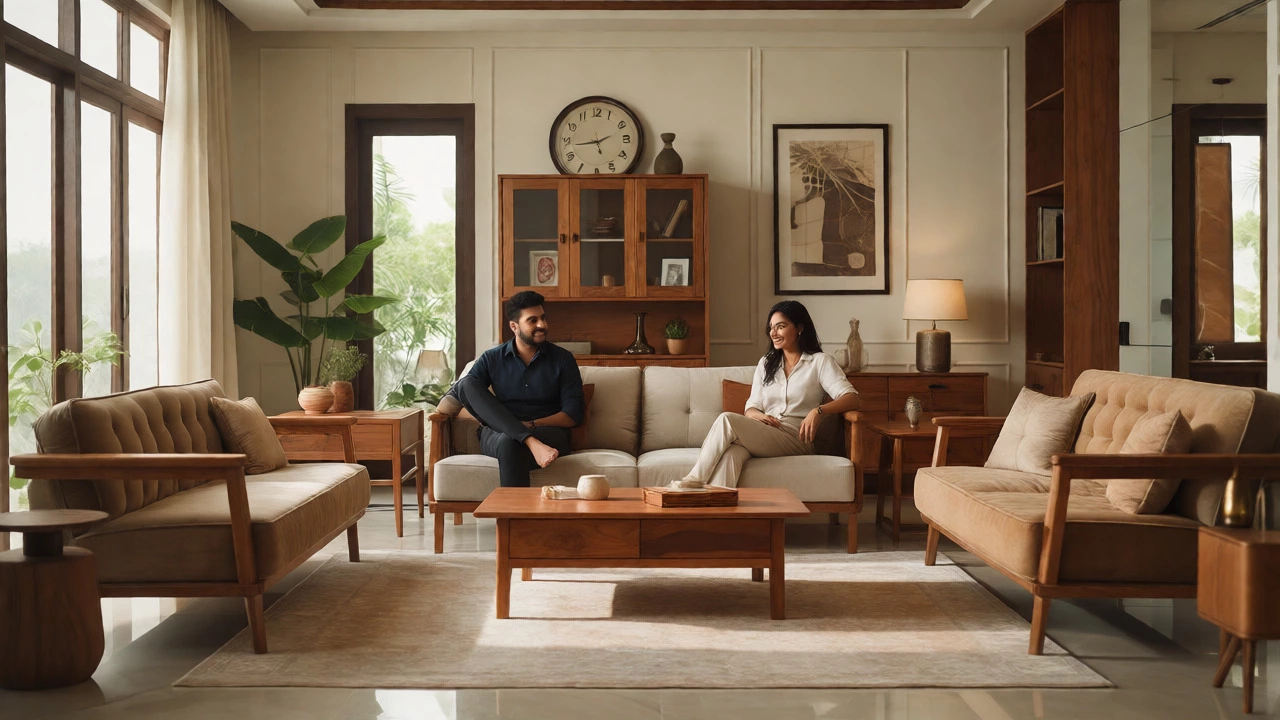
We can’t talk about competitors without mentioning the invisible giant: the local carpenter. Despite all the branding and apps, a significant portion of Indian furniture is still custom-built. IKEA’s standardized sizes don’t fit every Indian home, especially in older apartments with odd corners or non-standard ceiling heights. A carpenter can build a unit that fits exactly to the inch.
This fragmented market is IKEA’s hardest nut to crack. You can’t compete with a neighbor’s recommendation or a trusted local craftsman who has been serving a family for decades. Startups like NoBrokerHomes (via partnerships) and Urban Company (for repairs/customization) are trying to digitize this relationship, but the emotional trust in local craftsmanship remains a formidable barrier.
Strategic Differences: What Sets Them Apart?
So, how do these players differ strategically? Let’s break it down using semantic relationships:
- Customization vs. Standardization: IKEA forces you to adapt to their dimensions. Competitors like Livspace and local carpenters adapt to your home. This is a critical cultural mismatch for IKEA.
- Assembly Culture: IKEA promotes DIY as fun. Indian consumers largely see it as work. Brands offering free assembly (Pepperfry, Amazon) gain immediate preference.
- Material Perception: Solid wood is prized in India. IKEA uses veneers and laminates. Competitors highlighting "Solid Teak" or "Sheesham" tap into deeper cultural values regarding longevity and status.
- Digital Trust: Younger buyers trust reviews and AR visualization tools (Urban Ladder app) more than walking into a big box store. This shifts power to agile digital brands.
The battle isn’t just about price. It’s about fitting into the Indian way of life. IKEA brings global scale, but local competitors bring local nuance. That nuance is winning them market share.
Who is IKEA's biggest online competitor in India?
Pepperfry is widely considered IKEA's largest direct online competitor. With its extensive catalog, physical studio presence, and robust logistics network handling bulky items, Pepperfry addresses the key pain points of online furniture buying in India: delivery reliability and assembly services.
Is IKEA cheaper than other furniture brands in India?
Not necessarily. While IKEA offers competitive pricing on basic items, its total cost often rises when adding accessories, delivery fees, and assembly costs. Brands like Urban Ladder and Nilkamal often provide better value for money on durable goods, especially during festive sales.
Why do some Indians prefer local carpenters over IKEA?
Local carpenters offer complete customization. Indian homes often have unique layouts or require furniture made from specific types of solid wood (like Teak or Sheesham) for durability. IKEA's standardized, flat-pack particleboard furniture cannot match the bespoke fit and perceived longevity of custom-made pieces.
Which brand is best for modular kitchens in India?
While IKEA offers modular kitchens, brands like Livspace and Häfele are often preferred for comprehensive kitchen renovations. They provide end-to-end services including design consultation, installation, and integration with appliances, offering a more seamless experience than IKEA's self-design approach.
Does IKEA face competition from Amazon in India?
Yes, significantly. Amazon India hosts thousands of local and national furniture sellers. Its Prime delivery speeds and easy return policies make it a convenient alternative for smaller furniture items, lamps, and decor, eroding IKEA's advantage in impulse purchases and small-ticket home essentials.