
Small vs. Large Scale Industry Impact Calculator
Configure Parameters
Comparison Results
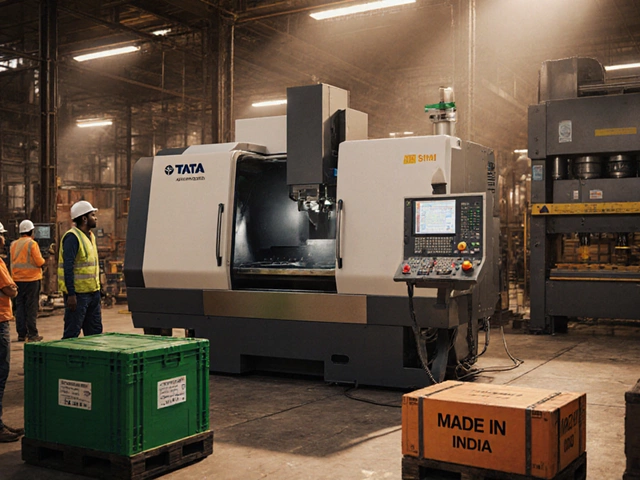
Small industries are labor-intensive, whereas large corporations rely heavily on automation and capital machinery.
High local sourcing means money circulates within the region (the multiplier effect), rather than being repatriated abroad.
Local sourcing reduces transportation distances significantly compared to global supply chains used by giants.
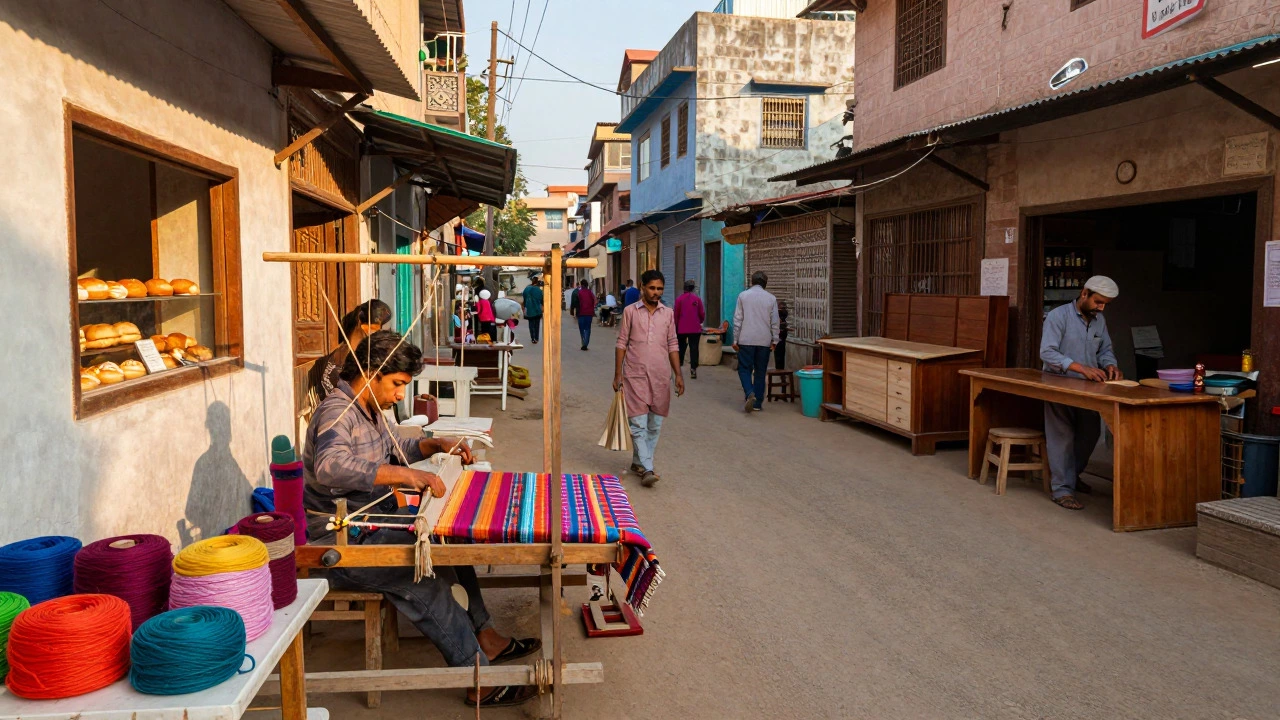
You might think that big corporations run the world. They dominate the news, control global supply chains, and have marketing budgets that could fund small nations. But look closer at your neighborhood. The bakery on the corner, the custom furniture maker in the industrial park, the boutique software developer working from a garage-these are small scale industries, defined as businesses with limited investment in plant and machinery, typically employing fewer than 100 workers depending on regional regulations. In 2026, these entities account for over 90% of all enterprises globally and contribute significantly to GDP, especially in developing economies.
Why does this matter? Because while giants like Amazon or Toyota get the glory, small scale manufacturing is the backbone of economic stability. It’s not just about making things; it’s about how they make them, who they employ, and how they adapt when the market shifts. If you’re an entrepreneur considering starting a workshop, or an investor looking for resilient assets, understanding the real advantages of small scale industries is crucial. Let’s break down why size often equals strength in the modern economy.
Job Creation and Social Equity
The most immediate advantage of small scale industries is their role as primary employers. Large automated factories require fewer humans per unit of output. A massive automotive plant might produce thousands of cars with highly robotic lines, employing perhaps a few thousand people. In contrast, a network of small auto parts manufacturers across a region can employ tens of thousands, each doing specialized tasks that robots haven’t fully replaced yet.
| Metric | Small Scale Industry | Large Scale Industry |
|---|---|---|
| Jobs per Million Invested | High (Labor-intensive) | Low (Capital-intensive) |
| Skill Level Required | Varied (Entry to Expert) | Specialized Technical |
| Geographic Distribution | Rural & Semi-Urban | Urban Hubs |
| Turnover Rate | Higher (Dynamic) | Lower (Stable) |
Consider the textile sector. A large garment factory might centralize production in one city. However, small scale tailoring units spread across villages allow women and men to work close to home, balancing family duties with income generation. This decentralization reduces urban migration pressure and keeps wealth within local communities. When money stays local, it circulates. The baker buys flour from the local miller, who pays the local farmer. This multiplier effect strengthens the entire regional economy, something large multinational corporations rarely achieve because they source globally and repatriate profits abroad.
Furthermore, small scale industries provide opportunities for marginalized groups. They lower the barrier to entry for entrepreneurs who lack access to venture capital but possess skills, ideas, or community trust. This inclusivity fosters social equity by allowing diverse voices to participate in economic growth, rather than concentrating power in the hands of a few corporate elites.
Agility and Innovation
Big ships take longer to turn. In business terms, large corporations suffer from bureaucracy. Decisions often need approval from multiple layers of management, legal teams, and board members. By the time a giant company decides to pivot its product line, the market has already moved on. Small scale industries, however, are nimble. The owner-manager often makes decisions on the spot. If customers want a different color, a modified feature, or a faster delivery window, a small manufacturer can adjust overnight.
This agility drives innovation. You don’t need a billion-dollar R&D lab to innovate; you need proximity to the customer. A small electronics repair shop might notice a recurring failure in a specific smartphone model and develop a better replacement part. That insight can lead to a new product line. Large companies rely on focus groups and data analytics, which are lagging indicators. Small businesses react to real-time feedback. This responsiveness allows them to capture niche markets that are too small for giants to bother with but profitable enough to sustain a small enterprise.
Think about the craft beer industry. Ten years ago, it was dominated by three major breweries. Today, hundreds of small breweries thrive by experimenting with unique flavors, collaborating with local food producers, and hosting taproom events. They didn’t outspend the big guys; they out-innovated them by being closer to the consumer. This pattern repeats across sectors, from fashion to software development. Small scale industries are the testing grounds for new ideas that, if successful, can be scaled up or licensed to larger players.

Resource Efficiency and Environmental Benefits
There’s a misconception that small is inefficient. While economies of scale favor large producers in mass production, small scale industries often excel in resource efficiency through waste reduction and localized sourcing. Large factories generate massive amounts of waste that requires complex logistics to manage. Small workshops tend to use materials more carefully because every scrap counts toward their bottom line.
Moreover, small scale manufacturing supports circular economy principles. It’s easier for a small furniture maker to repair a broken chair than for a disposable furniture giant to replace it. This repairability extends product lifecycles, reducing overall consumption. Additionally, small businesses are more likely to source raw materials locally, cutting down on transportation emissions. A woodworker using timber from nearby forests has a smaller carbon footprint than a factory importing plastic components from overseas.
In 2026, with increasing regulatory pressure on carbon footprints, this advantage is growing. Governments are offering incentives for green manufacturing practices, many of which are easier for small businesses to implement due to their simpler operations. For example, switching to solar panels or using recycled materials can be done incrementally without disrupting large-scale production lines. This environmental stewardship appeals to conscious consumers who prefer brands with sustainable credentials.
Economic Resilience and Risk Diversification
When a large corporation fails, it causes shockwaves. Thousands lose jobs, suppliers go bankrupt, and local economies crash. Think of the collapse of Enron or the struggles of traditional retail giants during the e-commerce boom. Small scale industries, however, act as shock absorbers. Because there are so many of them, the failure of one doesn’t destabilize the system. Instead, resources shift to other viable small businesses.
This diversification creates economic resilience. During global crises, such as pandemics or supply chain disruptions, small businesses often adapt faster. They can switch products based on immediate demand. During the early days of the pandemic, many small apparel manufacturers shifted to producing masks and sanitizers within weeks. Large factories faced contractual obligations and logistical hurdles that slowed their response. This flexibility ensures that essential goods remain available even when global systems falter.
Additionally, small scale industries reduce dependency on foreign imports. By producing goods locally, countries maintain strategic autonomy. Whether it’s pharmaceuticals, food processing, or basic machinery, having a robust base of small manufacturers ensures that critical supplies aren’t held hostage by geopolitical tensions or trade wars. This self-reliance is a key component of national security and economic stability.

Challenges and Mitigation Strategies
It’s not all sunshine. Small scale industries face significant challenges. Access to capital is the biggest hurdle. Banks often view small businesses as risky borrowers, leading to higher interest rates or loan rejections. Without adequate funding, expansion and technology adoption become difficult. Another challenge is skill gaps. Owners may be experts in their craft but lack knowledge in digital marketing, financial management, or export procedures.
To mitigate these issues, governments and private organizations are stepping up. Cluster development programs group small businesses together to share infrastructure, such as common effluent treatment plants or testing labs. Digital platforms enable small manufacturers to reach global markets without needing physical storefronts. Training initiatives help owners upgrade their managerial skills. Leveraging these resources turns potential weaknesses into strengths.
For instance, a small pottery studio might join a cooperative to collectively negotiate shipping rates or access bulk clay supplies. By collaborating, small businesses achieve some economies of scale while retaining their independence. This hybrid approach combines the agility of small firms with the purchasing power of larger entities, creating a competitive edge in the modern marketplace.
Future Outlook: The Rise of Micro-Manufacturing
Looking ahead, the trend favors small scale industries. Advances in technology, particularly additive manufacturing (3D printing) and computer-aided design, are democratizing production. What once required expensive injection molding machines can now be done with affordable desktop printers. This shift enables micro-manufacturing, where products are made on-demand, near the point of consumption.
This model reduces inventory costs and waste. Imagine ordering a custom shoe that is printed in your city within hours, rather than waiting weeks for shipment from a distant factory. Small scale industries are perfectly positioned to capitalize on this trend. They can offer personalized, high-quality products that large mass-producers cannot match. As consumer preferences shift towards customization and sustainability, the advantages of small scale manufacturing will only grow.
Investors and policymakers should recognize this shift. Supporting small businesses isn’t just charity; it’s smart economics. It builds resilient communities, fosters innovation, and promotes sustainable growth. Whether you’re starting a small workshop or investing in local ventures, understanding these dynamics helps you navigate the evolving landscape of global industry.
What defines a small scale industry?
A small scale industry is typically defined by limits on investment in plant and machinery and the number of employees. Criteria vary by country; for example, in India, it might involve less than $1 million in investment and under 100 workers, while in the US, the Small Business Administration uses revenue caps and employee counts specific to each industry sector.
How do small scale industries compete with large corporations?
They compete through agility, personalization, and niche targeting. While large corporations focus on volume and standardization, small businesses offer customized solutions, faster turnaround times, and superior customer relationships. They also leverage local trust and community connections that big brands struggle to replicate.
Are small scale industries environmentally friendly?
Often, yes. Due to smaller batch sizes and local sourcing, they tend to have lower transportation emissions. They also promote repair and reuse, extending product lifecycles. However, efficiency depends on individual practices; adopting green technologies enhances their environmental benefits.
What are the main challenges faced by small scale manufacturers?
Key challenges include limited access to credit, difficulty in adopting advanced technology, skill shortages, and competition from imported goods. Regulatory compliance can also be burdensome for small teams without dedicated legal or administrative staff.
How can government policies support small scale industries?
Governments can provide low-interest loans, tax incentives, cluster development infrastructure, and skill training programs. Simplifying regulatory processes and facilitating access to digital marketplaces also helps small businesses grow and compete globally.