
Global Manufacturing Hub Selector
Select your production requirements below to identify the most suitable global manufacturing hub according to current 2026 trends.
Ready to Analyze
Fill out the form on the left and click "Find Best Hub" to see recommendations.
You look around your living room right now. That smartphone in your hand, the shoes on your feet, maybe even the laptop you’re reading this on. Where did they come from? For the last twenty years, the reflex answer was simple: China is the world’s factory floor, responsible for nearly a third of all global manufacturing value added. But if you ask a supply chain manager in Birmingham or Detroit today, that answer feels shaky. It’s not wrong, exactly, but it’s incomplete. The title of "Manufacturing Capital" isn’t just about who makes the most stuff; it’s about who has the infrastructure, the labor force, and the government backing to do it efficiently at scale.
Here’s the thing: there is no single winner. The landscape has shifted. While China still holds the crown by volume, countries like India are aggressively claiming territory through schemes like Make in India, and nations like Vietnam and Mexico are stealing specific niches. If you want to understand where your next job might be, or where your company should source parts, you need to look past the headlines. Let’s break down who actually holds the power, why the map is changing, and what it means for the rest of us.
The Unshakable Giant: Why China Still Leads
Let’s get the big number out of the way first. According to data from the United Nations Industrial Development Organization (UNIDO), China accounts for roughly 30% of global manufacturing value added. That is more than the United States, Japan, and Germany combined. This isn’t just because they have a lot of people. It’s about ecosystem density.
Imagine you need to build a drone. In Shenzhen, you can drive ten minutes to find every screw, sensor, battery cell, and plastic casing you need. All suppliers are within a fifty-mile radius. Try doing that in Ohio or Manchester. You’ll spend weeks coordinating shipments from different continents. This proximity reduces lead times from months to days. That logistical advantage is hard to beat, even with higher wages.
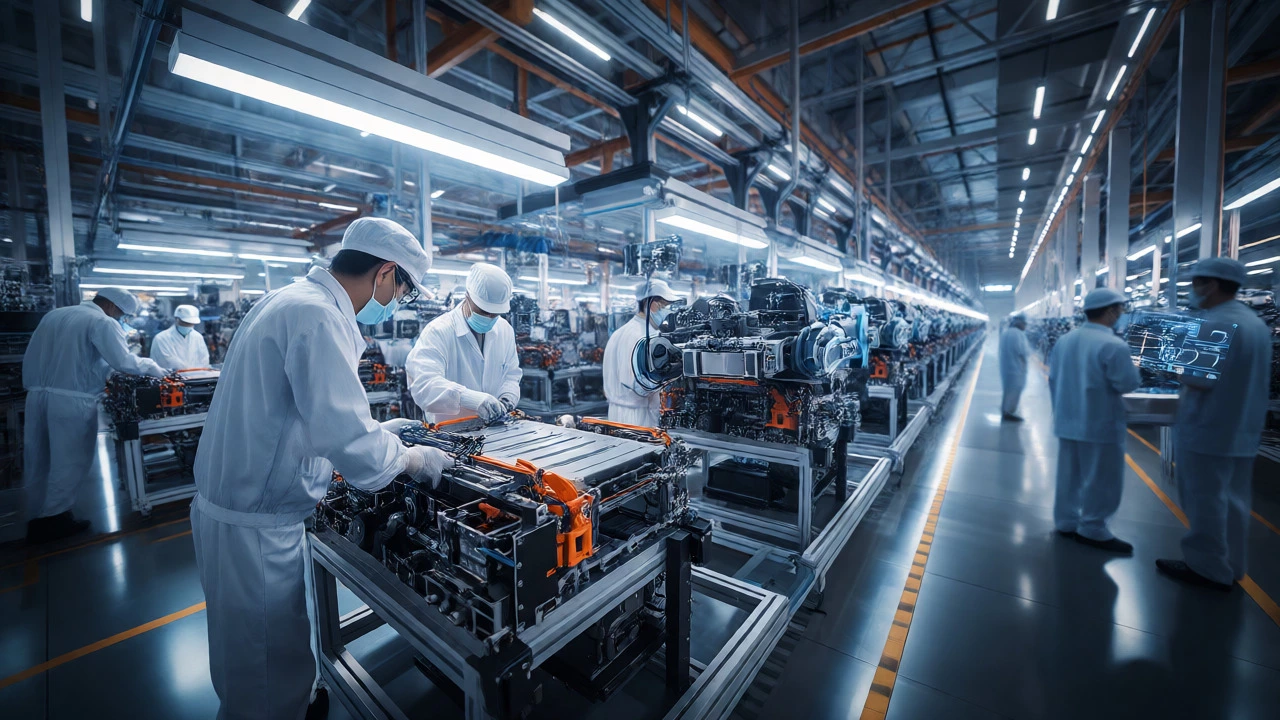
However, the narrative of "cheap Chinese labor" is dead. Wages in coastal China have risen significantly. So why stay? Because the skill level has risen too. Chinese workers aren’t just assembling toys anymore; they are building electric vehicles, semiconductors, and high-end robotics. The country has moved up the value chain. They aren’t just the factory; they are becoming the R&D lab. If you define the manufacturing capital as the place with the deepest talent pool and the fastest iteration speed, China still wins. But it’s winning a different game now.
The Rising Contender: India’s Ambitious Push
If China is the incumbent king, India is the challenger knocking loudly on the door. With a population surpassing China’s, India has the raw demographic fuel. But numbers alone don’t make a manufacturing hub. Infrastructure does. And that’s where things get interesting.
For decades, India struggled with bureaucracy and poor logistics. Goods moved slowly across states due to internal taxes and bad roads. The introduction of the Goods and Services Tax (GST) and massive highway construction projects have changed the math. Now, consider the government’s role. Schemes like the Production Linked Incentive (PLI) are directly subsidizing companies that manufacture locally. Apple, for instance, has shifted significant iPhone production to Tamil Nadu and Karnataka. This isn’t charity; it’s strategic positioning.
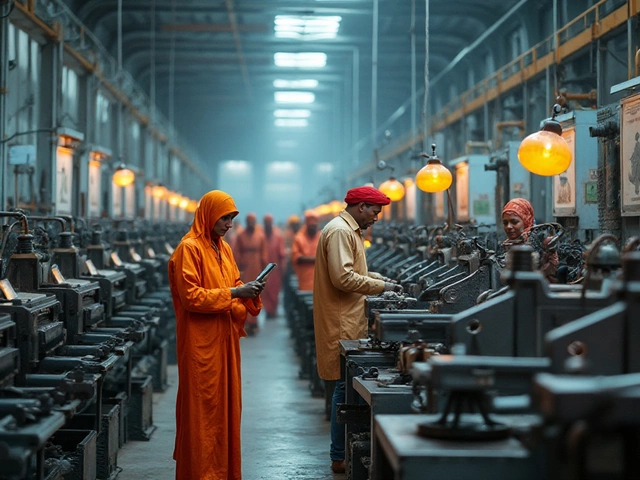
India’s strength lies in its diversity. It’s strong in pharmaceuticals, textiles, and increasingly, electronics assembly. Unlike China, which is often seen as a closed system, India offers a democratic alternative that Western companies feel safer relying on amidst geopolitical tensions. Is it ready to replace China? Not yet. The supply chains aren’t as deep. But for industries looking to diversify away from reliance on a single country, India is the primary destination.

The Specialized Players: Vietnam, Mexico, and Germany
Not everyone wants to be the generalist. Some countries win by being specialists. Take Vietnam. It has become the go-to spot for light manufacturing-textiles, footwear, and electronics assembly. Companies like Samsung produce over half their phones here. Why? Lower labor costs than China, plus trade agreements that allow duty-free access to Europe and Asia.
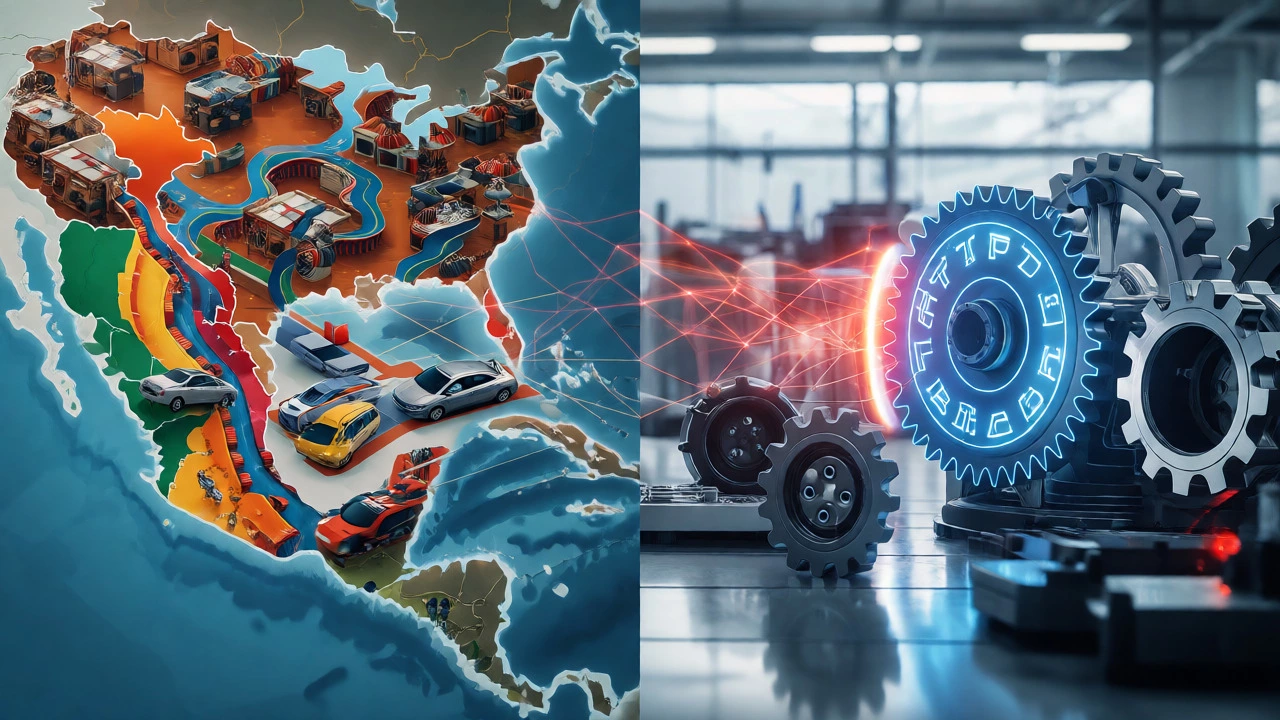
Then there’s Mexico. If you’re making cars or heavy machinery for the US market, Mexico is unbeatable. Proximity matters. Shipping a container from Shanghai to Los Angeles takes weeks and costs thousands. Driving a truck from Monterrey to Texas takes two days. Under the USMCA agreement, Mexican manufacturing is deeply integrated with American supply chains. It’s the perfect example of regionalization beating globalization.
And we can’t ignore Germany. It doesn’t compete on volume. You won’t see millions of cheap T-shirts coming from Bavaria. Instead, Germany dominates in high-precision engineering-automobiles, industrial machinery, and chemicals. Their model relies on vocational training and small-to-medium enterprises (the Mittelstand). If your definition of "capital" involves quality and innovation rather than sheer tonnage, Germany remains a critical node in the global network.
How Government Schemes Shape the Map
You might think free markets decide everything. In manufacturing, that’s rarely true. Governments pick winners. Look at the US CHIPS Act. It pours billions into domestic semiconductor fabrication. Without those subsidies, building a chip plant in Arizona wouldn’t make financial sense compared to building one in Taiwan. Government incentives lower the risk for private companies.
In India, the PLI scheme works similarly. By offering cash incentives based on incremental sales, the government effectively pays companies to set up shop. This has led to a surge in mobile phone exports. Similarly, Saudi Arabia is trying to pivot from oil to manufacturing using Vision 2030 funds. These aren’t just economic policies; they are attempts to redraw the global map.
When evaluating where the "capital" is, look at policy stability. Investors hate uncertainty. A country with consistent tax laws, reliable energy grids, and clear export rules will attract factories faster than one with frequent regulatory changes. This is why some Southeast Asian nations are gaining ground-they offer predictability alongside low costs.
Comparing the Heavyweights
To make this practical, let’s compare the top contenders based on key attributes that matter to businesses and job seekers. Note that these figures reflect trends leading into 2026.
| Country | Primary Strength | Key Industries | Labor Cost Index | Infrastructure Rating |
|---|---|---|---|---|
| China | Ecosystem Depth & Speed | Electronics, EVs, Machinery | Medium-High | Excellent |
| United States | High-Tech Innovation | Aerospace, Pharma, Semiconductors | Very High | Good (Regional) |
| India | Scale & Digital Integration | Pharma, Auto Components, IT Hardware | Low-Medium | Improving Rapidly |
| Vietnam | Agile Assembly | Textiles, Footwear, Electronics | Low | Moderate |
| Germany | Precision Engineering | Cars, Industrial Equipment | Very High | Excellent |
What This Means for You
So, who is the manufacturing capital? It depends on what you’re building. If you need a million units of a complex electronic device delivered next month, you probably still go to China. If you’re making generic apparel, Vietnam or Bangladesh is cheaper. If you’re producing high-end medical devices for the US market, Mexico or Ireland might be smarter choices.
The era of a single monopoly is ending. We are moving toward a multipolar manufacturing world. Supply chains are becoming shorter and more regional. "Friend-shoring"-moving production to politically allied countries-is reshaping investment flows. For entrepreneurs, this means more options. You aren’t stuck with one supplier. For workers, it means skills matter more than location. A welder in Ohio can compete globally if they specialize in automated welding cells, just as an engineer in Pune can work on global automotive platforms.
Don’t bet on one horse. Watch the data on port throughput, energy prices, and wage growth. Those indicators tell you more about the future manufacturing capital than any headline ever could.
Is China still the largest manufacturer in the world?
Yes, by total value added, China remains the largest manufacturer globally, accounting for approximately 30% of the world's total. However, its share has plateaued slightly as other nations like India and Vietnam gain market share in specific sectors.
Why is India considered a new manufacturing hub?
India is rising due to a large young workforce, improved infrastructure, and government initiatives like the Production Linked Incentive (PLI) scheme. These factors, combined with geopolitical desires to diversify supply chains away from China, have attracted major investments in electronics and pharmaceuticals.
Which country is best for low-cost manufacturing?
Vietnam, Bangladesh, and Indonesia are currently among the top choices for low-cost labor-intensive manufacturing such as textiles and basic electronics assembly. Costs vary by region and industry, but these countries generally offer lower wages than China while maintaining decent productivity levels.
How do government schemes affect manufacturing locations?
Government schemes provide subsidies, tax breaks, and infrastructure support that reduce the cost and risk of setting up factories. For example, the US CHIPS Act incentivizes semiconductor production domestically, while India's PLI scheme encourages local manufacturing of mobile phones and electronics.
Can automation replace low-cost labor advantages?
Automation reduces the relative importance of labor costs in highly automated industries like automotive and electronics. However, many manufacturing processes still require human dexterity and oversight, meaning low-cost labor remains a significant factor in sectors like garment making and final assembly.