
Indian Chemical Sector Explorer
Select a company from the list below to view detailed insights on their market position, key growth drivers, and potential risks.
SRF Ltd
Specialty ChemicalsPrimary Focus
Specialty Chemicals & Packaging
Global Presence
High (Exports ~40%)
Key Growth Driver
Fluorochemicals & Technical Textiles
Strategic Insight
SRF is known for backward integration, producing its own raw materials to protect margins during global price spikes. Their expansion into eco-friendly refrigerants aligns with global environmental protocols like the Kigali Amendment.
You might think the chemical companies shaping India’s industrial backbone are just a handful of faceless giants churning out plastic pellets. But here is the twist: the sector is a complex web of specialty innovators, bulk commodity titans, and green-tech pioneers that often fly under the radar until their products end up in your phone, your medicine cabinet, or your car battery. If you are an investor, a supply chain manager, or just curious about who powers the "Make in India" initiative beyond steel and textiles, understanding the hierarchy of these firms is crucial. The landscape has shifted dramatically in recent years, moving from pure volume production to high-value specialty chemicals driven by global supply chain diversification away from China.
This isn't just about listing names; it's about recognizing which players have the technology, the scale, and the strategic positioning to dominate the next decade. We are looking at five specific entities that define the current market cap, export volumes, and innovation rates in the Indian chemical sector as of late 2026. These aren't random picks-they are selected based on revenue stability, R&D investment, and their role in critical supply chains like pharmaceuticals, agriculture, and electric vehicles.
The Shift from Commodity to Specialty
Before we name the players, you need to understand why the list looks different today than it did ten years ago. Historically, India was known for low-cost, high-volume commodity chemicals-think basic acids, alkalis, and fertilizers. Today, the real money and growth are in Specialty Chemicals, which are high-performance formulations used in niche applications like active pharmaceutical ingredients (APIs), agrochemicals, and electronic chemicals. This shift happened because global brands started looking for reliable alternatives to Chinese manufacturing due to environmental crackdowns and geopolitical tensions. Indian companies seized this opportunity by investing heavily in cleaner technologies and precise synthesis capabilities.
When evaluating these companies, we look at three key metrics: EBITDA margins (profitability after operational costs), debt-to-equity ratios (financial health), and export share (global competitiveness). A company with high domestic sales but low exports might be struggling against cheap imports, while one with high exports but thin margins is playing a dangerous volume game. The winners balance both.
SRF Ltd: The Precision Powerhouse
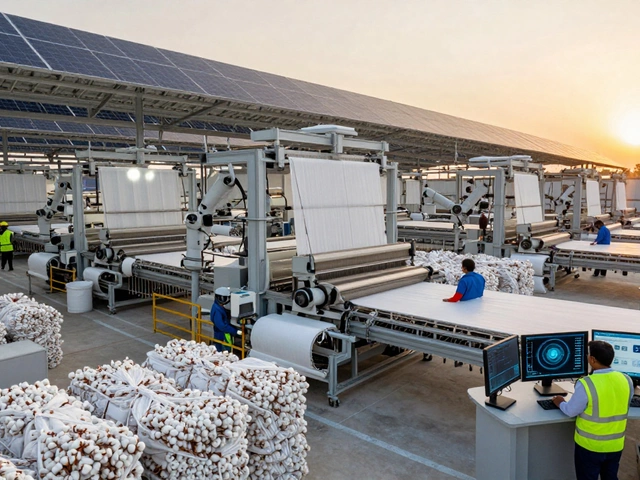
If you want to know where precision meets profitability, look no further than SRF Ltd. It is a diversified engineering and chemicals group known for its leadership in packaging films, technical textiles, and specialty chemicals. SRF doesn’t just make chemicals; they solve problems. Their specialty chemicals division is a quiet giant in the world of refrigerant gases and fluorochemicals. Why does this matter? Because every time you open your air conditioner or plug in your refrigerator, there is a good chance SRF’s chemistry is inside.
Their strength lies in backward integration. They produce their own raw materials, which protects them when global prices spike. In 2025-2026, SRF expanded its capacity for HFC-134a and other eco-friendly refrigerants, aligning perfectly with global environmental protocols like the Kigali Amendment. Investors love SRF not just for its stock performance, but for its consistent double-digit EBITDA growth, driven by high-margin specialty products rather than volatile commodity cycles. If you are sourcing fluoropolymers or specialized packaging solutions, SRF is likely already on your vendor list.
Tata Chemicals: The Sustainable Giant
Tata Chemicals is a leading global manufacturer of soda ash, sodium bicarbonate, and salt-based products, recognized for its sustainability initiatives. You probably know them for household baking soda, but that is just the tip of the iceberg. Tata Chemicals is a global leader in soda ash, a critical ingredient for glass manufacturing, detergents, and solar panels. With operations in the US, UK, Kenya, and India, they are truly multinational.
What sets Tata apart in the current climate is their aggressive pivot toward sustainability. They are pioneering carbon capture utilization and storage (CCUS) projects, turning CO2 emissions into usable products. For businesses needing large volumes of consistent quality soda ash, Tata offers reliability backed by the Tata brand trust. However, their business is cyclical, tied closely to construction and automotive glass demand. If you are in the building materials sector, your input costs are directly linked to Tata’s production efficiency and global logistics network.
Pidilite Industries: The Consumer Chemistry King
While others focus on B2B industrial inputs, Pidilite Industries is an Indian multinational corporation specializing in adhesives, sealants, paints, and home care products. Pidilite owns brands you use daily: Fevicol, M-Seal, and Dr. Fixit. Their dominance in the adhesives market is staggering-they hold over 70% market share in synthetic resins in India. This isn't accidental; it's built on decades of distribution networks reaching even the smallest hardware store in rural India.
Pidilite’s strategy is premiumization. They don’t compete on price alone; they compete on performance and brand recall. Recently, they have expanded into food processing chemicals and polymer additives, diversifying away from construction-linked cyclicality. For a startup looking to enter the consumer goods space, Pidilite’s model shows how deep distribution and strong branding can create a moat that competitors find nearly impossible to cross. If you are selling DIY products, Pidilite’s supply chain efficiency is your benchmark.
Aarti Industries: The API and Agrochem Specialist
In the world of pharmaceuticals and agriculture, intermediates are king. Aarti Industries is a prominent manufacturer of benzene-based derivatives and intermediates for pharmaceuticals and agrochemicals. They operate in a highly regulated environment where purity levels must be exact. A single impurity can ruin a batch of life-saving drugs. Aarti excels here because they have invested in state-of-the-art continuous flow reactors, which offer better control and safety compared to traditional batch reactors.
Their growth story is tied to the global shift in API manufacturing. As Western pharma companies de-risk their supply chains, they turn to vetted Indian partners like Aarti. The company has been aggressively expanding its capacity for nitration and chlorination units, critical steps in making drug molecules. If you are in the healthcare sector, understanding Aarti’s capacity constraints helps predict potential shortages in generic medicines. They are not just a supplier; they are a strategic partner in global health security.
Gujarat Fluorochemicals: The Energy Transition Player
Finally, we have Gujarat Fluorochemicals, which is a major producer of fluorochemicals, fluoropolymers, and refrigerant gases, increasingly vital for the EV battery ecosystem. While SRF focuses on broad specialty applications, Gujarat Fluorochemicals has carved out a niche in the energy transition. They produce PVDF (polyvinylidene fluoride), a binder essential for lithium-ion batteries. As electric vehicle adoption surges in India and globally, demand for PVDF is exploding.
This company represents the future-proof aspect of the chemical industry. They are moving beyond traditional refrigerants into high-growth areas like battery chemicals and membrane technologies. Their joint ventures and capacity expansions signal confidence in long-term structural demand rather than short-term cycles. If you are tracking the EV supply chain, Gujarat Fluorochemicals is a bellwether for battery material availability. Their ability to scale production while maintaining quality standards will determine how quickly India can localize EV component manufacturing.

Comparative Analysis of Market Leaders
To help you decide which company matters most to your interests, here is a breakdown of their core strengths and market positions. Note that financial figures reflect approximate trends observed through late 2026 reports.
| Company | Primary Focus Area | Key Growth Driver | Global Presence | Risk Factor |
|---|---|---|---|---|
| SRF Ltd | Specialty Chemicals & Packaging | Fluorochemicals & Technical Textiles | High (Exports ~40%) | Regulatory changes in refrigerants |
| Tata Chemicals | Soda Ash & Sodium Bicarbonate | Green Energy & Sustainability | Very High (Global Operations) | Cyclical construction/auto demand |
| Pidilite Industries | Adhesives & Home Care | Premiumization & Rural Distribution | Moderate (Growing Exports) | Rural economic slowdown |
| Aarti Industries | Pharma & Agro Intermediates | China+1 Supply Chain Shift | High (Major Exporter) | Raw material volatility |
| Gujarat Fluorochemicals | Fluoropolymers & Battery Materials | EV Battery Demand | Moderate-High | Technology obsolescence in batteries |
Why These Five Matter Now
You might ask, why these five? Why not Reliance Industries or Adani Enterprises, which are massive conglomerates? The answer lies in specialization. Reliance and Adani are diversified energy and infrastructure giants; their chemical arms are significant but not their sole identity. The five companies listed above are pure-play or dominant players in the chemical value chain. When you buy stock in Pidilite, you are betting on Indian consumption and housing. When you buy Aarti, you are betting on global pharma outsourcing. Each offers a distinct lever to pull depending on your economic outlook.
Furthermore, these companies demonstrate resilience. During the post-pandemic inflation spikes, many smaller chemical firms folded due to rising energy costs. These five survived and thrived because they had pricing power. They could pass on costs to customers because their products were either essential (Tata’s soda ash) or irreplaceable without significant requalification time (Aarti’s APIs).
Navigating the Future of Indian Chemicals
The road ahead for the Indian chemical industry is paved with both opportunity and caution. On one hand, government incentives like the Production Linked Incentive (PLI) scheme for advanced chemistry cells are boosting domestic manufacturing. On the other, environmental regulations are tightening. Companies that fail to adopt green processes will face higher compliance costs. SRF and Tata Chemicals are already ahead of the curve here, integrating ESG (Environmental, Social, and Governance) goals into their core strategies.
For businesses, this means supplier selection is becoming a strategic decision. Choosing a partner like Gujarat Fluorochemicals or SRF isn't just about price; it's about ensuring continuity in a volatile global market. For investors, the theme remains clear: specialty over commodity, exports over domestic-only, and sustainability as a competitive advantage.
Which is the largest chemical company in India?
Reliance Industries is technically the largest entity involved in chemicals due to its petrochemical arm, but among pure-play chemical manufacturers, SRF Ltd and Tata Chemicals are often considered leaders in terms of market capitalization and global reach within the specialty and commodity segments respectively. Pidilite leads in consumer-facing chemical products.
Why are specialty chemicals growing faster than commodity chemicals?
Specialty chemicals command higher margins because they are customized for specific applications and involve complex R&D. Unlike commodities, where price is determined by global markets, specialty producers have pricing power. Additionally, the global shift away from Chinese manufacturing (the "China+1" strategy) benefits Indian specialty firms that offer reliable, high-quality alternatives.
How do environmental regulations impact these companies?
Stricter environmental norms increase operational costs for waste treatment and emission controls. However, larger players like Tata Chemicals and SRF benefit from economies of scale in adopting green technologies. Smaller, unorganized players often struggle to comply, leading to market consolidation where these top five gain greater market share.
Are Indian chemical companies dependent on imports?
Yes, particularly for certain raw materials like aromatics and specific catalysts. However, companies like Aarti Industries and SRF are actively pursuing backward integration to reduce import dependency. Government policies promoting local manufacturing of critical inputs are helping these firms improve self-sufficiency over time.
What role do these companies play in the EV revolution?
Gujarat Fluorochemicals and SRF are pivotal in producing materials like PVDF binders and electrolytes required for lithium-ion batteries. As India aims to boost EV production, these chemical suppliers provide the foundational materials needed for battery manufacturing, making them indirect beneficiaries of the EV boom.