
Market Fit Estimator: The "Fiat Lesson" Tool
Analyze Your Product's Market Alignment
Based on the Fiat case study, evaluate how your product's strategy aligns with the critical pillars of the Indian market: Efficiency, Service, and Value.
Market Fit Score: 0/50
The Core Mistake: Misreading the Indian Consumer
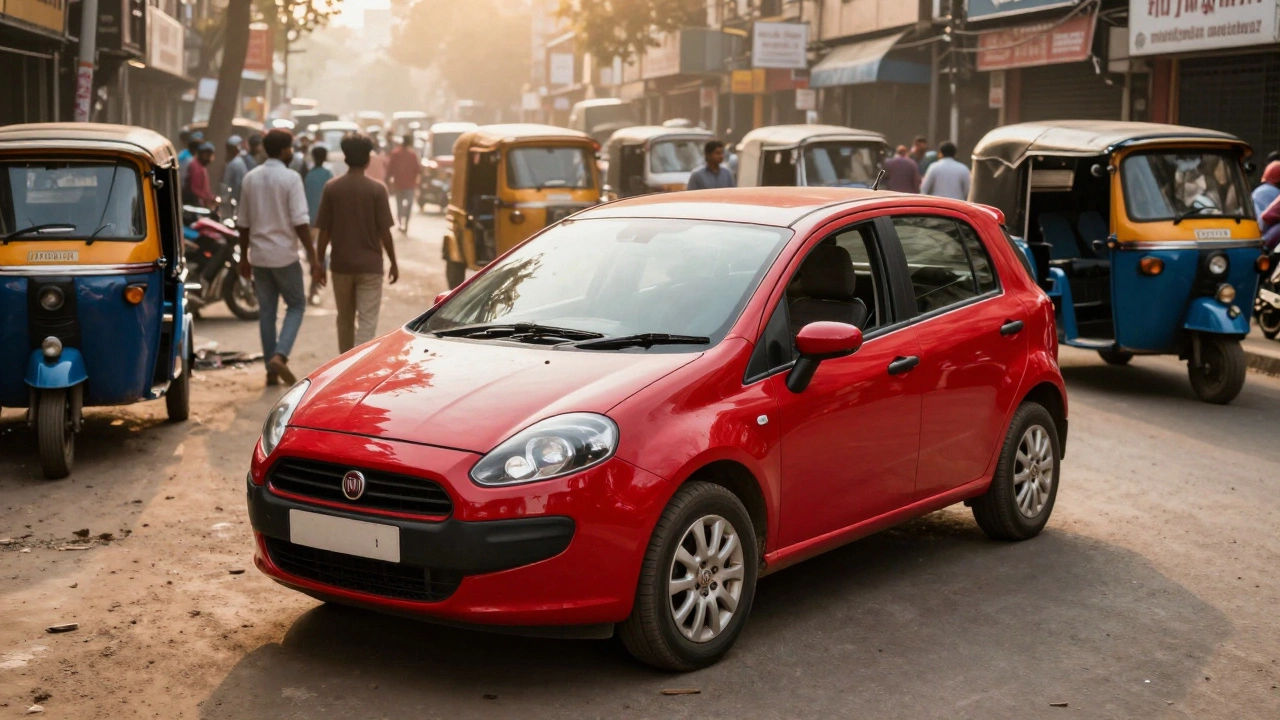
When Fiat entered the Indian market, they brought a European sensibility to a landscape that was obsessed with two things: fuel efficiency and resale value. For the average Indian car buyer, a vehicle isn't just a mode of transport; it is a massive financial asset. This is where Fiat stumbled. They focused on driving dynamics and Italian design, which sounds great in a brochure, but didn't translate to the daily grind of Bengaluru traffic or the dusty roads of rural Punjab. Take the Fiat Punto, for example. On paper, it was a masterpiece. It had a gorgeous exterior and handled like a dream. But it suffered from a perception problem. The engine options were often seen as underpowered or too thirsty compared to the offerings from Maruti Suzuki, which had already locked down the 'mileage' mindset of the Indian public. If a car doesn't give you a high kilometer-per-liter figure, it's almost a non-starter in this region.The Distribution Nightmare and Service Gaps
Selling a car is only half the battle; the real game is keeping it on the road. Fiat's distribution network in India was a fragmented mess. Unlike the aggressive expansion seen by Korean brands like Hyundai, Fiat relied on a limited number of dealerships. If you lived in a Tier-2 city and your car broke down, getting a genuine part could take weeks. This created a vicious cycle. Poor service led to bad word-of-mouth, which killed new car sales, which in turn made dealerships less likely to invest in better service centers. In a market where 'peace of mind' is a primary selling point, Fiat offered anxiety. When a customer has to drive fifty kilometers just to find a mechanic who knows how to work on an Italian engine, they probably won't buy that brand a second time.| Feature | Fiat Strategy | Market Leader Strategy (e.g., Maruti/Hyundai) |
|---|---|---|
| Primary Value Proposition | Design & Handling | Fuel Economy & Reliability |
| Service Network | Limited/Urban Centric | Ubiquitous/Pan-India |
| Resale Value | Rapid Depreciation | High Retention |
| Product Localization | European Specs | India-Specific Tuning |
The Partnership Paradox with Tata Motors
To survive, Fiat entered a strategic partnership with Tata Motors. This was a double-edged sword. On one hand, it allowed Fiat to use Tata's vast distribution network and shared some technical resources. On the other hand, it blurred the brand identity. The partnership led to the creation of the Tata Altroz and other projects where Fiat's engine technology was used in Tata cars. While this helped the engines stay relevant in the market, it didn't help the Fiat brand itself. Why would a customer buy a Fiat-branded car when they could buy a Tata with the same engine but with a much better service record and higher resale value? The Fiat India exit became inevitable when the brand realized it was essentially powering its competitors' success without reaping the brand equity rewards.The Shift to Stellantis and Global Prioritization
By the time Stellantis (the global giant formed by the merger of PSA Group and FCA) took over, the math simply didn't add up. Multinational companies operate on a global priority list. They look at markets and ask: 'Where can we get the highest return on investment with the least amount of risk?' India is a high-volume, low-margin market. To make money here, you need to sell hundreds of thousands of units. Fiat was selling a handful. Investing billions into a new EV platform or a localized factory for a brand that struggled to sell a few thousand cars a year made zero sense for Stellantis. They decided to pivot their focus toward brands that had more traction or higher margins. The Italian charm wasn't enough to justify the massive capital expenditure required to compete with the likes of Kia or Mahindra & Mahindra.
Lessons from the Italian Exit
What can other manufacturers learn from this? First, 'global' products rarely work without 'local' tweaks. You cannot simply drop a European car into the Indian market and expect it to fly. The road conditions, the humidity, the fuel quality, and the psychology of the buyer are all different. Second, the after-sales experience is the actual product. In India, you aren't just selling a piece of metal and rubber; you are selling a promise that the car will be fixable in a remote village in Rajasthan. Fiat failed the service test, and in the automotive world, that is a death sentence. Finally, timing is everything. Fiat entered the market at a time when the shift toward compact, efficient hatchbacks was peaking, but they were too slow to pivot when the market suddenly shifted toward SUVs and Crossovers. By the time they wanted to change direction, the brand was already perceived as a 'legacy' player with no future.Did Fiat completely stop selling cars in India?
Yes, Fiat has effectively ceased its passenger vehicle operations in India. While some existing owners can still find parts through specialized channels or the remaining remnants of the partnership network, the company no longer sells new Fiat-branded cars to the public.
Was the Fiat Punto a failure?
Technically, no. The Punto was praised for its build quality and driving dynamics. However, commercially, it failed because it was priced too high for the value it provided in terms of fuel economy and it lacked a supportive service network to back it up.
How did the Tata Motors partnership affect Fiat?
The partnership was a survival tactic. It allowed Fiat to leverage Tata's reach, but it also commoditized Fiat's technology. Since Tata cars used Fiat engines, consumers chose the brand with the better service network (Tata) over the brand that provided the engine (Fiat).
Could Fiat have survived with an EV?
It is unlikely. Entering the EV market requires massive infrastructure investment. Given their poor track record with ICE (Internal Combustion Engine) service and distribution, they would have faced the same trust issues with EVs, only with higher financial stakes.
What happened to the Fiat dealerships?
Most dealerships closed down or transitioned into multi-brand service centers. Because the volume of new cars dropped so significantly, the cost of maintaining a dedicated Fiat showroom became unsustainable for local business owners.