
India Semiconductor Investment & PLI Calculator
Estimate Project Economics (2026)
Based on Indian Government PLI Scheme Guidelines
*Estimated savings compared to full private funding. Actual PLI disbursements depend on production growth metrics over time.
For decades, the answer to whether India could make semiconductors was a resounding "no." The country imported nearly every microchip it used, from simple sensors in washing machines to complex processors in smartphones. But fast forward to mid-2026, and the landscape has shifted dramatically. You might have heard headlines about massive factory announcements or government incentives. The question isn't just "is India going to make them?" anymore; it is "how much are they making, and what does that mean for the global supply chain?"
The short answer is yes. India is actively building its semiconductor ecosystem. It is not yet a self-sufficient powerhouse like South Korea or Taiwan, but it has moved past the planning stage into concrete execution. By June 2026, several major fabrication plants are either operational or in advanced construction phases. This shift represents one of the most significant industrial policy pivots in recent history.
Key Takeaways
- Production Has Started: Assembly, testing, packaging, and marking (ATPM) facilities are fully operational, while advanced front-end fabs are nearing completion.
- Major Players Involved: Global giants like Micron Technology and domestic leaders like Tata Electronics are leading the charge with multi-billion dollar investments.
- Government Incentives Drive Growth: The Production Linked Incentive (PLI) scheme provides substantial financial support, covering up to 50% of capital expenditure for new fabs.
- Challenges Remain: High costs, skilled labor shortages, and intense global competition still pose significant hurdles to becoming a top-tier manufacturer.
- Strategic Goal: India aims to capture 1-2% of the global semiconductor market by 2030, reducing dependency on Asian suppliers.
The Shift from Consumer Electronics to Core Chips
To understand where India stands in 2026, we need to look at what "making semiconductors" actually means. It is not a single step. The industry is divided into three main stages: design, manufacturing (fabrication), and assembly/testing. For years, India excelled in design. Companies like Qualcomm and Nvidia have large engineering centers in Bangalore and Hyderabad. However, they were sending those designs abroad to be physically built.
The real breakthrough in this current cycle is the move into physical manufacturing. Specifically, the focus has been on two areas: Advanced Packaging and Front-End Fabrication. Advanced packaging involves taking chips made elsewhere and putting them into protective casings. This is less expensive and technically demanding than creating the silicon wafers themselves, but it is crucial for final product readiness. Front-end fabrication is the hard part-printing circuits onto silicon wafers using extreme ultraviolet light.
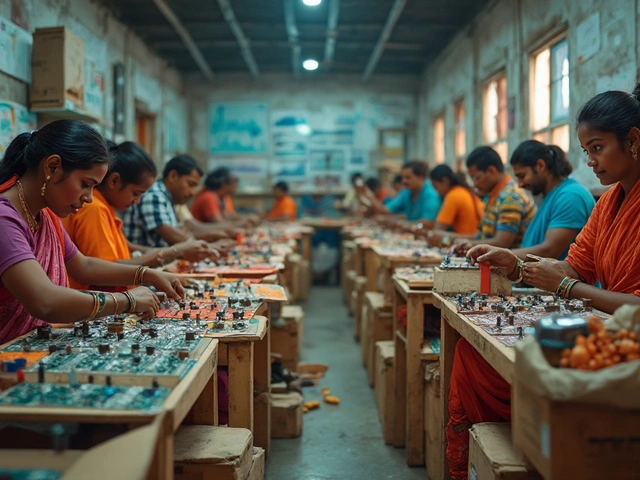
By early 2026, India had successfully established a robust ATPM (Assembly, Testing, Packaging, and Marking) sector. This means that while the core silicon might still come from TSMC or Samsung initially, the final processing happens domestically. This creates jobs, builds infrastructure, and retains more value within the Indian economy. It serves as a stepping stone toward full-scale wafer fabrication.
Who Is Building What? Major Projects in Motion
If you want to know if this is real hype or actual progress, look at the companies involved. These aren't shell corporations; they are industry titans committing billions of dollars.
| Company | Project Type | Location | Status (June 2026) | Investment Value |
|---|---|---|---|---|
| Micron Technology | Memory Fab & R&D Center | Vadodara, Gujarat | Construction ongoing; target commissioning late 2027 | $2.65 Billion |
| Tata Electronics | ATPM Facility & Design Center | Dholera, Gujarat | Operational (Phase 1); expanding capacity | $4.5 Billion (Total planned) |
| CG Power & Industrial Solutions | ATPM Facility | Nagpur, Maharashtra | Operational | $180 Million |
| Kaynes Technology | ATPM & EMS | Pune, Maharashtra | Operational | $100 Million+ |
| GlobalFoundries | Advanced Packaging Hub | Bengaluru, Karnataka | Planning/Early Construction | $500 Million+ |
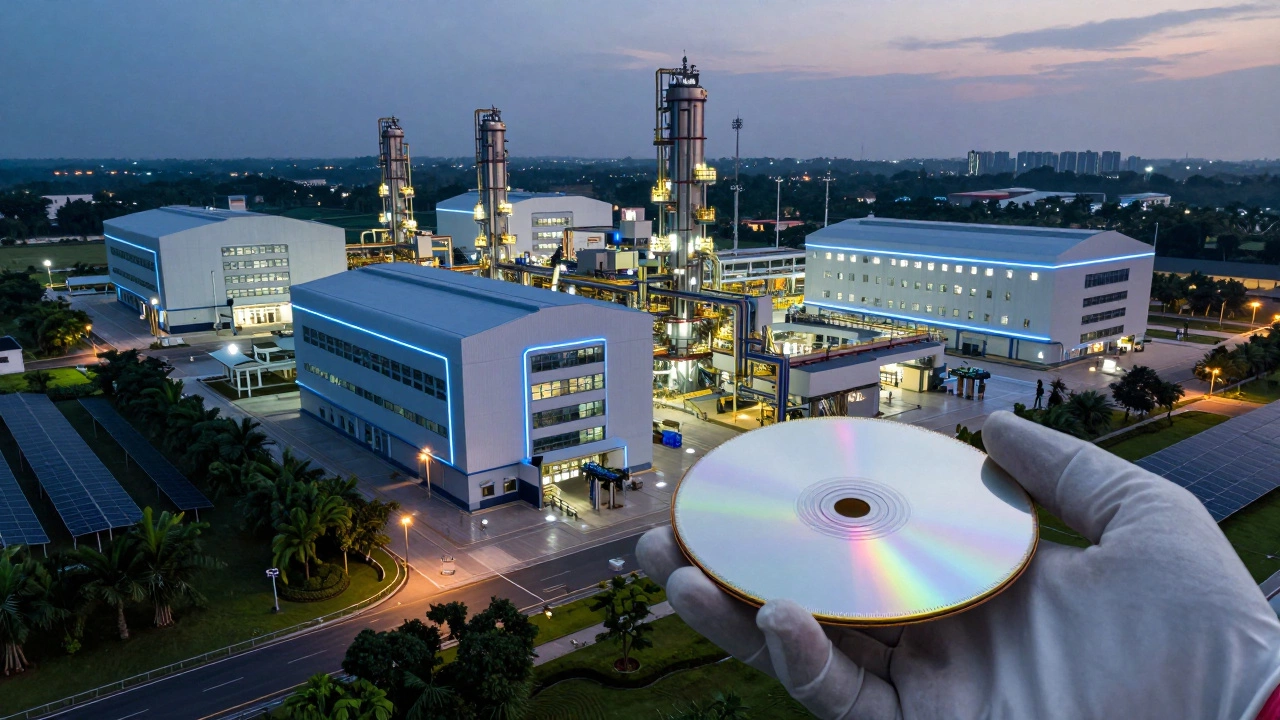
Micron Technology's project in Gujarat is particularly significant because it is an actual memory fabrication plant. Memory chips are essential for smartphones, laptops, and servers. While Micron focuses on mature nodes (older, reliable technology rather than cutting-edge AI chips), this proves India can handle the complex chemical and physical processes required to create silicon wafers.
Meanwhile, Tata Electronics, a subsidiary of the Tata Group, has positioned itself as the domestic champion. Their facility in Dholera is already running, handling assembly and testing for various consumer electronics components. This dual approach-global tech giants bringing capital and expertise, and local conglomerates providing scale and integration-is the backbone of India's strategy.
The Role of Government Policy: The PLI Scheme
You cannot talk about India's semiconductor rise without mentioning the money behind it. The Indian government launched the Production Linked Incentive (PLI) scheme for semiconductors and display technologies. This is not a small grant; it is a massive financial commitment designed to offset the high risks of entering the chip industry.
Under this scheme, the government offers incentives based on production growth. For setting up new fabrication plants, the incentive can cover up to 50% of the total capital expenditure. For ATPM units, it covers up to 25%. Additionally, there are separate funds for research and development and for setting up semiconductor design centers.
Why is this necessary? Because building a chip factory is incredibly expensive. A single modern fab can cost $10 billion or more. Even older technology lines require hundreds of millions. Without government subsidies, private companies would struggle to justify the investment due to uncertain returns and fierce competition from China, South Korea, and Japan. The PLI scheme effectively de-risks the investment, making India an attractive alternative location for companies looking to diversify their supply chains away from East Asia.
Why Now? Geopolitics and Supply Chain Security
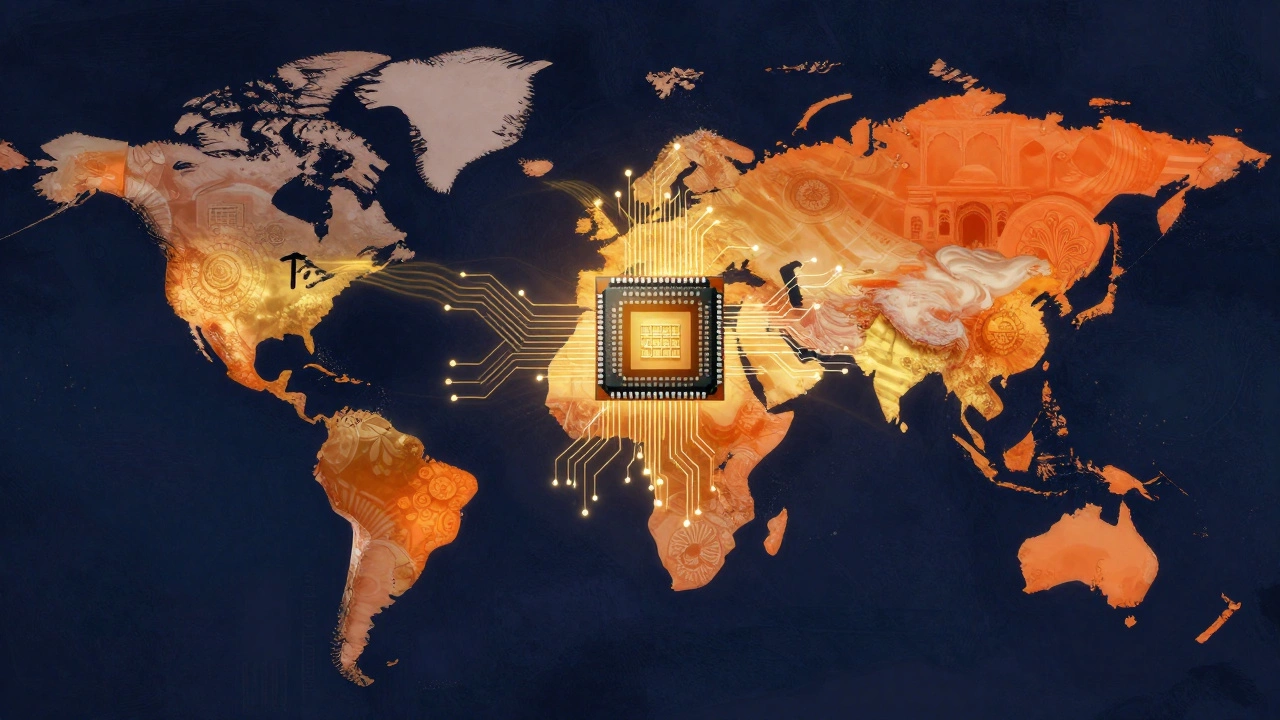
The timing of India's push into semiconductors is no accident. Since the global chip shortages of 2020-2022, governments worldwide realized how fragile the supply chain was. The United States passed the CHIPS Act, the European Union launched its own semiconductor initiative, and Japan increased subsidies. Everyone wants to bring chip production closer to home.
India fits perfectly into this "friend-shoring" narrative. Western countries are eager to reduce reliance on Chinese manufacturing. India offers a large domestic market, English-speaking workforce, and democratic governance aligned with Western interests. When Apple started moving iPhone production to India, it created a ready-made customer base for local semiconductor suppliers. If iPhones are being assembled in India, why not source some of the simpler chips locally too?
This geopolitical shift gives India leverage. It is not just trying to join the club; the club is actively inviting India in. Partnerships with the US, Japan, and EU provide technical assistance, training programs, and potential joint ventures. For example, collaborations with Japanese firms like Renesas and Sony have helped transfer knowledge and establish initial production lines.

Realistic Challenges: It’s Not All Smooth Sailing
While the progress is undeniable, let’s keep our feet on the ground. India faces serious hurdles that could slow down or even derail this momentum if not addressed properly.
- Skilled Labor Shortage: Running a semiconductor fab requires highly specialized engineers and technicians. India produces many computer science graduates, but few have the specific materials science and physics background needed for chip manufacturing. Retraining takes time and money.
- High Energy Costs: Semiconductor manufacturing consumes enormous amounts of electricity. Any fluctuation in power supply or increase in energy prices directly impacts profitability. Reliable, cheap green energy is critical for long-term sustainability.
- Infrastructure Gaps: Fabs need ultra-pure water, stable internet connectivity, and seamless logistics. While cities like Bengaluru and Hyderabad are well-equipped, newer locations like Dholera or Vadodara are still developing these supporting infrastructures.
- Global Competition: TSMC and Samsung dominate the advanced node market. They have decades of experience and economies of scale that India cannot match overnight. Trying to compete directly on cutting-edge AI chips is unrealistic for now.
Another subtle challenge is the "learning curve." Semiconductor manufacturing is arguably the most complex industrial process on Earth. Mistakes are costly. Early factories may face yield issues (the percentage of working chips produced). Overcoming these technical teething problems will take years of iteration and investment.
What Does This Mean for the Global Market?
By 2026, India is not replacing Taiwan or South Korea. That won’t happen for another decade, if ever. Instead, India is carving out a niche in mature nodes and specialized packaging. Mature nodes are chips used in cars, appliances, and industrial equipment. These don’t need the latest nanometer technology, but they are in high demand and often suffer from supply bottlenecks.
Think of it this way: If TSMC is the luxury sports car manufacturer, India is aiming to become the reliable sedan producer. There is plenty of room in the market for both. As electric vehicles and IoT devices proliferate, the demand for mature chips will outpace demand for cutting-edge ones. India is positioning itself to capture this growing segment.
Furthermore, India’s success could inspire other emerging markets to follow suit. Countries like Vietnam, Malaysia, and Mexico are also investing in electronics manufacturing. A diversified global supply chain benefits everyone by reducing the risk of future shortages.
Looking Ahead: The Road to 2030
The goal set by the Indian government is ambitious: to account for 1-2% of the global semiconductor market by 2030. Currently, India’s share is close to zero. Achieving this requires sustained investment, consistent policy support, and successful scaling of existing projects.
If Micron’s fab comes online as planned in late 2027, it will serve as a proof of concept. Other international players may then feel confident enough to commit to larger investments. Domestic companies like Tata will likely expand their capabilities, potentially moving into more complex packaging techniques.
Education will play a pivotal role. Universities and technical institutes are already launching specialized courses in semiconductor physics and manufacturing. If India can build a pipeline of skilled workers over the next five years, it will solve its biggest bottleneck.
In summary, India is indeed making semiconductors. It has moved beyond rhetoric to reality. While challenges remain, the foundation is laid, the money is flowing, and the global context favors this shift. Whether India becomes a dominant player or a steady contributor depends on execution, but the journey has unquestionably begun.
Is India currently manufacturing semiconductors in 2026?
Yes, India is actively manufacturing semiconductors. Several Assembly, Testing, Packaging, and Marking (ATPM) facilities are fully operational, including those run by Tata Electronics and CG Power. Additionally, front-end fabrication plants, such as Micron’s memory fab in Gujarat, are under construction and expected to begin production soon.
Which companies are investing in India's semiconductor sector?
Major global and domestic companies are investing heavily. Key players include Micron Technology (memory fabrication), Tata Electronics (ATPM and design), CG Power, Kaynes Technology, and GlobalFoundries. International partners from the US, Japan, and Europe are also collaborating through joint ventures and technology transfers.
What is the PLI scheme for semiconductors?
The Production Linked Incentive (PLI) scheme is a government program that provides financial incentives to companies setting up semiconductor manufacturing facilities in India. It offers up to 50% of capital expenditure for new fabs and up to 25% for ATPM units, aimed at reducing investment risks and boosting domestic production.
Can India compete with Taiwan and South Korea?
Not immediately in the advanced node space. Taiwan (TSMC) and South Korea (Samsung) dominate cutting-edge chip production. India is focusing on mature nodes and advanced packaging, which are less technologically intensive but in high demand for automotive and industrial applications. This niche strategy allows India to enter the market realistically.
What are the main challenges facing India's semiconductor industry?
Key challenges include a shortage of skilled engineers and technicians, high energy consumption and costs, infrastructure gaps in new industrial zones, and intense global competition. Addressing these issues requires long-term investment in education, renewable energy, and logistical support.
Where are the semiconductor factories located in India?
Major facilities are concentrated in states with strong industrial policies and infrastructure. Key locations include Gujarat (Vadodara and Dholera), Maharashtra (Nagpur and Pune), and Karnataka (Bengaluru). These regions offer better access to talent, power, and logistics networks.
How does India's semiconductor growth impact consumers?
Domestic production can lead to lower costs for electronic goods over time by reducing import duties and supply chain delays. It also enhances supply chain security, meaning fewer disruptions during global crises. Consumers may see more affordable smartphones, cars, and home appliances with locally sourced components.