
Textile Factory Cost Estimator
Estimate Your Textile Factory Setup Costs (2026)
Get a personalized cost estimate based on your desired scale, location, machinery type, and government schemes.
Your Estimated Setup Costs
Based on your selections, your approximate startup investment is:
₹0
This includes land, machinery, labor, and essential compliance costs.
Tip: Tamil Nadu and Gujarat offer significant power subsidies. Consider these locations for cost savings.
Land and Infrastructure Costs
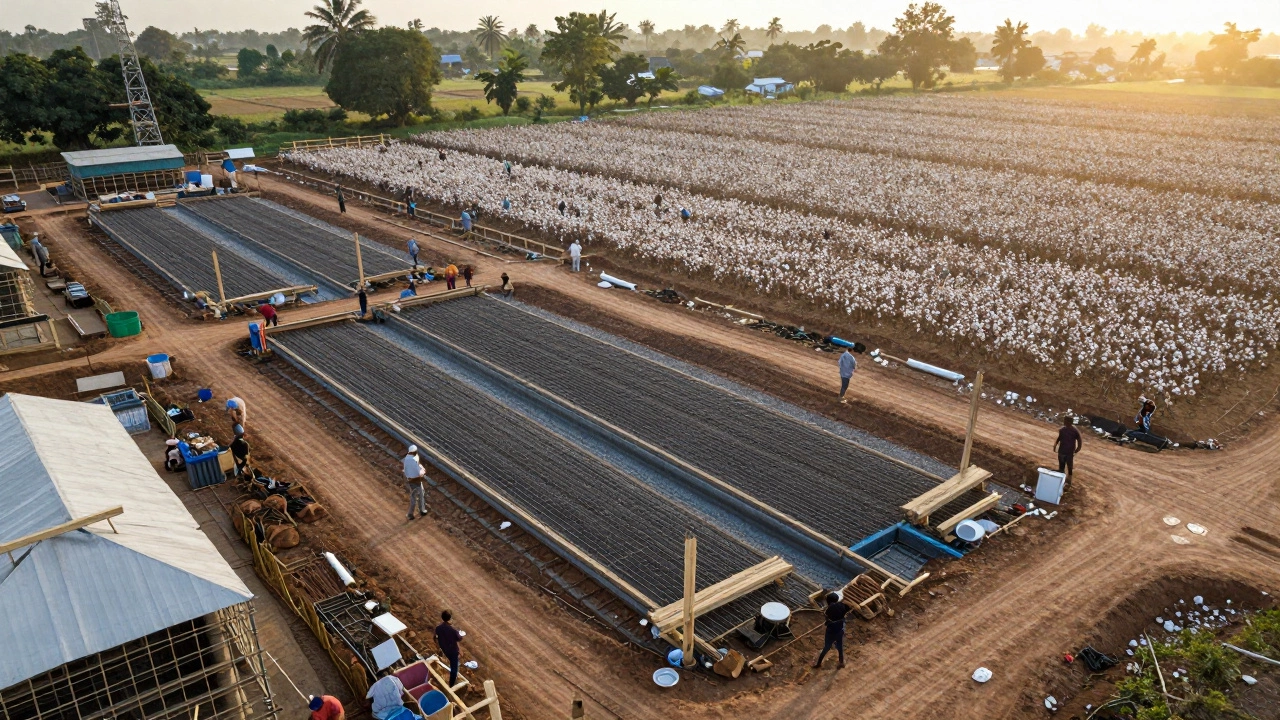
The location of your textile factory dramatically affects land costs. For example, in Gujarat or Tamil Nadu, industrial plots cost ₹15-30 lakh per acre. In Uttar Pradesh or Madhya Pradesh, you might find land for ₹8-20 lakh per acre. But don’t just look at the price tag. A cheaper location might mean higher logistics costs for raw materials or finished goods. A factory in Tirupur (Tamil Nadu) has easy access to cotton supply chains but faces high competition for labor. Meanwhile, setting up in Bihar or Odisha might offer lower land rates but require more investment in infrastructure like roads and power lines.
For a small textile unit, 1-2 acres might be enough. Medium-scale operations need 3-5 acres. Large factories often require 10+ acres. Remember to factor in building construction costs too. Basic factory sheds cost ₹1,500-₹2,500 per square foot. A 5,000 sq ft shed could cost ₹75 lakh-₹1.25 crore. If you need offices or warehouses, add another 20-30% to the total.
Machinery and Equipment
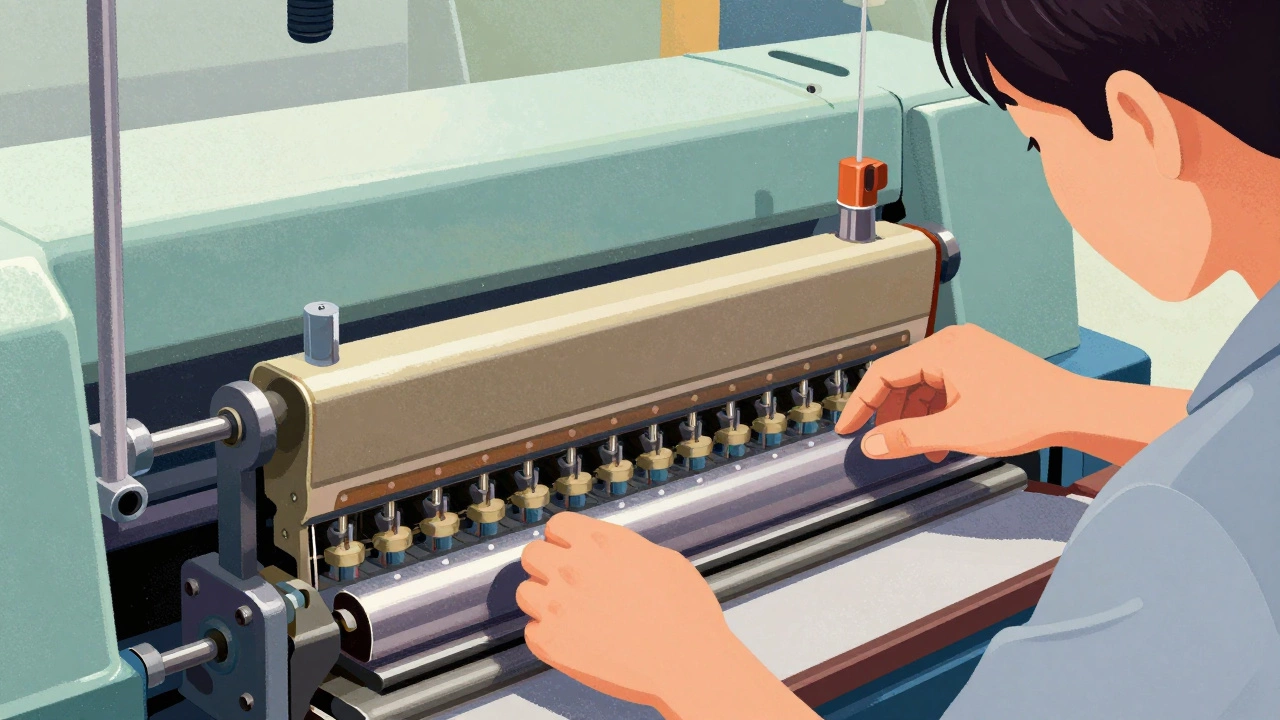
power loom machines are the backbone of most textile factories. A basic power loom costs ₹2.5-4 lakh per unit, while automatic versions range from ₹8-12 lakh. For a small factory with 10 looms, that’s ₹25-40 lakh. But if you want automatic looms with computerized controls, each unit can cost ₹8-12 lakh. That same 10-loom setup would jump to ₹80-1.2 crore.
spinning frame is another major cost. A small ring spinning frame for 10,000 spindles costs ₹50-75 lakh. For larger units, rotor spinning machines are cheaper upfront but may have higher maintenance costs. Dyeing and finishing equipment adds another layer. A basic dyeing machine costs ₹15-25 lakh. If you need eco-friendly dyeing tech, prices rise to ₹30-50 lakh.
Don’t forget auxiliary equipment like compressors, generators, and water treatment systems. These can add ₹10-20 lakh to your initial investment. Many new entrepreneurs skip these and end up paying more later for retrofits.
Labor and Workforce Expenses
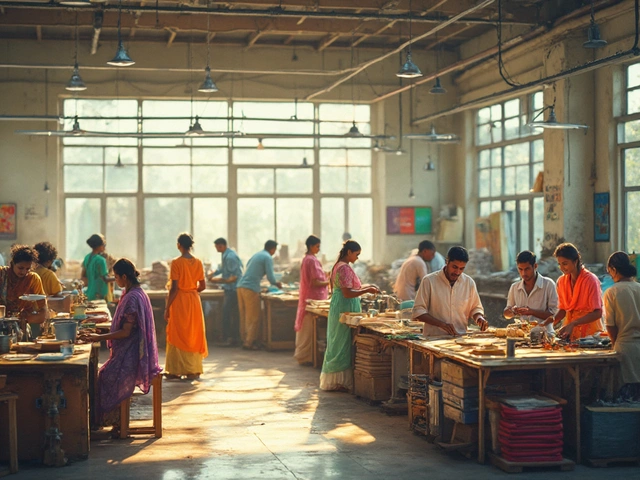
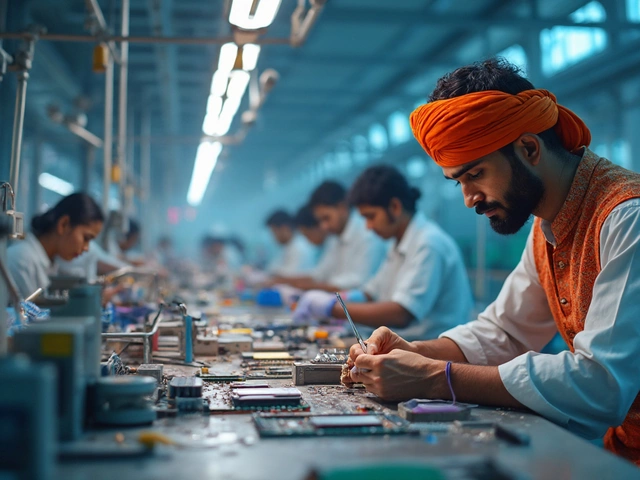
Labor costs in India’s textile sector are relatively low compared to global standards, but they’re not negligible. A skilled weaver earns ₹15,000-₹25,000 per month. Unskilled workers might earn ₹10,000-₹15,000. For a small factory with 15 workers, monthly wages total ₹2-3 lakh. Medium-scale operations with 50 workers could cost ₹5-10 lakh monthly. Large factories with 200+ workers may spend ₹20-40 lakh monthly on salaries alone.
Training costs matter too. New workers often need 2-3 months of training. A training program for 10 workers might cost ₹50,000-₹1 lakh. Also, remember statutory benefits like EPF (Employees’ Provident Fund) and ESI (Employee State Insurance), which add 12-15% to your wage bill. For example, paying ₹20,000 monthly salary means an actual cost of ₹22,500-23,000 after benefits.
Government Schemes That Reduce Costs
Pradhan Mantri Employment Generation Programme (PMEGP) is a government scheme that provides up to 35% subsidy for small-scale textile units. For example, if your total project cost is ₹50 lakh, you could get ₹17.5 lakh as a subsidy. PMEGP covers both manufacturing and service units and is administered by the Textile Ministry.
Another key scheme is the Textile Upgradation Fund Scheme (TUFS). This offers 25% subsidy for modernizing machinery. If you’re buying new automatic looms worth ₹1 crore, TUFS could cover ₹25 lakh.
Additionally, states like Tamil Nadu and Gujarat have their own incentives. Tamil Nadu Textile Corporation offers 10% subsidy on land cost for new factories. Gujarat’s "Textile Policy 2023" provides free power for the first three years for new units.
Hidden Costs That Catch New Entrepreneurs Off Guard
Many textile entrepreneurs overlook hidden costs until it’s too late. Environmental clearance alone can cost ₹2-5 lakh in consultancy fees and take 6-12 months to process. If your factory uses chemical dyes, you’ll need a Pollution Control Board certificate, which requires regular testing and documentation.
Power connections are another surprise. A 500 kVA connection might cost ₹5-10 lakh upfront, plus monthly demand charges of ₹10,000-₹20,000. Water supply infrastructure can add ₹2-3 lakh in setup costs. Also, don’t forget GST registration fees (₹2,000-₹5,000) and factory license fees (₹5,000-₹15,000).
Working capital is often underestimated. You need cash to buy raw materials before selling finished goods. For a small factory, ₹20-50 lakh in working capital is typical. Without it, you might run out of funds before your first sale.

Realistic Cost Estimates by Scale
| Cost Component | Small Scale (₹ lakh) | Medium Scale (₹ lakh) | Large Scale (₹ lakh) |
|---|---|---|---|
| Land & Building | 10-50 | 50-200 | 200-500 |
| Machinery | 30-100 | 150-500 | 500-2000 |
| Labor (monthly) | 15-30 | 50-100 | 150-300 |
| Licenses & Compliance | 2-5 | 5-15 | 15-30 |
| Working Capital | 20-50 | 100-200 | 300-500 |
Small-scale textile factories (1-2 acres) typically cost ₹50-1.2 crore to set up. This includes basic machinery, 10-15 workers, and minimal infrastructure. These units often focus on niche products like handloom or specialty fabrics.
Medium-scale operations (3-5 acres) range from ₹1.5-3.5 crore. They use semi-automatic machinery, 30-50 workers, and have better quality control systems. These are ideal for export-oriented businesses.
Large-scale factories (10+ acres) start at ₹5 crore and can go up to ₹15 crore+. They require full automation, 100+ workers, and significant investment in R&D and sustainability measures. These units usually supply major retailers or government contracts.
Quick Tips to Keep Costs Down
- Start small and scale gradually. Many successful textile businesses begin as home-based units before expanding.
- Use state-specific incentives. For example, Uttar Pradesh textile policy offers 50% subsidy on electricity for new textile units.
- Buy second-hand machinery. A well-maintained power loom from a closed factory can cost 40% less than new.
- Partner with local cotton farmers. This reduces raw material costs and ensures consistent supply.
- Apply for government schemes early. Delaying PMEGP or TUFS applications can cost you months of waiting time.
What is the minimum investment for a small textile factory in India?
A small textile factory with 10 power looms, basic machinery, and 15 workers typically requires ₹50-70 lakh for initial setup. This includes land (1-2 acres), machinery, licenses, and working capital. However, government schemes like PMEGP can reduce this cost by up to 35%.
How long does it take to set up a textile factory in India?
The timeline varies by scale. Small units take 6-9 months (including land acquisition, machinery installation, and approvals). Medium-scale factories need 12-18 months due to more complex approvals. Large factories can take 2-3 years, especially if environmental clearances or land disputes arise.
Can I start a textile factory with ₹20 lakh?
Yes, but only as a micro-unit. With ₹20 lakh, you could run a small handloom operation in a rented space (no land purchase). This would include 2-3 looms, basic dyeing equipment, and 5-6 workers. However, you’d need to scale quickly to cover operational costs, as working capital would be tight.
Which state is cheapest for textile factory setup?
Uttar Pradesh and Madhya Pradesh offer the lowest land costs (₹8-20 lakh/acre). However, Tamil Nadu has better infrastructure and supply chains for cotton. Gujarat provides strong subsidies and power connectivity. For overall affordability, UP is often the best choice for small units, while Tamil Nadu is better for export-focused operations.
Do I need to hire a consultant for government schemes?
Not always, but it’s highly recommended. Scheme applications require detailed project reports, financial projections, and compliance documentation. A consultant can help avoid delays and rejections. For PMEGP or TUFS, consultants typically charge ₹50,000-₹1 lakh, but this often saves you lakhs in missed subsidies.