
Local Manufacturing Impact Estimator
Input your current production metrics to see how onshoring might impact your business's bottom line and community.
| Cost Factor | Imported Model | Local Model | Difference |
|---|---|---|---|
| Base Labor/Materials | $0.00 | $0.00 | +$0.00 |
| Logistics & Tariffs | $0.00 | $0.00 | -$0.00 |
| Inventory Holding* | $0.00 | $0.00 | -$0.00 |
| Total Landed Cost | $0.00 | $0.00 | $0.00 |
Understanding the Multiplier Effect
This tool assumes a standard economic multiplier of 2.5x. This means for every direct factory job created, approximately 1.5 additional jobs are supported in the local service economy (transport, retail, food services, etc.).
Remember the chaos of 2021? Shipping containers piled up at ports, prices skyrocketed, and companies couldn't get their hands on basic components. That crisis wasn't just an inconvenience; it was a wake-up call for global supply chains. Today, as we navigate a post-pandemic world in late 2026, local manufacturing is no longer just a patriotic slogan-it's a strategic economic imperative. But beyond keeping lights on during a crisis, what does producing goods closer to home actually do for your wallet and your community?
It’s easy to look at the sticker price of an imported widget versus a locally made one and assume the importer wins. But that calculation misses the hidden costs: shipping delays, tariff risks, quality control nightmares, and the fragility of long-distance logistics. When you shift production back home or keep it within national borders, you unlock value that doesn’t show up on a simple invoice. Let’s break down where that money comes from and why governments are throwing billions at this trend.
The Multiplier Effect on Local Jobs
When a factory opens in your town, it doesn’t just hire machine operators. It creates a ripple effect known in economics as the multiplier effect. For every direct job created in manufacturing, studies consistently show between 1.5 to 3 additional jobs are supported in the local economy. Who are these people? They’re the truck drivers delivering raw materials, the cafeteria staff feeding the workers, the accountants handling payroll, and the retail stores selling supplies to those same employees.
This isn’t abstract theory. Look at regions like the Rust Belt in the US or the Midlands in the UK. Areas that successfully revitalized their industrial base saw household incomes rise not just for factory workers, but for service providers who relied on that new disposable income. Unlike tech hubs, which often concentrate wealth among high earners, manufacturing tends to offer stable, middle-class wages with clear paths for advancement. This stability keeps money circulating locally rather than being siphoned off to distant corporate headquarters.
Supply Chain Resilience Saves Money
Globalization taught us efficiency, but it also taught us vulnerability. A single blocked canal or a pandemic lockdown can halt production lines halfway across the world. Local manufacturing drastically reduces lead times-the time between placing an order and receiving the product. Instead of waiting six weeks for a container ship, you might wait three days by truck.
Why does speed matter financially? Because inventory is expensive. Companies hold safety stock to buffer against delays, tying up capital in warehouses. By shortening supply chains, businesses can adopt Just-in-Time (JIT) practices more effectively without the fear of running out of stock. Less inventory means less cash tied up in idle goods, freeing up capital for innovation or expansion. Furthermore, shorter chains mean fewer points of failure. If a supplier in Vietnam has a labor strike, your line stops. If your supplier is fifty miles away, you can drive over and negotiate.

Reducing Logistics and Carbon Costs
Shipping heavy goods across oceans burns fuel and emits carbon. With tightening environmental regulations and potential carbon border taxes coming into play globally, the cost of moving goods is rising. Producing locally cuts transportation distances significantly. You’re swapping ocean freight for domestic trucking or rail, which is often cheaper per unit when factoring in insurance, port fees, and customs brokerage.
| Factor | Imported Goods | Locally Manufactured |
|---|---|---|
| Lead Time | 4-8 Weeks | 1-5 Days |
| Transportation Cost | High (Ocean + Port Fees) | Low (Truck/Rail) |
| Quality Control | Difficult (Distance) | Easy (On-site visits) |
| Customs Risk | High (Tariffs/Delays) | None |
Beyond the direct savings, there’s the brand value. Consumers increasingly care about the carbon footprint of their purchases. "Made Locally" isn't just a label; it's a marketing tool that commands a premium. Brands leveraging local production often see higher customer loyalty because they can guarantee ethical labor standards and transparent sourcing, something that gets murky with complex overseas supply chains.
Government Incentives and Tax Breaks
Governments aren't just watching this trend; they're fueling it. In many countries, including the US with the CHIPS Act and various EU initiatives, substantial subsidies exist for companies that bring production home. These aren't just handouts; they're strategic investments in national security and economic independence.
- Tax Credits: Many jurisdictions offer investment tax credits for building new facilities or retrofitting old ones.
- Grants for Automation: Governments often subsidize the cost of robotics and AI integration to make local labor competitive with low-cost overseas alternatives.
- Training Programs: Public funds frequently support vocational training centers, reducing the hiring and training burden on manufacturers.
If you're considering starting or expanding a business, checking your eligibility for these schemes is crucial. The paperwork can be tedious, but the return on investment is often immediate. For instance, a small-scale manufacturer in Ohio recently offset 30% of its machinery upgrade costs through state-level green manufacturing grants. That’s real money staying in the business instead of going to the taxman.
Innovation Through Proximity
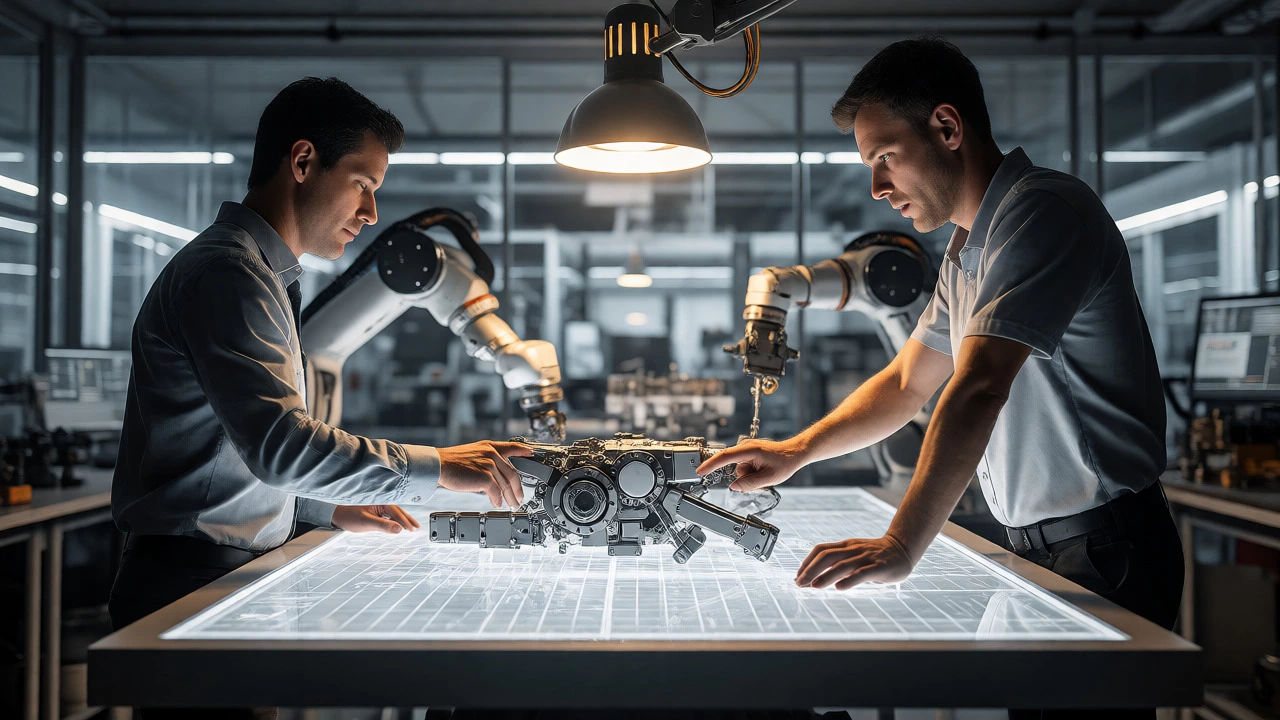
There’s a subtle but powerful benefit to having engineers, designers, and machinists in the same room-or at least the same country. Rapid prototyping becomes feasible. You can iterate on a design, test it, tweak it, and produce a final version in days rather than months. This agility allows companies to respond faster to market trends.
Think about consumer electronics. If a feature fails in testing, fixing it requires a quick turnaround. Waiting for feedback from an overseas partner adds weeks to the development cycle. Local clusters, like those seen in Germany’s automotive sector or Japan’s robotics industry, thrive on this tight feedback loop. Knowledge spills over easily when people talk face-to-face. This ecosystem fosters innovation that isolated offshore factories simply cannot match.
Challenges to Consider
It’s not all sunshine and tax breaks. Local manufacturing faces headwinds. Labor costs are undeniably higher in developed nations. Finding skilled workers remains a challenge, despite government training programs. And scaling up quickly can be harder when you don’t have the massive, established infrastructure of places like Shenzhen or Ho Chi Minh City.
However, automation is closing the gap. Robots don’t complain about wages or need health insurance. As technology advances, the cost difference between automated local production and manual overseas labor shrinks. The key is to focus on high-value, complex products where quality and speed matter more than rock-bottom unit costs.
Is local manufacturing always more expensive?
Not necessarily. While labor costs may be higher, total landed cost-including shipping, tariffs, inventory holding costs, and risk mitigation-often makes local production competitive or even cheaper for bulky or high-value items.
How do government schemes help small manufacturers?
Schemes often provide grants for equipment upgrades, tax deductions for R&D, and subsidized training programs. This lowers the barrier to entry and helps small firms compete with larger international players.
Does local manufacturing reduce environmental impact?
Yes, primarily by reducing transportation emissions. Shorter supply chains mean less fuel consumption. Additionally, local factories are often subject to stricter environmental regulations than some overseas counterparts.
What industries benefit most from onshoring?
Industries requiring rapid iteration, high customization, or strict quality control benefit most. Examples include aerospace, medical devices, luxury goods, and specialized electronics.
Can I qualify for incentives if I already manufacture locally?
Many incentive programs target expansion, automation, or sustainability improvements, not just new construction. Existing manufacturers can often apply for grants to modernize their facilities.